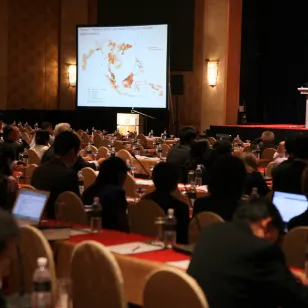
News Cartagena Summit: renewed commitment to end suffering caused by mines 4-12-2009 News release 26-11-2009 News release Section Anti-personnel landmines and explosive remnants of war Section devoted to the victims of anti-personnel mines and other explosive remnants of war. It includes global information by region, press articles, photos, personal stories, publications and links towards relevant sites. There are also links to other sections within this website relating to ICRC campaigns against indiscriminate weaponry and its activities aimed at preventing accidents, helping victims and developing and fostering respect for international humanitarian law. The Cartagena Summit on a Mine-Free World – Second Review Conference of the Mine Ban Convention, from 29 November to 4 December 2009.
2-11-2009 The Mine Ban Convention after 10 years: achievements and challengesThis fact sheet highlights the achievements of the Mine Ban Convention, ten years after its entry into force. It also outlines the remaning challenges that will need to be addressed by the 156 States party to the Convention, at the Cartagena Summit on a Mine-Free World (29 November-4 December 2009), the name given to the Second Review Conference of the Convention. (Focus\Landmines) Fact Sheet 2-11-2009 Anti-personnel mines: overview of the problemThe suffering caused by anti-personnel mines is horrific. A victim who survives typically requires amputation, multiple operations and prolonged physical rehabilitation, commonly suffering permanent disability – with serious social, psychological and economic implications. Fortunately, 156 States have joined the Mine Ban Convention, which establishes a comprehensive ban on these weapons. The number of new mine victims has fallen significantly since the Convention was adopted. (Focus\Landmines) FAQ 11-12-2009 The Cartagena Action Plan 2010-2014The Cartagena Action Plan commits States Parties to undertake a range of specific actions during the next five years in order to strengthen implementation of and promote universal adherence to the Mine Ban Convention. (Focus\Landmines) Includes PDF 9-12-2009 A shared commitment for a mine-free world: the 2009 Cartagena Declaration In the Cartagena Declaration, States Parties to the Mine Ban Convention reaffirm their commitment to ending the suffering and casualties caused by anti-personnel mines and to achieving a world free of anti-personnel mines. (Focus\Landmines) Includes PDF 3-12-2009 A world free of mines is becoming an achievable goalStatement by Mrs Christine Beerli, vice-president of the ICRC. Second Review Conference of the States Parties to the Convention on the Prohibition of Anti-personnel Mines, Cartagena, Colombia, 30 November – 4 December 2009. (Focus\Landmines) Official Statement 26-11-2009 Mine Ban Convention: despite progress made, victim assistance falls shortFollowing the adoption 10 years ago of the Mine Ban Convention, the number of mine victims has dropped significantly. However, most victims have yet to see substantial improvement in their access to many basic services, explains Peter Herby, head of the ICRC's arms unit. (Focus\Landmines) Interview Includes Photo 28-9-2009 Delivering on the promises to victims of mines, cluster munitions and other explosive remnants of warPriorities for implementation of victim assistance commitments in the context of the Mine Ban Convention, the Convention on Cluster Munitions and the Protocol on Explosive Remnants of War, recommendations from an expert meeting hosted by the International Committee of the Red Cross and the Norwegian Red Cross, Oslo, 23-25 June 2009 (Focus\Landmines) 28-9-2009 Appeal - for victim assistance - to States participating in the Cartagena Summit on a Mine Free WorldThis appeal to the Cartagena Summit on a Mine-Free World (the Second Review Conference of the Mine Ban Convention) was signed by participants at an expert meeting on assistance for victims of anti-personnel mines, cluster munitions and other explosive remnants of war that the ICRC organized together with the Norwegian Red Cross in Oslo, Norway on 23-25June, 2009. (Focus\Landmines) Includes PDF 1-10-2009 Map: Mine Ban Convention - States Parties and SignatoriesConvention on the Prohibition of the Use, Stockpiling, Production and Transfer of Anti-Personnel Mines and on their Destruction - States Parties and Signatories (Focus\Landmines) Atlas Includes Map 1-1-2009 Map: global contamination from mines and explosive remnants of war (ERW)Link to the Landmine Monitor website (Focus\Landmines) Atlas 1-1-2009 Map: deadlines for States Parties with article 5 obligationsLink to the Landmine Monitor website (Focus\Landmines) Atlas 24-11-2009 The Cartagena Summit on a Mine-Free WorldCartagena, Colombia, 29 November - 4 December 2009. Second Review Conference of the Convention on the Prohibition of the Use, Stockpiling, Production and Transfer of Anti-Personnel Mines and on Their Destruction. (Info resources\Events) Event Includes Photo 30-12-2009 Senegal: Casamance still mined, still dangerousMartine Niafouna lost part of her right leg while walking down a mined trail in Casamance, an area of Senegal that has seen considerable violence over the past three decades. (The ICRC worldwide\Africa\Senegal) Feature Includes Photo 2-12-2009 Colombia: tools for building a better futureMost civilian victims of weapon contamination in Colombia live in rural areas, but returning to agricultural work after an accident can be difficult. In many cases, they have to leave their homes and move to a city, alone or with their families, to get the medical treatment they need. Many are also forced to leave the area for safety reasons. (The ICRC worldwide\The Americas\Colombia) Feature Includes Photo 26-11-2009 Afghanistan: mine victims want jobs, not pity - Najmuddin’s storyBorn in 1966 in Panjshir, Afghanistan, Najmuddin was educated in Panjshir and Kabul. At 18, he lost his legs to a landmine. For the following five years he struggled to find a job, without success, leaving him confined to his home. In 1988, he obtained artificial legs – and a job – from the rehabilitation centre of the ICRC in Kabul. He trained as a physiotherapist and in 1995 became director of the rehabilitation centre. Together with the ICRC, he is promoting the social reintegration of the people with disabilities in Afghanistan. (The ICRC worldwide\Asia and the Pacific\Afghanistan) Feature Includes Photo 13-8-2009 Iraq: mine victim takes a small step to a big new futureA new ICRC assistance programme in Iraq is helping war victims to become financially independent. Beneficiaries include people like Mohammad, who lost a limb in a mine blast in northern Iraq back in 1991. (The ICRC worldwide\Middle East and North Africa\Iraq) Feature Includes Photo 29-5-2009 Lebanon: the orthopaedist and his boy![]() In Southern Lebanon, an orthopaedic technician is helping victims of cluster bombs recover a semblance of normalcy. One of his most successful patients was only 11 when he lost both legs. (The ICRC worldwide\Middle East and North Africa\Lebanon) Feature Includes Photo 18-11-2008 Colombia: surviving a mine accidentAlthough Juan still suffers from severe headaches and back pain and has trouble sleeping, he feels lucky: he is a mine survivor. He is one of the 2,000 civilian victims of accidents caused by improvised explosive devices and anti-personnel landmines in Colombia between 2002 and 2007. (The ICRC worldwide\The Americas\Colombia) Feature 30-9-2008 Azerbaijan: safe playgrounds for childrenAlthough the hostilities in the Nagorny Karabakh region of Azerbaijan were suspended over a decade ago, their deadly legacy lives on in the form of landmines. The ICRC endeavours to prevent the havoc they cause. (The ICRC worldwide\Eastern Europe and Central Asia\Azerbaijan) Feature Includes Photo 13-5-2008 Afghanistan: hope rising from the ashesInjuries from landmines over the last 25 years have left an estimated 100,000 or more Afghan people handicapped. Scattered throughout the country, landmines bring sudden and unexpected tragedy to many families. This is the story of Saddiq Ali, whose shattered life the ICRC is helping to rebuild. (The ICRC worldwide\Asia and the Pacific\Afghanistan) Feature Includes Photo 31-12-2003 A new life for MohsinMohsin, a young man from Kabul, Afghanistan, was badly injured in an accident two years ago which left him paraplegic. This video tells the story of how he overcame his terrible injury and found a new role in life as a grocery shop owner, with the help of the ICRC's Home Care programme. (Info resources\ICRC publications and films\Films\Assistance) ICRC film 31-12-1999 The Ottawa treaty: towards a world free of anti-personnel minesIn order to overcome one of the most serious problems of our times, the international community signed a treaty in Ottawa outlawing an invisible enemy that strikes blindly: anti-personnel mines. This informative documentary reviews the prohibitions – on the use, development, stockpiling and transfer of anti-personnel mines – and the obligations instituted by the treaty: the destruction of existing stockpiles, the clearance of mine-infested areas and the setting up of preventions and assistance programmes. It serves to remind us that the treaty's provisions represent a complete plan of action eradicating this scourge – an objective that can only be reached if the treaty is actually applied on the ground. (Info resources\ICRC publications and films\Films\Prevention) ICRC film 21-9-2007 Weapon contamination manual: Reducing the impact of explosive remnants of war and landmines through field activitiesThis manual has been written to act as the ICRC’s Institutional reference on mine action, as a basis for ICRC mine action training and to provide guidance for those working in delegations where weapon-contamination is an issue. The manual consists of three books and it outlines a broad and flexible approach which includes rapid response, multisectoral approach (the application of assistance and protection to reduce impact) and cooperation/capacity building. (Info resources\ICRC publications and films\Publications\Prevention) ICRC Publication Includes PDF 20-12-2007 Anti-personnel landmines: the main challenges aheadIn November 2007, States Parties to the Ottawa Mine Ban Convention met in Jordan to evaluate progress on the implementation of the ban on anti-personnel landmines. They also discussed the main challenges going forward in terms of clearance deadlines, stockpile destruction and victime assistance. An interview with Eve La Haye, legal adviser in the ICRC's arms unit. (Focus\Landmines) Interview Includes Photo 20-12-2007 How Does It Stack Up? The Anti-Personnel Mine Ban Convention at 10Link to an article published on the Arms control association website (Focus\Landmines) Legal article 24-11-2008 Ninth Meeting of the States Parties to the Convention on the prohibition of anti-personnel mines Meeting of the States Parties to the Convention on the Prohibition of the Use, Stockpiling, Production and Transfer of Anti-Personnel Mines and on their Destruction, Geneva, 24- 28 November 2008. Statement by Christine Beerli, Vice-President of the ICRC (Humanitarian law\Weapons\Landmines) Official Statement 29-11-2007 Ending the deadly legacy of warThe Convention on the Prohibition of Anti-Personnel Mines (known as the Ottawa Convention) marks its tenth anniversary on 3 December 2007. While considerable progress has been made in the past decade towards eradicating these weapons worldwide, major challenges remain - not least addressing the lifelong needs of hundreds of thousands of mine victims. Moreover, landmines are not the only type of weapon that go on killing after conflicts. Philip Spoerri, the ICRC's director of international law, explains. (Focus\Landmines) Official Statement 19-11-2007 Eighth Meeting of the States Parties to the Convention on the prohibition of anti-personnel minesEighth Meeting of the States Parties to the Convention on the Prohibition of the Use, Stockpiling, Production and Transfer of Anti-Personnel Mines and on their Destruction, statement by Mr. Olivier Vodoz, vice-president of the International Committee of the Red Cross, Dead Sea, Jordan 18 November 2007 (Focus\Landmines) Official Statement 26-11-2009 ICRC physical rehabilitation centre in Kabul: learning to walk againIn Afghanistan, the ICRC manages six physical rehabilitation centres and a workshop manufacturing prosthetic/orthotic appliances, bringing assistance to mine victims and other persons with limited mobility across the country. These photos were taken at the ICRC's centre in Kabul in 2009 by renowned war photographer James Nachtwey, from the VII photo agency. (Info resources\Photos\Asia and the Pacific) Photo Collection Includes Photo 27-11-2007 Afghanistan – Measured success after decade of Mine-Ban Convention![]() Ten years ago this December, the Mine-Ban Convention, or Ottawa Convention, was adopted by most of the world’s States. This photo essay explores some of the accomplishments and remaining challenges in one of the most heavily mined countries in the world. (Info resources\Photos\Asia and the Pacific) Photo Collection Includes Photo 27-11-2009 Mine mayhem continues Article published on the 27 November 2009 in then The Weekly edition of República, Nepal. (The ICRC worldwide\Asia and the Pacific\Nepal) Press article 8-12-2008 Explosive remnants of war - long after the ceasefire, people continue to lose limbsAs the world prepares for states to sign the Cluster Munitions Convention in Oslo this month, Nepalis still face the threat of being maimed by unexploded mines. Link to an article published on the Nepali Times website (The ICRC worldwide\Asia and the Pacific\Nepal) Press article 2-1-2008 Return to Vedeno While the situation is gradually returning to normal in Chechnya, an ICRC worker gives an account of his return to the Vedeno area, a place he enjoyed in his youth. Article published in the Red Cross Red Crescent Magazine, No 3, 2007 (The ICRC worldwide\Eastern Europe and Central Asia\Russia) Press article Includes Photo 10-11-2009 Mines continue to shatter lives in Colombia![]() In February 2009 Francisco, 20, and a friend from his hamlet set off to earn a day's wage and unknowingly stepped into a mine field. Francisco survived, but at a terrible cost. This is his story. In Colombia, many lives are broken in rural communities who continue to suffer due to the use of landmines. (Info resources\Video) Video Collection Includes Video 19-8-2009 A new life for Afghanistan's amputees![]() Najmuddin suffered a personal tragedy more than 20 years ago when both his legs had to be amputated above the knee because of a landmine explosion. Today, he is a director of the ICRC's rehabilitation centre in Kabul where he meets and treats the victims of mines and improvised explosive devices every day. (Info resources\Video) Video Collection Includes Video 20-4-2009 What the ICRC is doing to reduce the risks and effects of weapon contaminationWhat the ICRC is doing to reduce the effects of weapon contamination on civilians: data gathering and analysis, risk reduction, risk education, survey and clearance. (ICRC Activities\Mine action) 15-8-2007 Convention on the prohibition of anti-personnel minesOverview of the convention on the prohibition of anti-personnel mines, also called the Ottawa Convention (Focus\Landmines) Includes Photo 1-2-2008 International Campaign to Ban LandminesNews on mines, Mine Ban Convention , etc. List of publications and videos (on-line ordering). Landmine research resources (websites, books, audiovisual aids). Photos. Information on Ottawa Convention (text, recent ratifications, meetings of States Parties, etc.). Calendar of mine-related meetings. (Info resources\Other sites\Non-governmental organizations) Other site 23-2-2005 E-mine: The electronic Mine Information Network (United Nations)(Info resources\Other sites\Non-governmental organizations) Other site 23-2-2005 Landmine MonitorReports from 1999-2004. Reports by States. Link to Landmine Monitor database (information on Ottawa Convention, humanitarian action around the world, mine victims, etc.). (Info resources\Other sites\Non-governmental organizations) Other site 23-2-2005 Safe-Lane web site by the Government of Canada(Info resources\Other sites\Non-governmental organizations) Other site 23-2-2005 Geneva International Center for Humanitarian Demining(Info resources\Other sites\Non-governmental organizations) Other site |