Archived page: may contain outdated information!
  • Send page
  • Print page

International day of the disappeared 2011

26-08-2011 Event

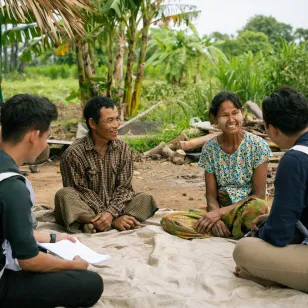
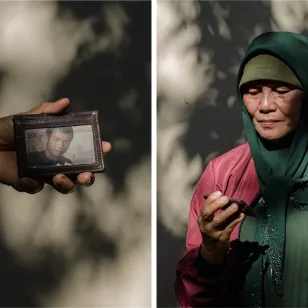
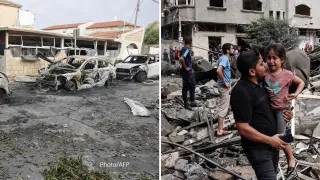
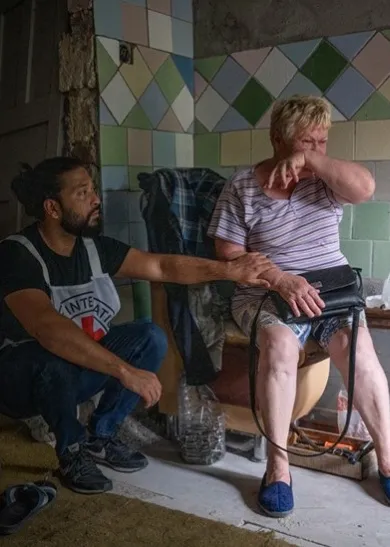
Relatives of people who disappear in connection with armed conflict or other violence suffer immensely as they struggle to find out what became of the missing person. More needs to be done to help the thousands of families of missing persons. On 30 August, the International Day of the Disappeared, the ICRC is highlighting their plight, and explaining what the organization is doing to help.

Event Info

Shida Kartli, Georgia. Traditional Georgian memorial table for Tamar and Elguja.

Where: Worldwide

When: 30.08.2011 - 30.08.2011

What is a missing person?

By "missing person," we generally mean someone whose family has no news of them or someone who has been reported missing (on the basis of reliable information) in connection with an armed conflict – international or non-international – or of internal violence, internal disturbances or any other situation that might require action by a neutral and independent body (see the ICRC publication Missing persons: a handbook for parliamentarians (2009)).

Where is the ICRC working on the missing persons issue?

The ICRC is currently working on this issue in dozens of countries, in all regions, including the following: 

  • Africa: Eritrea, Ethiopia and Senegal. 
  • Asia and the Pacific: East Timor, Kyrgyzstan, Nepal and Sri Lanka. 
  • Europe: Armenia, Azerbaijan, Bosnia & Herzegovina, Croatia, Cyprus, Georgia, the Former Yugoslav Republic of Macedonia, the Russian Federation and Serbia (Kosovo).
  • The Americas: Argentina, Chile, Colombia, Guatemala, Mexico and Peru. 
  • Middle East and North Africa: Iran, Iraq, Israel, Jordan, Kuwait, Lebanon and disappearances relating to the Western Sahara conflict.

The legal framework

The International Convention for the Protection of All Persons from Enforced Disappearance (2006), which entered into force for States Parties in 2010, addresses the five priority areas for action on disappearances that were identified during the International Conference of Governmental and Non-Governmental Experts on missing persons held in Geneva in 2003 at the invitation of the ICRC.

These five areas, which have also been taken up by other international agencies, are:

  1. Prevention of disappearances.
  2. Clarification of the fate of persons unaccounted for.
  3. Information management and the processing of files on persons unaccounted for.
  4. Management of human remains and of information on the dead.
  5. Support for the families of persons unaccounted for.

For full details, please see the ICRC report The missing and their families

As of 17 August 2011, there were only 29 Parties to the Convention and 88 signatories. States have an obligation to account for the missing all around the world. One step towards fulfilling this obligation consists in incorporating in national legislation the provisions of international humanitarian law that relate to missing persons. The ICRC is willing to assist States in this process.

The ICRC recommends that States that have not already done so consult the ICRC's Guiding principles / model law on the missing and  Missing persons: a handbook for parliamentarians.