Health care in Gaza reaches all-time low
15-06-2010 Photo gallery
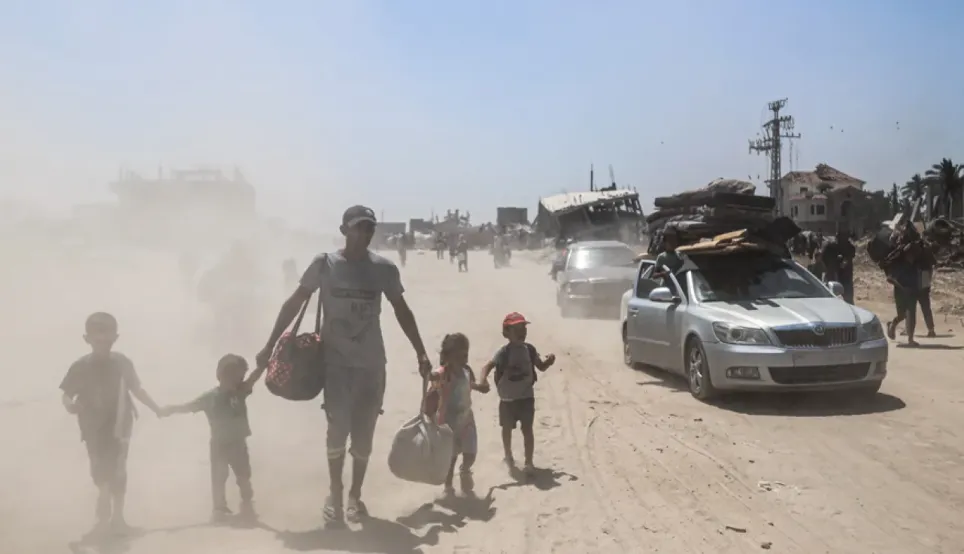
The closure imposed on Gaza three years ago and the effects of Israel's military operation in the winter of 2009 are crippling both industry and agriculture and stifling employment. Today, there are major humanitarian concerns regarding health issues, water and sanitation conditions and the level of unemployment and poverty.
-

- The closure imposed on the Gaza Strip is about to enter its fourth year, choking off any real possibility of economic development. Gazans continue to suffer from unemployment, poverty and warfare, while the quality of Gaza's health care system has reached an all-time low. Today, Gaza's health care system cannot provide the treatment that many patients require.
© ICRC
- The closure imposed on the Gaza Strip is about to enter its fourth year, choking off any real possibility of economic development. Gazans continue to suffer from unemployment, poverty and warfare, while the quality of Gaza's health care system has reached an all-time low. Today, Gaza's health care system cannot provide the treatment that many patients require.
-

- The closure of Gaza has indeed made it extremely difficult to transfer the supplies required for the maintenance of medical equipment. The import through Israel of spare parts for medical equipment is subject to lengthy delays lasting up to several months. Stocks of essential medical supplies have reached an all-time low because of a standstill in cooperation between Palestinian authorities in Ramallah and Gaza. Thus, the health sector has deteriorated and patients suffer from the lack of medicines, medical disposables and functioning equipment. "Shortage of disposable materials has become critical and many times surgeries have to be postponed due to the stock-out," explains Dr Dabhi Skeak, Chief Surgeon at Gaza Shifa Hospital.
© ICRC / C. Goin
- The closure of Gaza has indeed made it extremely difficult to transfer the supplies required for the maintenance of medical equipment. The import through Israel of spare parts for medical equipment is subject to lengthy delays lasting up to several months. Stocks of essential medical supplies have reached an all-time low because of a standstill in cooperation between Palestinian authorities in Ramallah and Gaza. Thus, the health sector has deteriorated and patients suffer from the lack of medicines, medical disposables and functioning equipment. "Shortage of disposable materials has become critical and many times surgeries have to be postponed due to the stock-out," explains Dr Dabhi Skeak, Chief Surgeon at Gaza Shifa Hospital.
-

- Daily power cuts and power fluctuations pose a serious risk to the treatment of patients and to their lives, but they also continue to expose medical equipment to more frequent breakdowns. Hospital laundry services have repeatedly shut down because the machines are either run-down or out of order.
© ICRC / C. Goin
- Daily power cuts and power fluctuations pose a serious risk to the treatment of patients and to their lives, but they also continue to expose medical equipment to more frequent breakdowns. Hospital laundry services have repeatedly shut down because the machines are either run-down or out of order.
-

- Al-Shifa Hospital is the largest medical complex and central hospital of Gaza. At the haemodialysis unit, there are 34 blood and a kidney dialysis machines, and each patient needs three sessions of four-hour kidney dialysis treatment. "Every time the power goes off, the machines stop until the generator starts to work again, this may take a couple of minutes. When it happens, blood stops circulating so power outages are directly affecting patient's lives," said Dr. Shatat, Director of the dialysis department in Al-Shifa Hospital.
© ICRC / Cécilia Goin / il-e-01976H
- Al-Shifa Hospital is the largest medical complex and central hospital of Gaza. At the haemodialysis unit, there are 34 blood and a kidney dialysis machines, and each patient needs three sessions of four-hour kidney dialysis treatment. "Every time the power goes off, the machines stop until the generator starts to work again, this may take a couple of minutes. When it happens, blood stops circulating so power outages are directly affecting patient's lives," said Dr. Shatat, Director of the dialysis department in Al-Shifa Hospital.
-

- Dr. Mohammed Shatat, Director of the dialysis department in Al-Shifa Hospital: “we have dealt with power crisis for five years, but we are having blackouts more frequently these past months. Because of interruption of electricity, all the machines will stop functioning immediately. This leads to blood closts in patients and they can get anaemia very easily. Therefore, we are in need to get medicine to increase the percentage of haemoglobin of patients."
© ICRC / C. Goin
- Dr. Mohammed Shatat, Director of the dialysis department in Al-Shifa Hospital: “we have dealt with power crisis for five years, but we are having blackouts more frequently these past months. Because of interruption of electricity, all the machines will stop functioning immediately. This leads to blood closts in patients and they can get anaemia very easily. Therefore, we are in need to get medicine to increase the percentage of haemoglobin of patients."
-

- Many patients cannot get the health care they need. There is a lack of PKU milk powder for children. This milk protein powder aims to expand the food choices for people with phenylketonuria (PKU) - a metabolic genetic disorder. If phenylalanine builds up in a child's bloodstream, the child will suffer brain damage and become mentally retarded. "Without a change in the current situation, a further decline of the health system is unavoidable, thus putting at risk thousands of patients' treatment and long-term health outlook," said Eileen Daly, the ICRC's health coordinator.
© ICRC
- Many patients cannot get the health care they need. There is a lack of PKU milk powder for children. This milk protein powder aims to expand the food choices for people with phenylketonuria (PKU) - a metabolic genetic disorder. If phenylalanine builds up in a child's bloodstream, the child will suffer brain damage and become mentally retarded. "Without a change in the current situation, a further decline of the health system is unavoidable, thus putting at risk thousands of patients' treatment and long-term health outlook," said Eileen Daly, the ICRC's health coordinator.
-

- At the end of May 2010, 110 of 470 medicines considered essential, such as chemotherapy and haemophilia drugs, were unavailable in Gaza. When chemotherapy is interrupted, the chances of success drop dramatically, even if another painful round of treatment is initiated. Haemophilia patients face life-threatening haemorrhages when compounds such as Factor VIII and IX are not available.
© ICRC / C. Goin
- At the end of May 2010, 110 of 470 medicines considered essential, such as chemotherapy and haemophilia drugs, were unavailable in Gaza. When chemotherapy is interrupted, the chances of success drop dramatically, even if another painful round of treatment is initiated. Haemophilia patients face life-threatening haemorrhages when compounds such as Factor VIII and IX are not available.
-

- Gaza's health care system cannot provide the treatment that many patients require. Of special concern today is the stock-out in many essential drugs and disposable material. More than 110 of the 700 disposable items that should be available are also out of stock. The only way to cope is to re-use such items as ventilator tubes or colostomy bags, even though doing so can lead to infections that endanger patients' lives. "The state of the health-care system in Gaza has never been worse," said Eileen Daly, the ICRC's health coordinator. Unless something changes, things are only going to get even worse. Thousands of patients could go without treatment and the long-term outlook will be increasingly worrisome."
© ICRC
- Gaza's health care system cannot provide the treatment that many patients require. Of special concern today is the stock-out in many essential drugs and disposable material. More than 110 of the 700 disposable items that should be available are also out of stock. The only way to cope is to re-use such items as ventilator tubes or colostomy bags, even though doing so can lead to infections that endanger patients' lives. "The state of the health-care system in Gaza has never been worse," said Eileen Daly, the ICRC's health coordinator. Unless something changes, things are only going to get even worse. Thousands of patients could go without treatment and the long-term outlook will be increasingly worrisome."