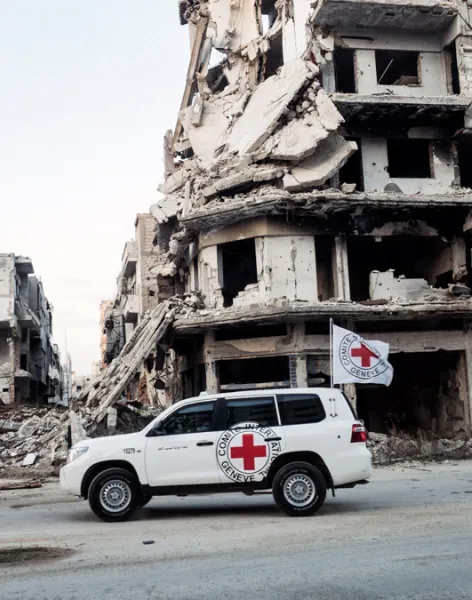
India: ICRC and local Red Cross branches work together
18-02-2011 Photo gallery
Clashes that broke out during the first week of January between the Garo and Rabha communities in the north-eastern Indian states of Assam and Meghalaya caused the displacement of approximately 50,000 civilians and the deaths of at least 12 people. The Assam and Meghalaya branches of the Indian Red Cross teamed up with the ICRC to provide emergency aid.
-

-
During the first week of January 2011, ethnic clashes between the Garo and Rabha communities in the north-eastern Indian states of Assam and Meghalaya caused the displacement of approximately 50,000 civilians and the deaths of at least 12 people. Around 10,000 people lost all their belongings when their houses, such as the one shown here, were reduced to ashes.
© ICRC / D. Etter / v-p-in-e-00060
-
During the first week of January 2011, ethnic clashes between the Garo and Rabha communities in the north-eastern Indian states of Assam and Meghalaya caused the displacement of approximately 50,000 civilians and the deaths of at least 12 people. Around 10,000 people lost all their belongings when their houses, such as the one shown here, were reduced to ashes.
-

-
In times of disaster, women and children are often vulnerable. Most of the time, they seek refuge in safer areas such as nearby towns or villages. However, in some cases, they stay behind to look after the few belongings that were not lost or destroyed. In this picture, a girl of the Garo tribe stands in what remains of her family house in Goalpara District, Assam.
© ICRC / D. Etter / v-p-in-e-00061
-
In times of disaster, women and children are often vulnerable. Most of the time, they seek refuge in safer areas such as nearby towns or villages. However, in some cases, they stay behind to look after the few belongings that were not lost or destroyed. In this picture, a girl of the Garo tribe stands in what remains of her family house in Goalpara District, Assam.
-

-
An abandoned cow in front of a destroyed house in the Garo Hills District of the Indian state of Meghalaya. Crops and livestock are sometimes left behind when their owners flee to safer areas. As a result, rural livelihoods are disrupted and vital income is lost.
© ICRC / D. Etter / v-p-in-e-00073
-
An abandoned cow in front of a destroyed house in the Garo Hills District of the Indian state of Meghalaya. Crops and livestock are sometimes left behind when their owners flee to safer areas. As a result, rural livelihoods are disrupted and vital income is lost.
-

-
Displaced women of the Rabha community prepare food in a makeshift kitchen in the playground of a school that now serves as a camp for displaced people in Goalpara, Assam. Kitchens such as this one are used by everyone in the camp and lack even the most basic supplies. Proper habits of hygiene and cleanliness need to be encouraged and strictly observed to prevent disease from spreading throughout the camp.
© ICRC / D. Etter / v-p-in-e-00062
-
Displaced women of the Rabha community prepare food in a makeshift kitchen in the playground of a school that now serves as a camp for displaced people in Goalpara, Assam. Kitchens such as this one are used by everyone in the camp and lack even the most basic supplies. Proper habits of hygiene and cleanliness need to be encouraged and strictly observed to prevent disease from spreading throughout the camp.
-

-
Because no instruction will take place in this schoolhouse while it is occupied by displaced people, the children and teachers have also become victims of the violence.
© ICRC / D. Etter / v-p-in-e-00063
-
Because no instruction will take place in this schoolhouse while it is occupied by displaced people, the children and teachers have also become victims of the violence.
-

-
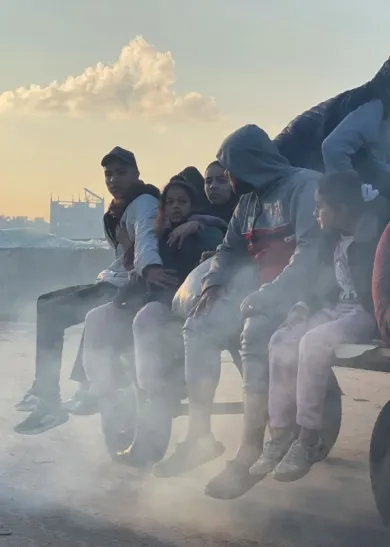
While displaced women and children find safety and shelter at the local school, in many cases they have to endure separation from their husbands and fathers who have stayed behind to protect the family property. The men sometimes travel great distances during the day to look after their crops and livestock so that they still earn a living despite having been displaced.
© ICRC / D. Etter / v-p-in-e-00070
-
While displaced women and children find safety and shelter at the local school, in many cases they have to endure separation from their husbands and fathers who have stayed behind to protect the family property. The men sometimes travel great distances during the day to look after their crops and livestock so that they still earn a living despite having been displaced.
-

-
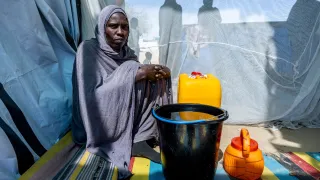
"Displaced communities found shelter in transitory makeshift camps, where they are now facing a difficult situation due to a lack of suitable facilities and poor hygiene conditions," said Renuka Devi Barkataki, the chairman of the Assam state branch of the Indian Red Cross. A displaced woman of the Garo community awaits help in a camp.
© ICRC / D. Etter / v-p-in-e-00064
-
"Displaced communities found shelter in transitory makeshift camps, where they are now facing a difficult situation due to a lack of suitable facilities and poor hygiene conditions," said Renuka Devi Barkataki, the chairman of the Assam state branch of the Indian Red Cross. A displaced woman of the Garo community awaits help in a camp.
-

-
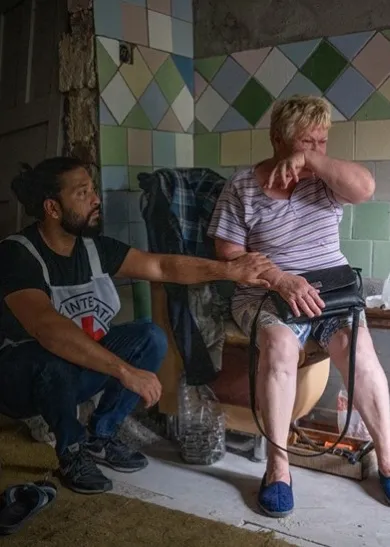
As aid was being distributed, staff from the ICRC and the Indian Red Cross also provided counselling and other support to help those worst affected overcome their trauma. The emotional suffering caused by disasters and violence can be eased with proper support from the community.
© ICRC / D. Etter / v-p-in-e-00069
-
As aid was being distributed, staff from the ICRC and the Indian Red Cross also provided counselling and other support to help those worst affected overcome their trauma. The emotional suffering caused by disasters and violence can be eased with proper support from the community.
-

-
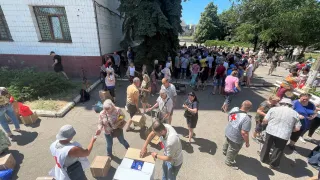
"We are working in close cooperation with the Indian Red Cross, so as to respond rapidly and effectively to the needs faced by these communities," said François Stamm, who heads the ICRC regional delegation in New Delhi. "Our joint response has enabled us to provide prompt assistance for the people who have been hardest hit." Red Cross volunteers brought aid to those who needed it most, even if that meant working late hours in difficult conditions.
© ICRC / D. Etter / v-p-in-e-00065
-
"We are working in close cooperation with the Indian Red Cross, so as to respond rapidly and effectively to the needs faced by these communities," said François Stamm, who heads the ICRC regional delegation in New Delhi. "Our joint response has enabled us to provide prompt assistance for the people who have been hardest hit." Red Cross volunteers brought aid to those who needed it most, even if that meant working late hours in difficult conditions.
-

-
A young woman of the Rabha community carrying plastic sheeting that she will use to protect her improvised shelter from rain and dust.
© ICRC / D. Etter / v-p-in-e-00066
-
A young woman of the Rabha community carrying plastic sheeting that she will use to protect her improvised shelter from rain and dust.
-

-
Kitchen sets, blankets, buckets, jerrycans, plastic sheeting, mugs, bath and laundry soaps, and other items were distributed. Local Red Cross volunteers also provided counselling and other support to help those worst affected overcome their trauma.
© ICRC / D. Etter / v-p-in-e-00067
-
Kitchen sets, blankets, buckets, jerrycans, plastic sheeting, mugs, bath and laundry soaps, and other items were distributed. Local Red Cross volunteers also provided counselling and other support to help those worst affected overcome their trauma.
-

-
Even though it may be some time before these children can go to school again, their families are now better prepared to cope with the loss of all their belongings. With help from the ICRC and the Assam and Meghalaya branches of the Indian Red Cross, they should be able to return to their villages and build new homes.
© ICRC / D. Etter / v-p-in-e-00068
-
Even though it may be some time before these children can go to school again, their families are now better prepared to cope with the loss of all their belongings. With help from the ICRC and the Assam and Meghalaya branches of the Indian Red Cross, they should be able to return to their villages and build new homes.