• Send page
  • Print page

The ICRC in Nigeria

05-12-2011 Overview

In Nigeria, the ICRC protects and assists people affected by violence, particularly in the Niger Delta and certain states in the north that are prone to inter-communal and political violence. It promotes international humanitarian law and other rules that protect people in situations of violence. Finally, the ICRC supports the emergency-response work of the Nigerian Red Cross.

Basic health care

In 2010, the ICRC stepped up its operations in violence-prone regions of Nigeria by establishing a presence in the northern state of Kano and opening a sub-delegation at Port Harcourt in southern Nigeria's Niger Delta.

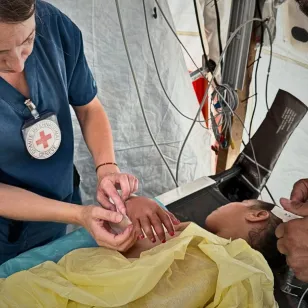
The Niger Delta has suffered armed violence in the past and many of its creeks and remote areas have no basic health care. The ICRC currently operates a mobile boat-clinic, which transports ICRC health personnel, staff of the Ministry of Health and Nigerian Red Cross volunteers to these difficult-to-reach communities in the creeks. The health teams carry out basic immunization and vaccination for women of childbearing age and for children.

Since 2011, the ICRC has also started to work closely with various government health facilities in violence-prone areas, providing the supplies needed to treat casualties. Discussions are in progress about the possibility of the ICRC providing specialized training to boost the surgical skills of medical staff.

Support for the Nigerian Red Cross

The ICRC is helping the Nigerian Red Cross to increase its emergency-response capability, training and equipping volunteers to provide first aid and water during emergencies. Together with the National Society, the ICRC also provides first aid training to communities prone to violence in northern states and the Niger Delta creeks. This cooperation has enabled the ICRC and the Nigerian Red Cross to help people in northern states who were had to flee their homes during and after the April 2011 post-election violence.

Promotion of IHL

Working closely with the authorities, the armed forces, the police, civil society and the Economic Community of West African States (ECOWAS), the ICRC promotes international humanitarian law and its national implementation, especially as regards weapon control. In particular, it supports the integration of IHL rules into the training and operations of the Nigerian armed forces and the ECOWAS Standby Force.

Finally …

The ICRC was active in Nigeria during the 1967-1970 civil war. It established a delegation in Lagos in 1988 and relocated to Abuja in 2003. The organization presently has 13 expatriates and 60 local employees working permanently in the country.


Photos

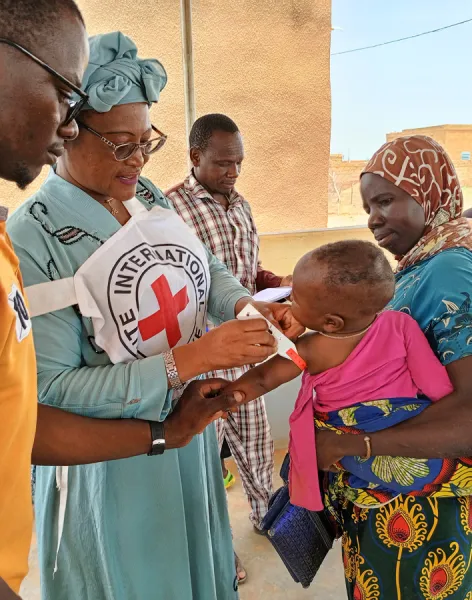
Tangbolosunju, Niger Delta, Nigeria. Children like these are the main beneficiaries of the ICRC health programme in the Niger Delta. 

Tangbolosunju, Niger Delta, Nigeria. Children like these are the main beneficiaries of the ICRC health programme in the Niger Delta.
© ICRC / R. Qureshi

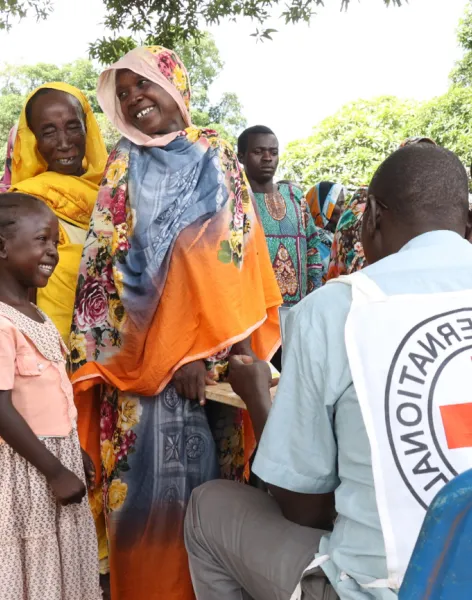
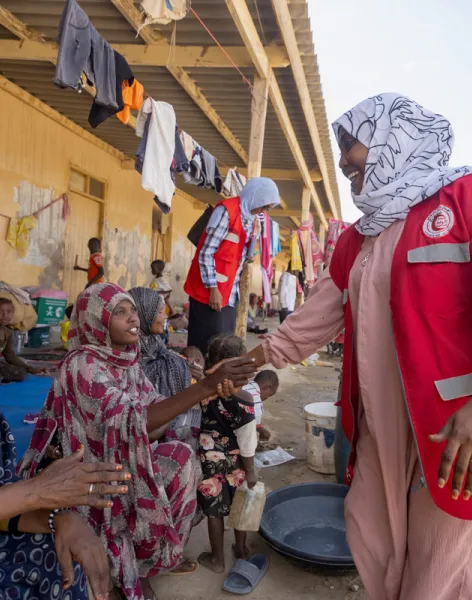
Bauchi, Nigeria. An ICRC delegate and a Nigerian Red Cross volunteer talk to a group of displaced persons. 

Bauchi, Nigeria. An ICRC delegate and a Nigerian Red Cross volunteer talk to a group of displaced persons.
© Nigerian Red Cross Society

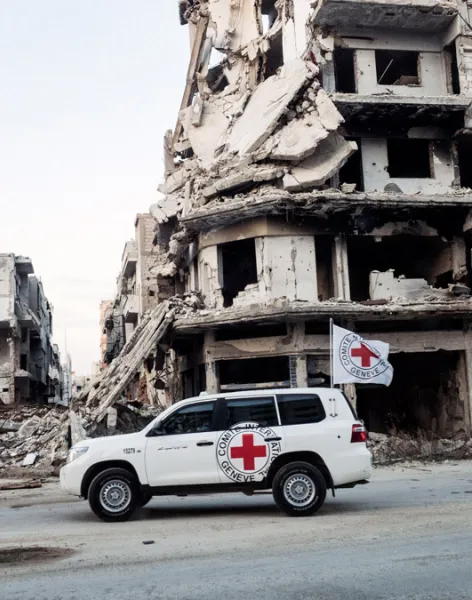
Nigeria. An ICRC field officer explains the basic rules of IHL to Nigerian Army personnel. 

Nigeria. An ICRC field officer explains the basic rules of IHL to Nigerian Army personnel.
© ICRC / Maria Olu-Egbuniwe