Cameroon: the struggle to access safe drinking water in Kerawa and Kolofata

On 22 March, the world celebrated World Water Day, a day to discuss a vital resource. However, in Kolofata and Kerawa in Cameroonʼs Far North Region, celebrating water is a luxury no one can afford.
Under the relentless sun in the savannah of Kolofata in the Mayo-Sava department, Aïssatou, mother of five, recalls the darkest moments of the water crisis in her village. She recounts them as if she were still reliving them. She is holding a nearly empty yellow container close to her chest. Her three-year-old son, too weak to walk, sits in the shade of a neem tree, one of the rare trees that can withstand the extreme heat that grips the region between March and April. “I used to walk more than six kilometres without finding a single source of drinking water. Sometimes I venture into a dry riverbed, hoping to find a little muddy water between the cracks in the earth. Around me, other women dig in silence. Here, every drop of water is wrested from drought and danger. But all these images belong to the past.”

Water, a scarce resource
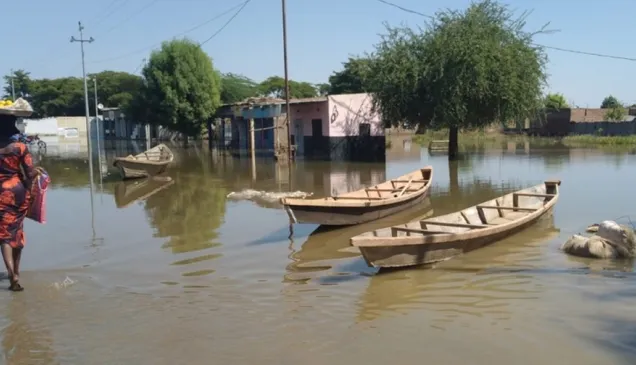
In Kerawa and Kolofata, in Cameroonʼs Far North Region, access to water has become a daily struggle. Under a scorching sun (43°C in the shade), rivers have disappeared, backwaters have turned to dust or sandbanks, and wells have dried up.
Families have no choice but to travel long distances, often for several hours, to find water that is scarce and not safe to drink.
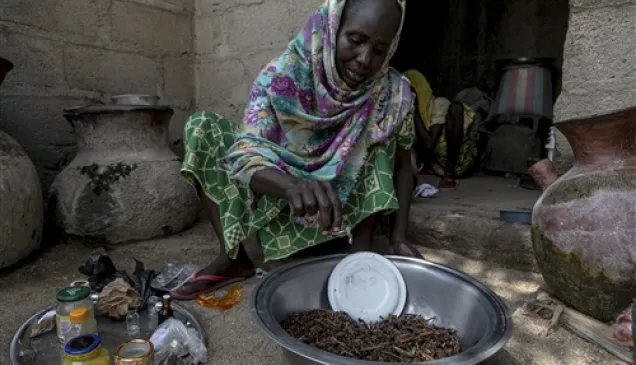
“I remember last year, we often went to draw water from a backwater. Look at a woman my age, Iʼm 70, sick and tired. I would spend a whole day there, waiting in line, and when I managed to get a container, Iʼd bring the water back home. One part was used for washing up and the other for laundry. We kept the rest in barrels. We donʼt pour out dirty water. We leave it to stand, to allow impurities to settle, and then we take out the small amount that has become clear, which will be used for drinking.”, confides Panta Magne, her eyes weary and her head covered by her hijab.
However, drought is only one part of the ordeal. In this commune of 631 square kilometres, 60 per cent of the population are internally displaced persons. Bordering on Nigeria, Kolofata is affected by insecurity. As a result, fetching water involves major risks.

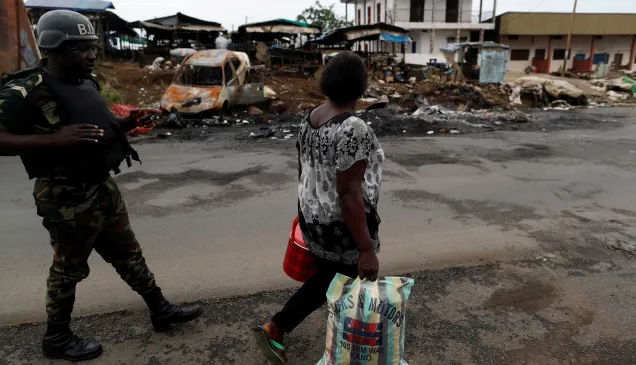
In this context of insecurity, women and children, who are on the front line of water collection, become easy targets. Kidnappings, violence, threats: the search for water sometimes turns into a fight for survival.
“These people have very different strategies. They can easily infiltrate themselves among us. You donʼt know whoʼs who. So what do we do when the water source is far away?
We wait for the military or the vigilance committees to pass by before going to draw water. But I assure you, if there are no soldiers, we canʼt try to draw water. They would take you.”, says a supply teacher, himself an internally displaced person.
He confides that on several occasions, armed men kidnapped women, men and children in his former village, Waouly, before setting dozens of houses on fire. Today, the village, emptied of its population, no longer exists. A few gutted houses appear here and there, their blackened walls still standing despite time and violence. There is complete silence. In the distance, soldiers on foot patrol can be seen, the only signs of human presence in this abandoned landscape.
The ICRCʼs response
For displaced persons, the situation is even more critical. On the roads of exile, without access to drinking water, some families have had to consume stagnant water, with serious consequences for childrenʼs health. Thirst, fatigue and fear are intertwined in a daily life marked by precariousness.
At the Kerawa integrated health centre, nursing assistant Keda Emmanuel laments the recurrence of water-borne diseases in the area. “Weʼve had cholera hitting the population here for some time. There are also gastroenteric diseases and typhoid fever. Itʼs when you live in communities like ours that you realize how important drinking water is,” he sighs.
Faced with this emergency, the ICRC is providing a humanitarian response. Boreholes have been drilled, water points rehabilitated and supply systems installed to bring this vital resource closer to communities.
“The Kolofata and Kerawa areas are particularly affected by the conflict. These are also areas where there are very large numbers of displaced people. This overpopulation exacerbates the pressure on infrastructures that are already saturated and ill-equipped to meet the scale of needs. The ICRCʼs action consisted in restoring the boreholes that were out of service. We have also provided people with small-scale water supply systems equipped with solar panels. They now have permanent access to water,” sums up Oliver Muvunyi, Head of the ICRC Maroua sub-delegation.

A relief for the local population. That day, 68-year-old Aladji Daoud, a former nursery worker, came in for supplies. On his tricycle, he loaded three 100-litre drums of water.
“Itʼs a miracle for us,” he exclaims, smiling broadly. “Before, to water my nursery, I used to go from Kolofata to Amchidé, 20 kilometres from here, to draw water. Imagine what itʼs like with insecurity. Going to Gansé is just as far. We used to dig holes about 30 centimetres deep in Mayo. And then when weʼd dug holes like that, the water came out, and that water came with mud. We would draw it and let it stand before drinking it. Unfortunately, it would make us sick. But with this new borehole...phew! We can finally breathe.”
In the villages of Mayo-Sava, water does not just flow, it has to be sought, sometimes at great personal risk. Climate pressure, combined with persistent insecurity, is making populations permanently vulnerable.