Case studies from Somalia and Pakistan
These case studies show how different healthcare facilities have developed, implemented and evaluated their own interventions. It will provide you with ideas that could be used in your healthcare facilities and some key learning points from each location.
SOMALIA - The Kismayo Hospital
Background
Somalia has been in turmoil for decades and as a result people carry weapons (knives and guns) for protection themselves, their families and their personal possessions
Seeing a weapon is a common occurrence everywhere in the country.
The impact of weapons in healthcare settings is well documented and causes widespread disruption to healthcare services when an incident involving a weapon occurs. They are often used to intimidate staff to ensure their friends and relatives are treated first. Patients have been killed in hospitals by rival groups and gangs and honour killings have also been documented.
The intervention
The team began their work in 2017 by developing and implementing a pilot project at Kismayo hospital in XXX. It was realised early on that communicating a message of no weapons allowed would not be sufficient on it’s own and to ensure that people using the hospital knew of the ban, it would be necessary to improve security in and out of the hospital
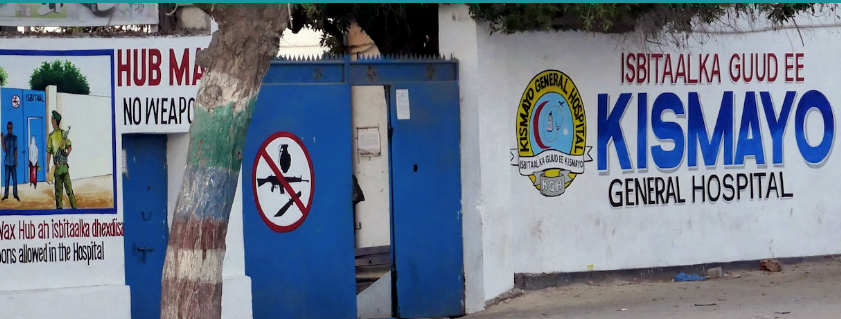
Figures 1 and 2 Community painting murals on the side of Kismayo hospital
Therefore, the number of entrances were cut to ensure that the hospital was easier to secure in terms of people entering and exiting the facility. It was also realised early on that in Somalia people often felt that they needed their weapons to ensure their safety on the way to the hospital. Leaving the weapon at home was often not an option. Therefore, it was decided that a secure box would be placed at the entrance to the hospital so that people could leave their weapons securely and safely. People were given tokens so that they could retrieve the correct weapon on leaving the hospital.
The project also engaged the local community to paint large murals on the perimeter of the hospital following discussions on the messages. Somalia has an oral/pictorial rather than written culture and these bright and informative signs displaying the no guns signs became a talking point in the local community.
The impact of the intervention
By increasing security and effective screening as well as the murals there was a significant decrease in the number of civilians entering the hospital. Many civilians now surrender their weapon without being asked. This has had a positive effect on patient care with less incidents and close downs as well as reducing intimidation of healthcare staff.
Unfortunately, this has not worked as well with the army, armed groups and VIP’s. The security forces fear insurgents will target them if they know they have no weapons and VIP’s feel they need security wherever they go. In addition, security guards doesn’t have the confidence to ask them to surrender their weapon. The team have on-going discussions with these groups about leaving, hiding or locking the weapons.
KEY LEARNING
Developing strong alliance with local actors, members of the healthcare centre and the ICRC is critical when negotiating with weapon bearers.
Explaining the real negative impact of weapon bearers actions on local populations can be critical in getting them to change their attitudes, behaviours and actions.
Video on Facebook by BBC/ Transcription below:
Cisbitaalka Kismaanyo waxa lagu kordhiyay sawiro farshaxan ah oo tilmaamaya qaybaha caafimaadka kala duwan iyo amaanka muuqaalkan waxa diyaarisay hay’adda ICRC. (Kismayo Hospital has been added with artistic paintings portraying various health and safety issues. The video was compiled by the ICRC.)
(Mohamed dolma Abdi) – Before, it was difficult since people came to the hospital with weapons and sometimes it lead to contention and fights. But now the situation is better, the police give out their weapons at the gate. It gets difficult sometimes when we have large groups of police, but regardless we have a box where we store the weapons. They prefer leaving the weapons with someone they trust, sometimes even their neighbor.
(Hussein Sheikh Kassim) – The health care and Health Care in Danger (HCID) messages painted on the perimeter of the hospital wall will educate the public. Years before, anyone and everyone used to enter the hospital with their weapons, sleep in the hospital with their weapons and they used to be surprised if told not to do so. After a lot of education and creating awareness, 80% out of 100% people leave their weapons at the gate.
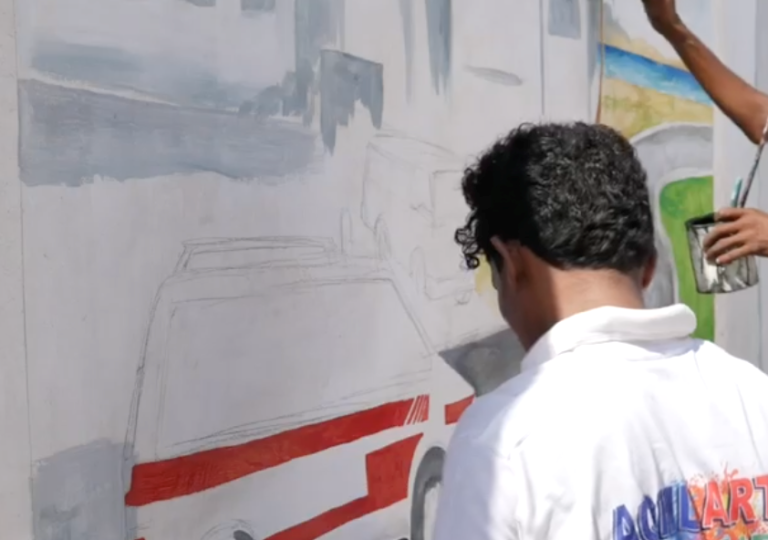
(Salman Osman Shariff) – The art comes from the mind, heart and hands. People will appreciate the artwork afterwards. At on the onset of the artwork, we planned our programme on how to go about the project. After the first and second day, people who were referred to the hospital especially mothers when they saw the message on breastfeeding – they were happy. Every Illustration we painted was conveying a specific message. The messages inform of pictures will stick in the mind of mothers as compared to awareness which is done sometimes. People were inquisitive on artwork, and suggested it would be more impactful if the same could have been done around the whole town.
(Abdiweli Farah Abdulle) – Creating awareness with visuals or pictures is something Kismayo town ha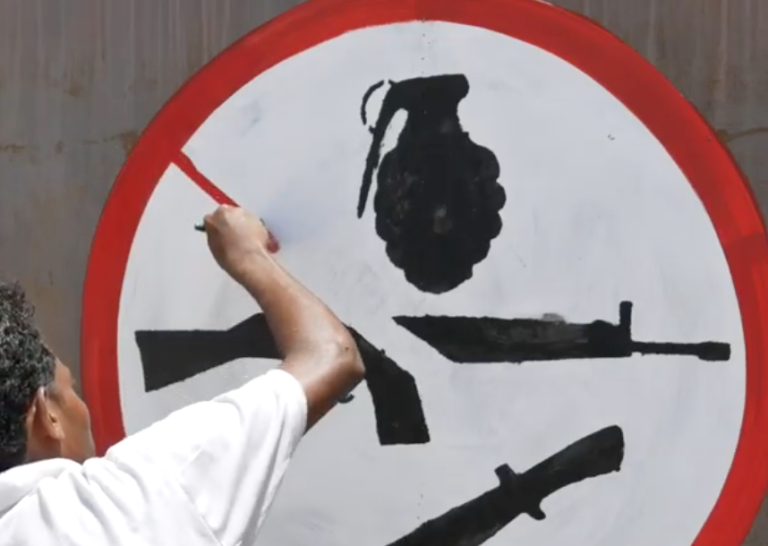 s been missing. Somalis see and hear, seeing artwork or drawings is a way of awareness.
(Mohamed Mohamed Igal) – It makes it easy for the public to see the messages on the wall rather than waiting for the same to be broadcasted on the radios and TV. I would also recommend to do the same to be replicated on social amenities like football and basketball grounds. This is where people visit a lot be it mothers, fathers and children.
PAKISTAN: The Lady Reading Hospital in Peshawar
Practical approaches to reducing violence and the infiltration of weapons in the lady reading hospital in Peshawar, Pakistan
Background
Established in 1927 it is the largest health care facility in Khyber Pakhtunkhawa Province. It has 1700 beds, 1350 doctors, 33 departments with one of the biggest trauma centres in Pakistan. The Emergency Department receives about 3000 to 4000 patients per day. It offers free medical treatment in emergencies.
It is located in a dense inner-city location and is adjacent to a military installation.
There is a culture of carrying weapons in this part of Pakistan and this has meant that there has been a history of carrying weapons into the hospital.
This has had the following impacts on healthcare:
- There have been incidents involving violence against healthcare workers
- Incidences of patients being targeted in the facility resulting in injuries and deaths
- Hinderance in provision of health care due to disruption caused by violence
- Healthcare staff resorting to temporary suspension of services to protest violent events targeting health care and thus further impacting access to healthcare services
- Psychological consequences/staff feeling unsafe and worried about their safety
The program
In 2017 a joint programme was developed by the hospital and the HCiD programme to reduce violence against healthcare workers. A key part of the overall programme was to reduce the number of weapons entering the hospital.
This work included:
- A hospital security survey that identified key risks associated with the physical structure of the hospital
- Research on violence against health care workers in the hospital to determine the types of incidents and who committed them.
- “De-escalation & managing violence in health care settings” training took place to give staff the skills and expertise to reduce the number and severity of incidents.
- A media campaign that emphasised the impact of violence on healthcare and disseminated
- Improving security measures and SOPs within the hospital that helped to secure a stricter implementation of the “No Weapons Policy
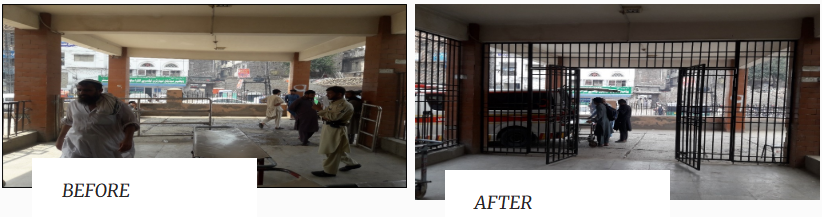
Gates were built at the main entrances and exits to ensure that searchers of weapons could take place effectively allowing a much stricter implementation of the “No Weapons” policy.
The gates also allowed the control of numbers entering the hospital which improved the ability of the hospital to deal with major emergencies when the hospital would normally be overwhelmed by patients seeking treatment.
Impact of the programme
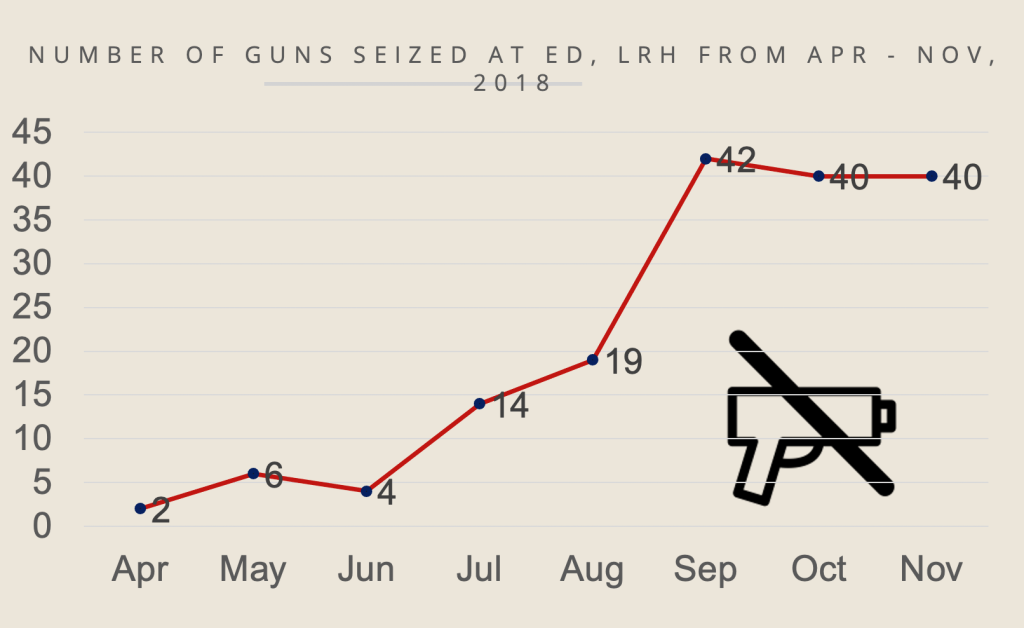
The Impact of this intervention was that the number of guns seized at the entrances to the hospital went from two to forty within a six months period.
Recommendations:
It is important to explain why you are implementing the increased security policies and what benefits patients and staff are likely to gain from extra security measures.
It is critical that you train security staff so that they are fully aware of the no weapons policy relevant SOPs, periodic drills designated visiting hours and the one-attendant policy. By having security staff properly trained they will be able to deal with difficult situations sensitively but firmly with everyone entering the hospital with a weapon.
Improving the waiting areas including increased lighting, more seating and information will reduce frustration, anger and violence towards health care workers.