Mali: Anderamboukane, a once-thriving town desolated by armed violence

The town of Anderamboukane (Ander for short) is located 94 km south-east of Menaka, Mali, near the border with Niger, at a bend in the Assakaraye Valley where the riverbed widens in rainy season to a lake, its majestic green set off against the yellow-brown backdrop of the dunes. Ander is known for its striking beauty and for periodically hosting the Tamadacht cultural festival. But the arrival of armed violence in recent years has cut the town off from its surroundings and left its inhabitants struggling to survive amid the desolation.
Ahmad* agreed to tell the International Committee of the Red Cross (ICRC) about the difficulties faced by his community, which no humanitarian organization has been able to reach since 2022.
Staying put, despite it all
We met Ahmad while he was in Menaka visiting family. He is 58 years old, has 12 children and lives on a farm in Ander.
“There’s almost nothing left in Ander: medicine, water, food … everything’s running out,” he began.
“When the violence escalated in 2023, we all fled. Like many people, I travelled with my family to Menaka. Others went to Kidal, or across the border to Niger. With only donkeys for transport, it took us days to get to Menaka, and once we arrived, we faced another problem: all the camps for displaced people were full. Thankfully, a friend took us in and let us stay in his house.
“Once my family was settled in Menaka, I returned to Ander with other heads of household. We had no choice – our homes, our fields, everything was there. At least we can rest easier knowing that our families are safe in Menaka.
“In Ander, the radio is our only link to the outside world. The telephone lines have been cut, so we communicate with our families mainly by sending messages with people traveling back and forth to Menaka.”
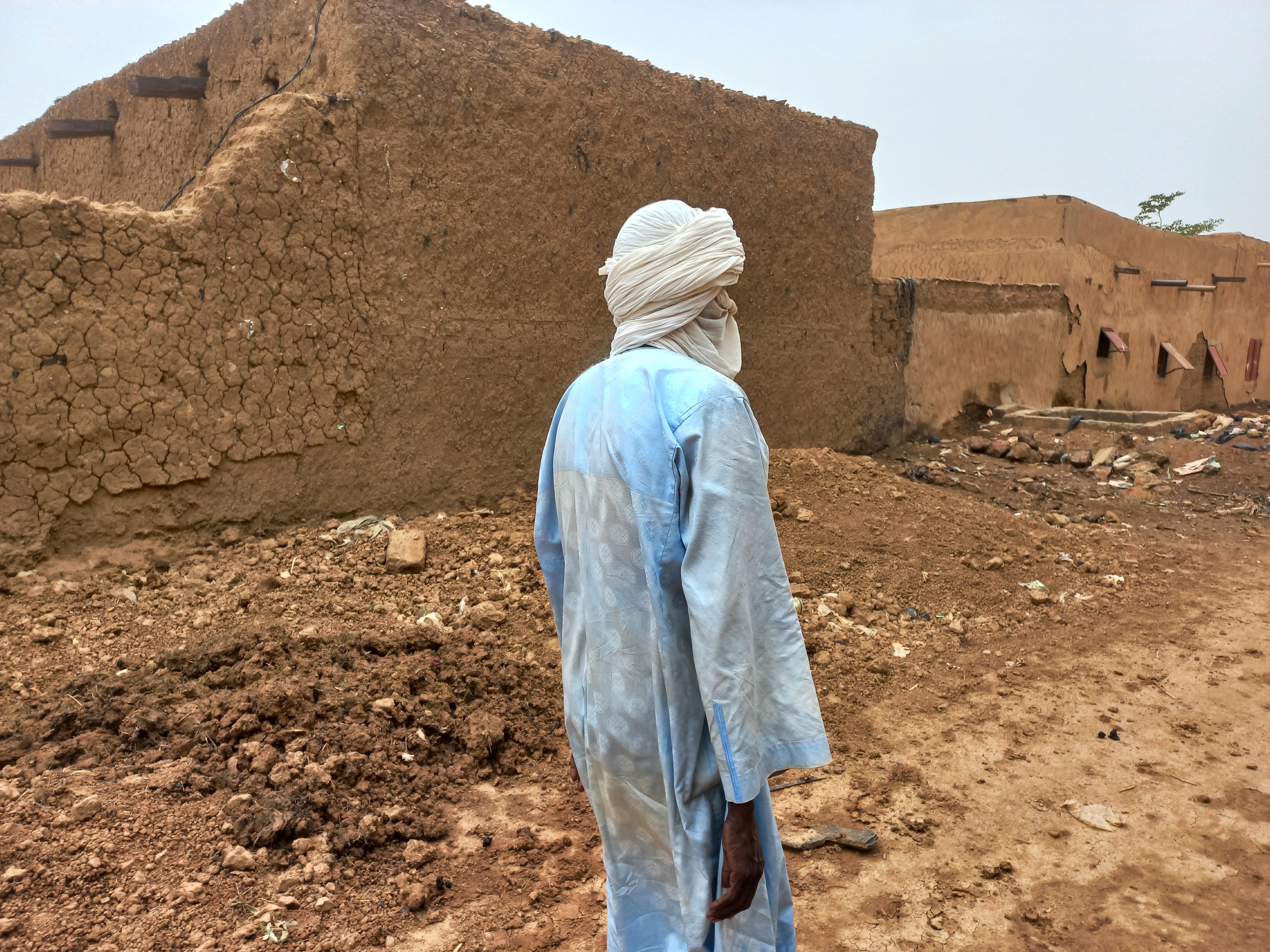
Ahmad walks through the city of Ménaka, where his family has relocated, to take care of a few errands.
Photo credit: Almaimoune Ag Mahamadou
Farming and livestock raising in decline
"Before, we could farm all year round: millet, corn and sorghum, beans and other legumes, watermelon and other fruits. The harvests were good enough that we could supply not only the local market, but also the villages along the border with Niger.
"In 2023, everything changed. As the clashes intensified, we could safely farm only a fraction of the land. The restrictions on movement meant we lost access to workers and good quality seed.
"Now, everything we manage to grow, we eat. And when we need money, we have to sell part of the harvest for next to nothing – just to get the basics. For example, last year my wife fell ill. I had to sell a 100 kg sack of millet to pay for her treatment.
“Even if we could grow crops as before, what would we do with the harvest, without markets and access to trade routes?
“Livestock raising has become a distant memory. There are no animals left. When people fled amid the chaos of the fighting, many families lost their flocks to theft, illness and the lack of water and pastureland. My animals scattered, and I never found them again. Only a few families still have a few sheep or goats. These families are our source of milk, and when they slaughter an animal, they share the meat with us. In return, we share our grains with them.”
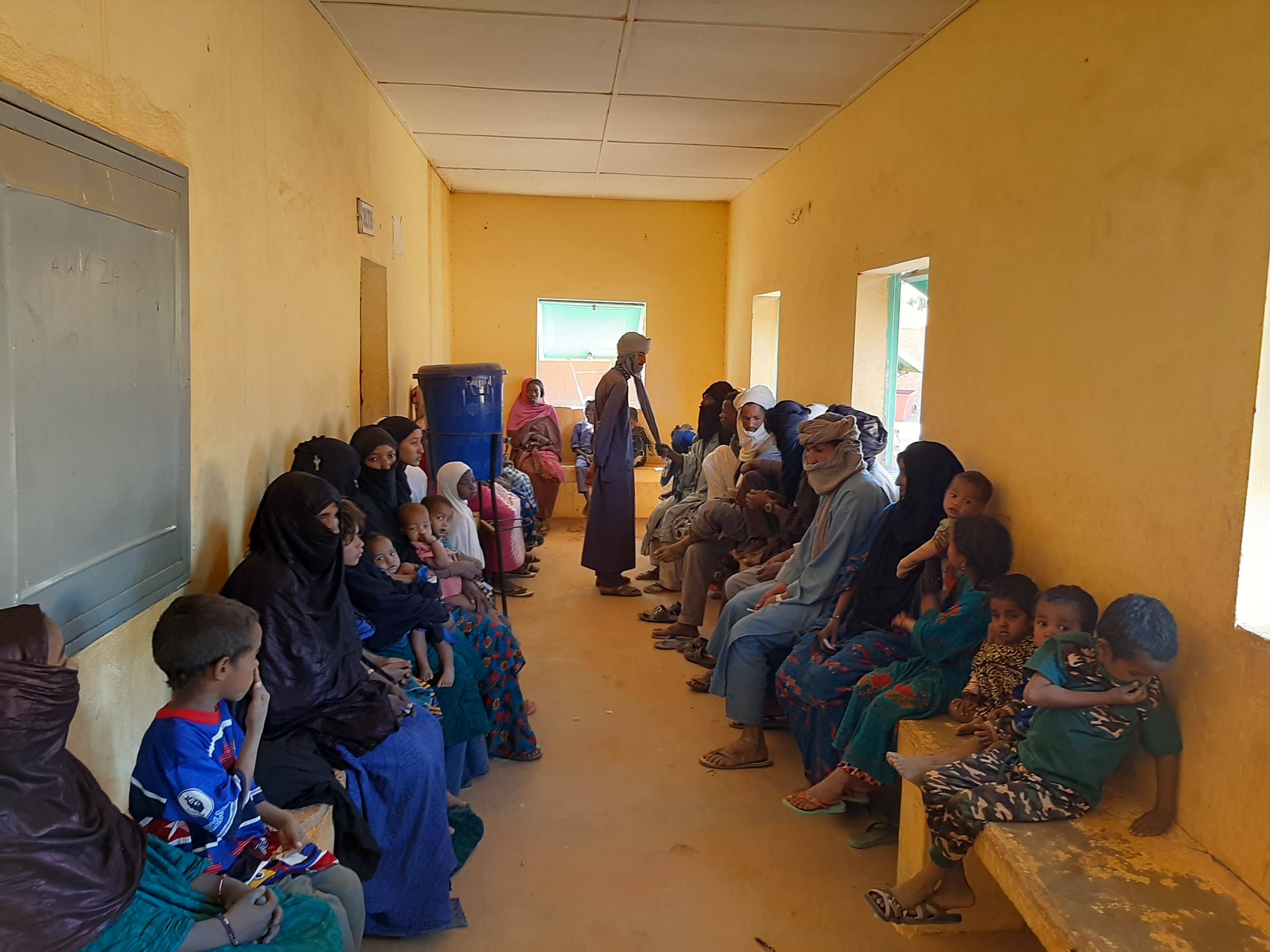
An old photo of the Anderamboukane CSCOM. It was very busy and received support from the ICRC in the form of medicines, consumables and stipends for the health staff.
Photo credit: Sidi B. Diarra
Climate ups and downs: fields flooding, lake drying up, desert advancing
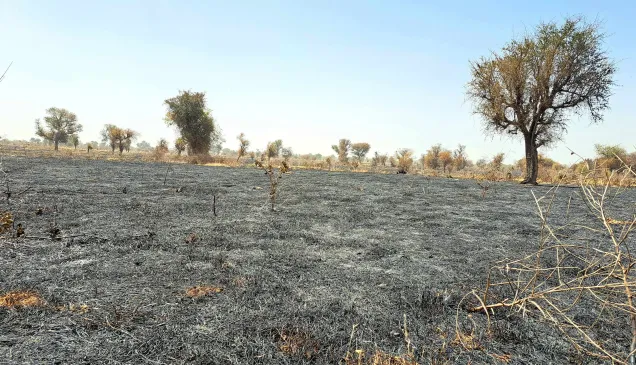
“Last year, more rain fell than the ground could absorb, flooding our fields. This year the lake is full but there hasn’t been any flooding yet. Will the lake spill over or dry up? No one knows. It never used to dry up: it was full of fish year-round, fish that we would sell to neighbouring villages. But lately, in the dry season it’s just a sandy riverbed and there are hardly any fish left. Now we have to dig pools right on the edge of the dried-up riverbed. Our boreholes no longer work. Even drinking water has become scarce.”
No health centre
“Ander used to have a community health centre where we could go for all our ailments. But in 2023 it moved to Menaka because of the escalation in the conflict. When someone falls ill, we use traditional medicine, since modern medicine is no longer available. If their condition worsens, we transport them urgently to the closest health centre, in Menaka, in a mule-drawn cart, or on a motorbike for those who can afford it. But the long, bumpy ride is risky.”
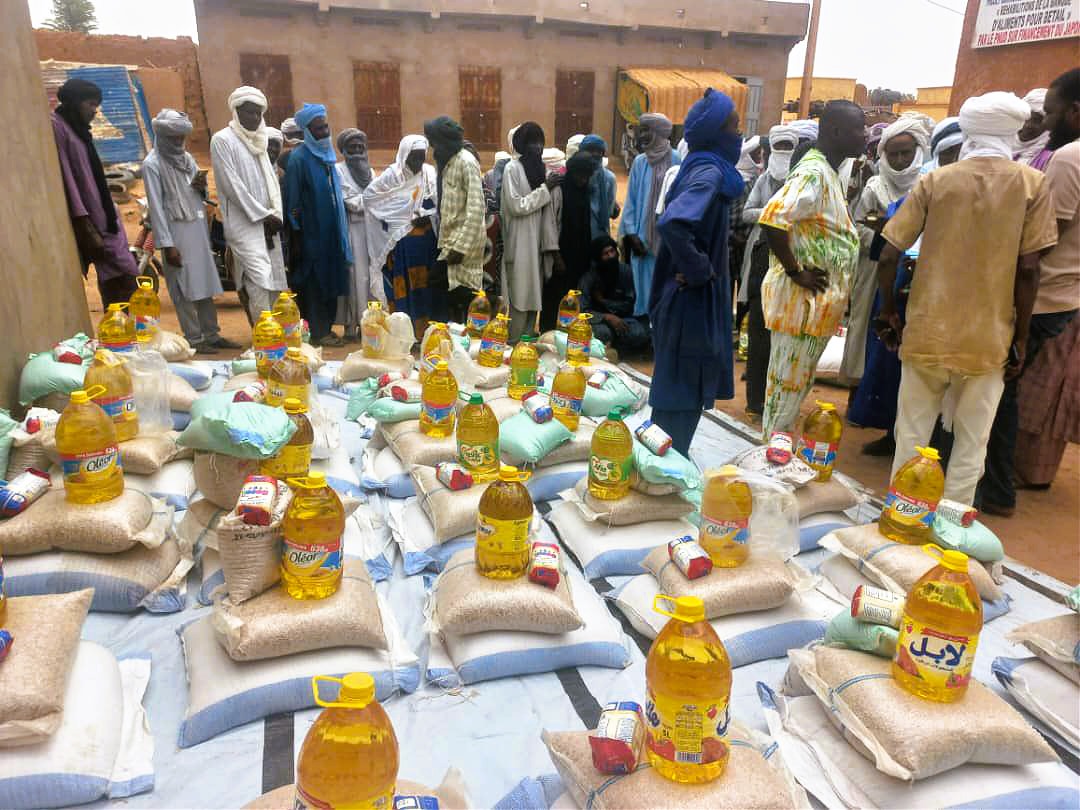
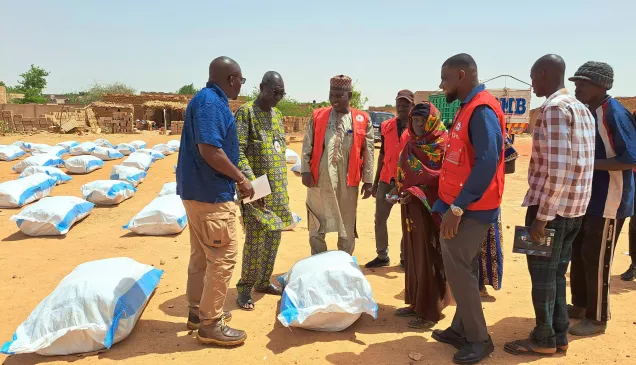
To support agricultural production and help combat food insecurity, the ICRC distributed seeds and food rations to farmers in Ménaka and Ander.
Photo credit: Almaimoune Ag Mahamadou
ICRC – for years one of the only organizations working in Ander
Until 2022, the ICRC was one of very few organizations permitted to carry out its humanitarian work in Ander, helping family members get back in touch, providing medicine and medical supplies to the health centre, vaccinating livestock, distributing food, etc.
Unfortunately, the escalating violence forced the ICRC and other organizations to suspend their work around Ander. The humanitarian situation was precarious then and is growing increasing dire.
“More and more people are arriving from all around the Menaka Region. They are struggling to meet many of their essential needs, particularly getting reliable access to food,” explains Ghislain Fernand Ngono Oyono, the head of the ICRC’s office in Menaka. “It’s a challenge for us every day to try to help everyone who needs it, given our limited resources and the constraints on what we are able to do in such a volatile environment.”
Despite these difficulties, the ICRC is finding other ways in line with its mandate to ensure that the people in and around Menaka are protected and get assistance to the extent possible. In July 2025, the ICRC gave food (rice, beans, oil and salt) and seed for millet and beans to 120 farming families who had been displaced around the Menaka Region. That gives Ahmad and the other families the peace of mind of knowing they will not have to dip too heavily into their harvests for the coming seasons.
*Not his real name
The ICRC has been working in Menaka since 2014. In the region we: