Treatment of civilians in Colombia during 2025

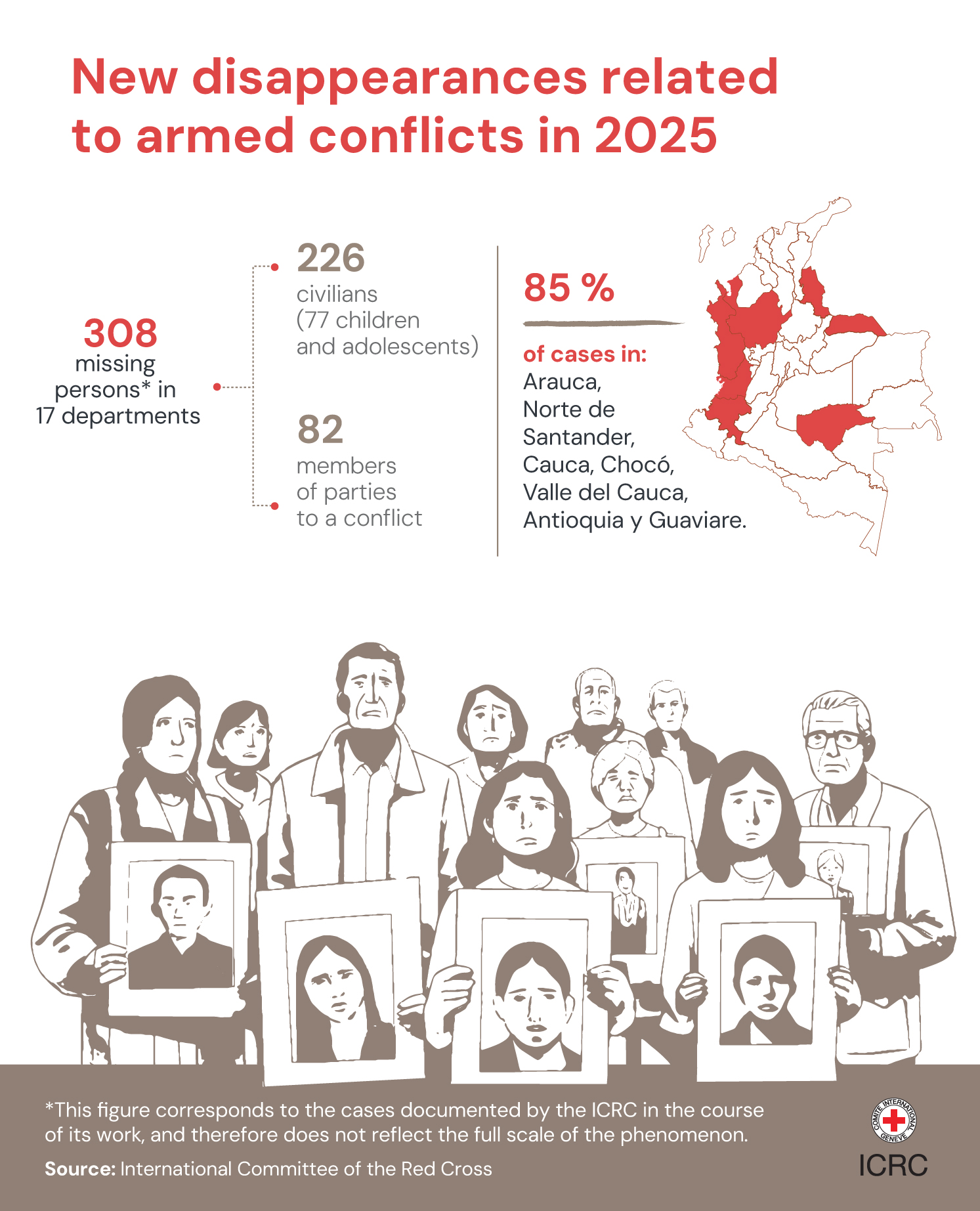
Beyond the conduct of hostilities, civilians faced different forms of violence and abuse in areas where state and non-state armed actors were present and exercised control, such as homicides, disappearances, threats, recruitment, use and participation of minors in hostilities, sexual violence and cruel, inhuman or degrading treatment, including in situations of deprivation of liberty.
These dynamics generated conditions of pressure and vulnerability that, in many cases, forced people to leave their territories, resulting in the loss of their livelihoods, support networks and means of subsistence. Some communities were confined by armed actors, which prevented, among other things, timely access to medical care, thereby increasing risks to life and health; for example, the lack of access to prenatal check-ups for pregnant women or to yellow fever vaccinations.
Among the different forms of violence recorded, sexual violence continued to be particularly severe, yet one of the least visible. The available figures do not reflect the true scale of this phenomenon, partly because many victims and survivors face stigmatization, fear of reprisals, and barriers to reporting what happened and accessing care and assistance mechanisms.
In addition to rape, sexual violence includes practices such as sexual harassment, forced nudity, survival sex and sexual slavery, among others. Its effects are not limited to those who suffer from it, as they also have an impact on individuals’ family and community ties, affect their physical and mental health, and alter their living conditions and social environment. In several cases, armed actors have resorted to this type of violence as a form of intimidation, punishment or show of power.
In armed conflicts, persons who do not directly take part in hostilities, or who have ceased to do so, must be respected and protected in all circumstances. IHL prohibits all forms of violence against their life, physical integrity or dignity, as well as cruel, inhuman or degrading treatment.