Our work in Togo
Action adapted to people’s needs
The ICRC’s work in Togo is carried out in line with our Fundamental Principles of humanity, impartiality, neutrality and independence. Our teams work closely with displaced communities and other people affected by violence, especially in the north of the country, by providing aid adapted to their essential needs. We bring support to farmers and livestock herders and help improve access to clean water and health care, including physical rehabilitation. The Togolese Red Cross is our key partner in all our action in the field.
Protection and rehabilitation
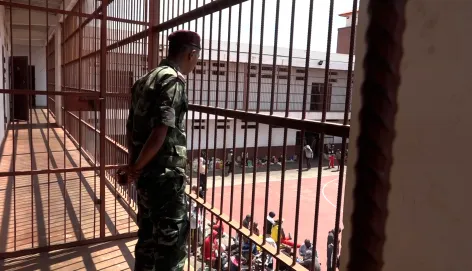
The ICRC works to restore contact among family members and reunite families that become separated in emergencies. Our delegates also visit people deprived of their liberty to ensure they are treated with dignity and held in humane conditions, as part of our humanitarian mandate.
Through our Physical Rehabilitation Programme, the ICRC works to strengthen professional capacities in the sector, improve quality of care and develop specialized infrastructure, all while promoting social inclusion for people with disabilities.
Promoting IHL and global Red Cross engagement
The ICRC delegation in Togo raises awareness of IHL and promotes compliance among security and defence personnel, the Togolese armed forces, the judiciary and the public authorities. We also support efforts to integrate provisions of IHL into national and international law.
In all our activities, we aim to provide an effective humanitarian response while also strengthening the global response capacity of the International Red Cross and Red Crescent Movement, including through our partnership with the Togolese Red Cross.
Strategic placement and changes in the region
The establishment of a dedicated delegation in Togo has been a key step for the ICRC. Not only will it strengthen our response capabilities as needs in the region continue to grow, it will also deepen our strategic engagement with Togo to promote IHL, as Togo is an important stage for exchange and cooperation on humanitarian action in the region and across Africa.
The ICRC’s mission to Togo also covered activities in Benin through the end of 2024. A headquarters agreement signed with the authorities in November 2024 established a separate mission for Benin, in Cotonou.