Central African Republic: Amid ongoing hostilities, Clotilde remains resilient

In Zémio, Haut-Mbomou Prefecture, in the south-eastern Central African Republic (CAR), violent clashes between the Central African Armed Forces, their allies and the Azandé Ani Kpi Gbé militia have forced thousands of civilians to take flight. Among them is Clotilde, 27, a mother of four and teacher whose life has been upended by the fighting. Like so many others, Clotilde has been scarred by her experience of violence and exile.
Clotild fled danger in her hometown of Mboki, Haut-Mbomou, with her four young children, walking day and night for two weeks to reach Zémio. The whole way, she was terrified, hungry, thirsty and in mortal danger. Despite the exhaustion, despite her struggles, Clotilde continued onward with one goal in sight: survival.
Determination in the face of struggle
Clotilde illustrates well the courage and perseverance shown by her community. After her parents enrolled her in Mboki's primary school, she quickly stood out among her classmates, boys and girls alike. After she received her diploma, the nearest secondary school was in Zémio, many kilometers away. Nevertheless, Clotilde successfully graduated, a huge personal victory in the face of a number of challenges, including the birth of her first child during her final year of school.
Clotilde is emotional as she recalls the hardships she faced: “I was pregnant, and my boyfriend wanted me to drop out and marry him. I refused. I had to deal with the challenges of pregnancy, the mockery and the grief all the way through to my son's birth.”
After she graduated, she was unable to afford higher education in Bangui. So, she completed teacher training and returned to Mboki to teach in a Catholic school. With her teaching income supplemented by farm work, Clotilde was able to keep her family afloat. She and her husband led a peaceful life until the crisis broke out in 2024, upending everything.
A perilous trek to Zémio
In 2023, armed tensions seized Haut-Mbomou. The following year, Mboki was engulfed in fighting, forcing the townspeople to run for their lives. Clotilde and her family were not spared.
“When our town was attacked,” recalls Clotilde with tears in her eyes, “we fled in a panic. Everyone went in different directions. I took my four young children with me. Their father tried to take some of our belongings with, but we couldn’t bring everything. I joined up with a group of other women, and we started walking, with no provisions and the constant fear of crossing paths with armed men. We made our way along rough trails, forded rivers, slept in fields, ate wild fruit and drank marsh water to survive. The trip took almost two weeks.”
When they arrived in Zémio, Clotilde and her children were exhausted, famished and dehydrated.
“We arrived around 9am. Our feet were swollen and bruised. Some of the women were met by loved ones, but my family and I had nowhere to go. We set up under a tree, with no idea of what the future would hold,” Clotilde recalls.
A stranger, moved by their plight, came to their rescue.
“A man picked me out because he saw I was alone with my four children. He agreed to take us in. He saved us,” says Clotilde.
After Clotilde had been in Zémio for several months, the situation in Mboki calmed somewhat, so she decided to return home, despite persisting danger in the surrounding towns.
“I decided I would rather suffer in my own home than in Zémio,” she says.
On her return, Clotilde found that her house had been destroyed, her fields burned, and her belongings pillaged. Even her cutlery and teaching papers were gone. She nevertheless set about rebuilding her life, with the aid of kind neighbours and her own determination.

A glimmer of hope for the future
As part of our work to help victims of armed conflict, the International Committee of the Red Cross (ICRC) launched a project to build a barrier to secure the health centre in Mboki. The project is employing members of the local community – Clotilde is helping to make bricks. Although the work is strenuous, it has enabled her to provide for her family.
“I got involved in the project because I wanted to help keep the health centre secure. The work will help protect health workers and the members of our community who go there for treatment,” she says.
Every morning at 7:30am, Clotilde and other young men and women arrive at the work site where bricks are fired. They work until 12:30pm, using presses to turn out the bricks, which is physically demanding.
Still, Clotilde is determined. Every day, she and her teammates aim to make between 700 and 1,000 bricks. The ICRC then buys the bricks as part of a cash-for-work programme.
Thanks to this, Clotilde has been able to put some money aside and start earning an income of her own.
“Since I returned to Mboki, I haven’t been able to teach, and the cost of living is high here. This job enables me to feed my children and give them a future,” she says.
Our work in Zémio
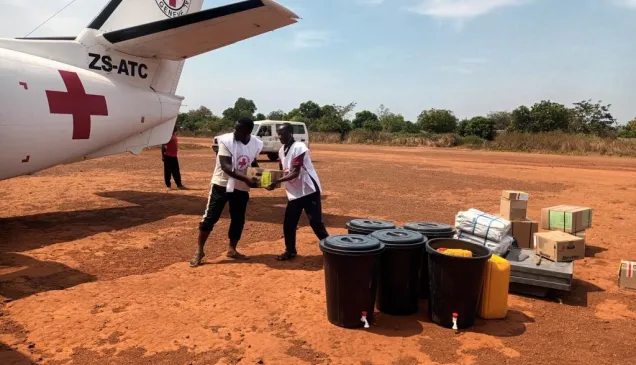
From 7 to 9 January 2026, the ICRC and the Central African Red Cross Society carried out a number of activities to ease the humanitarian situation in Zémio. Six shipments of emergency medical supplies for the treatment of the sick and wounded were delivered to the town's hospital.
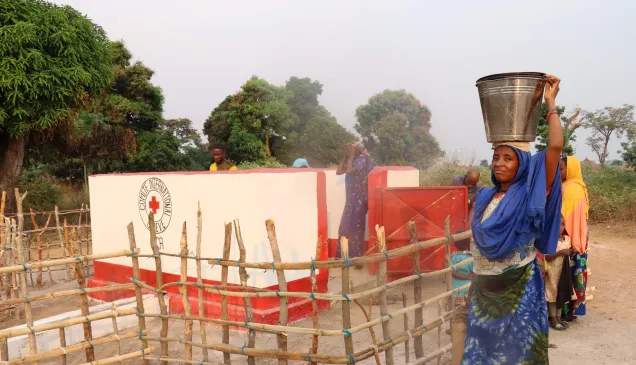
The teams also worked to improve access to water and hygiene facilities around the Catholic church, where roughly 2,000 displaced people have taken up residence. They repaired the only drilling site for wells, installed a 15,000-litre bladder tank for storing water and built six new temporary latrines and two showers, supplementing the four existing ones. The teams also provided the committee that manages the site with equipment for digging further wells. In addition, they are in the process of installing four solar-powered spotlights to make it safer for residents to access water and the hygiene facilities, especially at night.
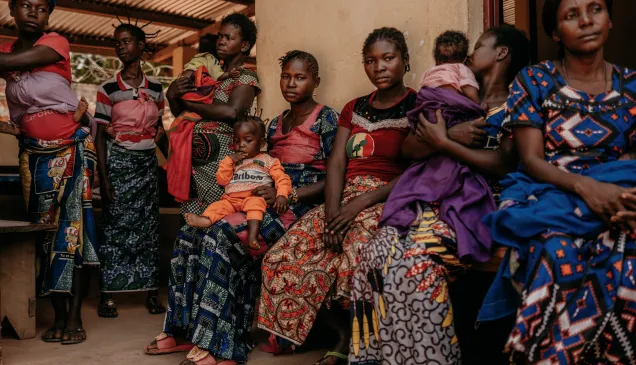
Clotilde’s story is shared by countless women in the CAR and other areas convulsed by armed conflict. Despite the immense challenges they face, these women display remarkable bravery and resilience as they work to protect their families and rebuild their lives.
Their quiet determination is admirable, but it speaks to a pressing and widespread need – for protection, for support, for sustainable opportunities. We cannot forget: behind each statistic is a face, a story and a tenacious hope for a more secure future.