Donetsk: Helping isolated communities through difficult winters

Regular snowfall and rain, rugged terrain as well as impassable roads make daily survival very difficult for people in remote conflict affected villages in Donetsk. Essential items that help communities have daily meals, access to clean water and keep their homes warm are often hard to get.
Throughout the winter, the ICRC continued to deliver vital supplies together with our local operational partner to meet the urgent humanitarian needs of the communities that have been facing the consequences of armed conflict since 2014.
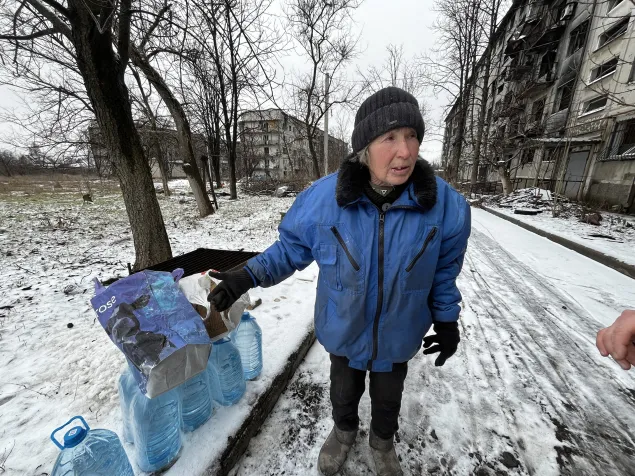
Vera is one of 80 residents who remain in the town of Krasnohorivka in Donetsk. She lives in a home without basic utilities — no electricity, no running water. “So, I live like a little bird — I rise and go to bed with the sun. In the evenings, I light candles,” Vera says. Her loyal dog is always by her side, keeping her company and helping her stay warm during the cold season.

Even in difficult conditions, people continue to endure. We regularly visit them to understand their needs, and we continue to provide them with support together with our local operational partner. At this distribution of humanitarian aid in early 2026 in Krasnohorivka we provided 3,600 litres of bottled drinking water, 80 food parcels and 80 hygiene kits.
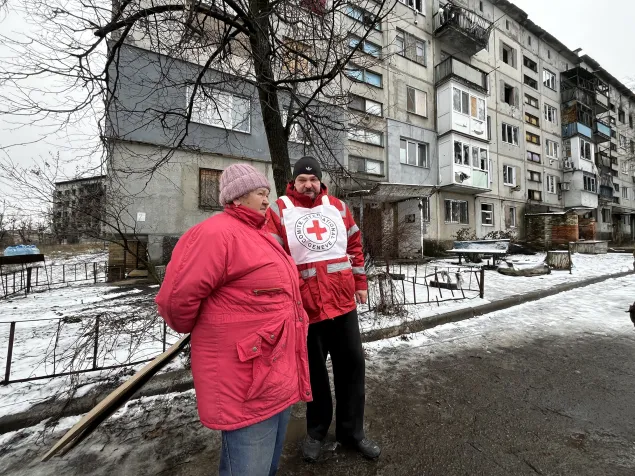
Galina’s apartment in Krasnohorivka was destroyed by shelling. She is now staying in an apartment belonging to friends, which has no heating or running water. Fortunately, the building and a neighbouring one are connected to the power supply. To keep warm, Galina gathers firewood herself, carefully searching for branches around the settlement “I don’t go far — it’s dangerous, there could be mines,” she says.

Over the past year, our team, in collaboration with our local partner, delivered more than 5.5 tonnes of aid, including food, hygiene items, blankets, rechargeable lamps and more than 7,000 litres of drinking water.
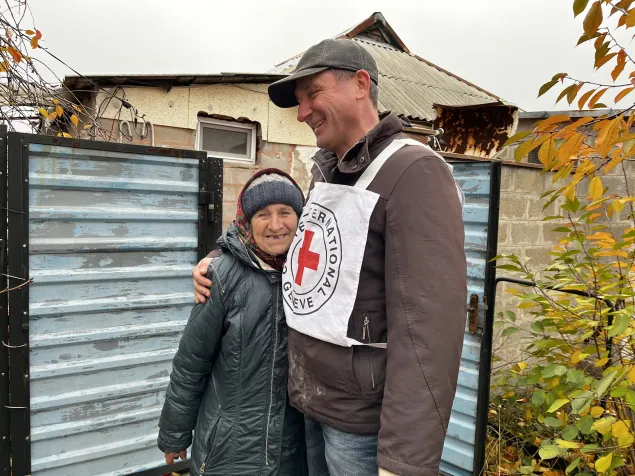
Lidiya’s home in the Petrovsky district of Donetsk was severely damaged during the hostilities. A fire destroyed her roof, household appliances and a cherished antique table she had inherited from her parents.

“The shelling started at night, and the roof caught fire. Luckily, a neighbour called the fire department just in time — the flames were already reaching his house,” Lidiya recalls. The harsh winter of 2026 made repairing damaged homes more urgent than ever. To help Lidiya rebuild, the ICRC provided construction and roofing materials, giving her hope that her home will soon be fully restored.
In 2025, in partnership with our operational partner in Donetsk, the ICRC supplied construction materials to repair more than 500 private homes across over ten settlements. This support has helped more than 1,200 families begin to rebuild their homes and their lives, even in the face of conflict and freezing temperatures.
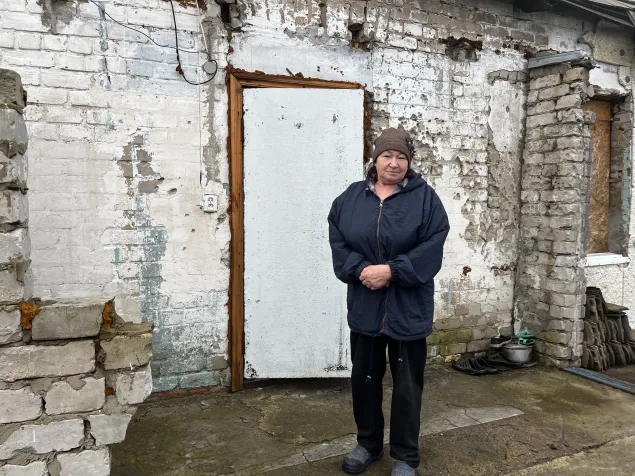
Natalia’s home in the village of Signalne near Olenivka was destroyed in the fighting, forcing her to seek shelter in a neighbouring house that was still standing. Despite losing her home, she continues to visit her yard regularly to tend to her vegetable garden and her loyal dog, Valet, who faithfully guards the property.

The water tank she once used to irrigate her garden was damaged by shelling and could no longer be used. Water shortages in Donetsk are the result of multiple challenges, including damaged infrastructure, energy disruptions and reduced access to main water sources.
In response, we delivered drip irrigation kits to more than 120 households across six settlements last year, helping families like Natalia’s to continue growing their crops despite the ongoing water scarcity. To help Natalia, we teamed up with our local operational partner in Donetsk to provide her with a new 1,000-litre water tank and a drip irrigation system.
“Last year, I struggled to grow vegetables because we didn’t have enough water. Relying on rain alone wasn’t enough. Now, with this drip irrigation system, it will be so much easier to care for my plants,” Natalia said.
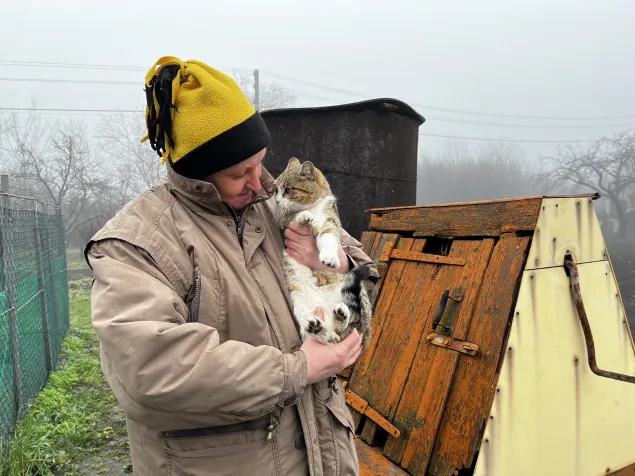
‘We always had a vegetable garden, and we used to get irrigation water from a well. But in recent years, the water in the well has almost disappeared, and without rain, the soil turns to stone,’ said Viktoriya during a humanitarian aid distribution in Olenivka.

In addition to limited rainfall, the ongoing conflict has disrupted access to the water supply, worsening the already difficult situation for residents of the region. Together with our local partner, we are helping residents cope with water scarcity and adapt to climate change by providing them with the equipment needed to grow vegetables and support their families.
To support people like Viktoriya to grow crops despite water shortages, we provided 60 polycarbonate greenhouses to remote conflict affected villages in Donetsk in 2025. Each greenhouse is equipped with a drip irrigation system and a 500-litre water tank.
"With such a greenhouse, we will need less water, and the plants will also be protected from the scorching sun," Viktoriya shared with a smile.