Yemen: Frequently asked questions on the release, transfer and repatriation of conflict-related detainees - May 2026

-
The ICRC is facilitating the release, transfer, and repatriation of conflict-related detainees in Yemen, at the request of and in agreement with all parties. Our role is strictly humanitarian. We act as a neutral intermediary to safely transfer released detainees to their places of origin.
-
The ICRC acts as a neutral intermediary, responsible for implementing and facilitating the release, transfer, and repatriation of the detainees agreed upon to be released by the parties to the conflict. The ICRC’s role as a neutral intermediary is rooted in its humanitarian mandate, which is guided by the principles of neutrality, impartiality, and independence, as enshrined in international humanitarian law.
-
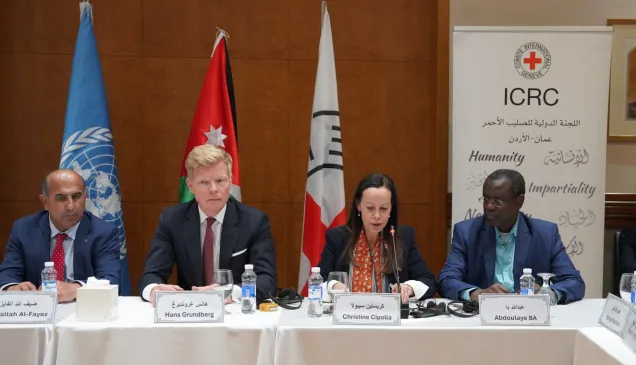
The release follows discussions held in Muscat (Oman), earlier in December 2025, and subsequent talks held in Amman (Jordan) between February and May 2026, which build on commitments made under the Stockholm Agreement of 2018. The ICRC’s involvement in this process does not indicate any political endorsement, but it comes rather as per its humanitarian mandate under IHL and its role as a co-chair of the Supervisory Committee on the detainees to guarantee that the parties fulfil the humanitarian principles in the release. All parties involved requested and accepted the ICRC’s role, allowing us to facilitate the operation in a safe, neutral, and dignified manner.
-
No. The ICRC does not take part in political negotiations. Our role begins only after the parties reach an agreement and formally request our humanitarian support. We do not influence decisions regarding who is released or when.
-
No. Only the parties to the conflict can comment on lists of detainees, names and final numbers. The ICRC does not publish lists, confirm identities, or share personal information, in order to protect detainees and their families.
-
The ICRC does not determine who will be released or not. This is the responsibility of the parties to the conflict. The ICRC’s role is purely humanitarian and, in this instance, is limited to supporting the logistical aspects of this release operation to ensure safe and dignified release and repatriation.
If you have not been in contact with your relative, and if you have not submitted a tracing request, you can open a tracing request with the ICRC, and we will try to help you find out where the person is and restore contact.
-
Released detainees are given the opportunity to contact their families as soon as possible during the operation. Families are encouraged to rely on official information from the parties regarding lists and names.
-
At the request of the parties, the ICRC’s role is to verify the identity and willingness of detainees to be released, conduct medical checks before travel, organize safe transport and repatriation including flights, help detainees contact their families, and work to reunite detainees with their families. Throughout the process, we ensure dignity, safety, and respect for humanitarian standards.
-
The ICRC remains ready to proceed as soon as conditions allow. But it’s important to note that parties to the conflict are fully responsible for determining when the release can happen. The ICRC maintains contact with parties concerned to ensure that the process moves forward smoothly.
-
In the next phase, the ICRC will require full and unhindered access to all detainees included in the agreement to ensure that the operations are carried out safely and with dignity for all concerned. It will verify the identity and willingness of detainees to be released, conduct medical checks before travel, organize safe transport and repatriation, help detainees contact their families, and work to reunite detainees with their families. Throughout the process, the ICRC will ensure dignity, safety, and respect for humanitarian standards.
-
Yes. This operation is expected to be one of the largest release operations facilitated by the ICRC since the start of the conflict, similar to October 2020 and April 2023 releases. Both previous operations enabled thousands of families to reunite after years of separation.
-
Every release brings profound relief to families who have waited months or years for news of their loved ones. Beyond the transfers, these operations restore dignity, reunite families, bring hope and help reduce humanitarian suffering. The ICRC hopes this upcoming release will build confidence between the parties and encourage further humanitarian steps.
-
Yes. The ICRC will provide timely, factual updates on the progress of the operation through its official communication and social media channels, in coordination with relevant stakeholders. The ICRC does not share personal details of the released detainees or that of their relatives and families.
-
In our role as a neutral humanitarian intermediary, we will continue to work closely with the parties. We remain ready and committed to facilitate the safe and dignified transfer and repatriation of detainees to be released, as foreseen in the agreement of the parties in Amman.
-
Since the signing of the agreement in Amman in May, the ICRC has been working and coordinating with all the parties to prepare for the safe and dignified transfer of detainees upon their release by parties. This has included conducting private interviews with detainees to confirm their willingness to be transferred as agreed in Amman and to address any concerns or specific needs, as well as carrying out medical assessments to identify any immediate health needs. We have also been coordinating with all parties to the conflict to make the necessary arrangements. Our efforts have been focused on ensuring that every step of this process upholds the dignity of the detainees and brings relief to their families, who have been waiting for this moment for years.