Frequently asked questions about the ICRC’s work in Egypt

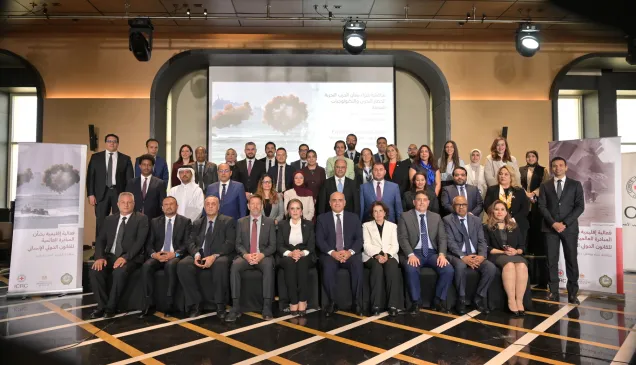
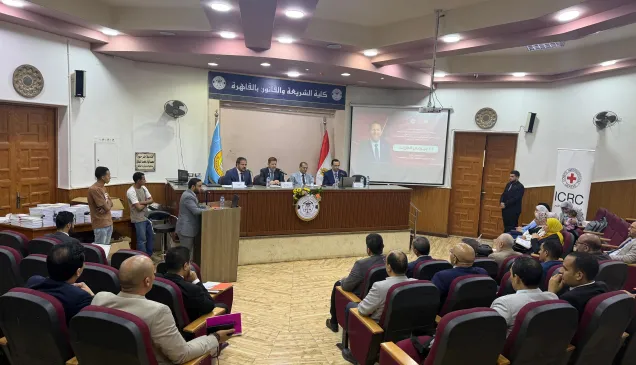
The ICRC has been operating in Egypt for over 100 years, dating back to World War I and II. Today, through its delegation in Cairo, the ICRC focuses on supporting ongoing responses to conflicts in neighboring countries and partnering with the Egyptian Red Crecent (ERC) to address diverse humanitarian needs, reestablishing family links and promoting international humanitarian law (IHL).
For more information, we invite you to visit our page about Egypt.
-
Our mission is to protect the lives and dignity of those affected by armed conflict and to provide them with assistance, such as food and clean water, health care and shelter. We also work to prevent and alleviate the suffering of those affected by other situations of violence, such as internal disturbances and tensions.
-
The ICRC has operated in Egypt for over a century, beginning during World Wars I and II, and has assisted thousands of prisoners of war and civilians affected by conflicts involving Egypt over the past century. Established permanently in Cairo in 1983, the ICRC delegation supports humanitarian responses to crises in neighboring regions such as Gaza and Sudan, working closely with the Egyptian Red Crescent (ERC) to address needs across Egypt and the wider region. It also works to reunite families separated by conflict or migration, promote International Humanitarian Law (IHL), and engage in humanitarian diplomacy with diplomatic missions, regional organizations, and international institutions based in Egypt.
-
IHL is a set of rules that seeks, for humanitarian reasons, to limit the effects of armed conflict. It protects persons who are not, or are no longer, directly or actively participating in hostilities (including civilians, medics, aid workers, wounded, sick and shipwrecked troops, prisoners of war or other detainees), and imposes limits on the means and methods of warfare (for instance, the use of certain weapons). IHL is also known as 'the law of war' or 'the law of armed conflict'. It is made up of treaties (the Geneva Conventions and their Additional Protocols are the main ones) and customary international law.
-
The ICRC, together with National Red Cross and Red Crescent Societies, works to help locate people who have gone missing after being separated from their families due to conflict, disasters, other situations of violence, or migration. Regardless of your nationality or status, we can support you in searching for missing loved ones through the world’s largest humanitarian network, with more than 90 ICRC offices working alongside 191 National Red Cross and Red Crescent Societies worldwide.
If you are looking for a missing family member, the first step is to contact the ICRC office in Egypt. You can reach our team at the following number: +202 252 81 548
-
Every year we help to account for, trace and restore contact between thousands of family members who lost contact or went missing because of armed conflict, situations of violence or disasters, or in the context of migration. Each case is different, but some of the services we provide include finding people, putting families back in touch, and helping families keep in contact through phone calls and messages.
-
No. All ICRC services are provided free of charge. We urge the public to be cautious of scams, as the ICRC never requests payment for humanitarian assistance and does not work with private partners who charge for services. Please exercise caution if you receive phone calls claiming to be from the ICRC and asking for money in exchange for humanitarian support.
-
The ICRC is not a religious organization, and its emblem doesn’t have any religious connotations. The emblem's design is derived from the inverse of the Swiss flag. The red crescent and red cross emblems serve as visible symbols representing the protection guaranteed under the Geneva Conventions and their Additional Protocols. These emblems ensure the safety and well-being of relief workers, medical personnel, medical facilities, and medical transport amid armed conflicts.
-
The ICRC and the ERC are part of the International Red Cross and Red Crescent Movement, which also comprises 191 other National Red Cross and Red Crescent National Societies and the International Federation of Red Cross and Red Crescent Societies. This makes it the largest humanitarian network in the world.
The ICRC and ERC are distinct entities united by shared humanitarian principles of neutrality, impartiality and independence. ERC is the national humanitarian coordinator in Egypt, acting as an independent auxiliary to the Egyptian authorities. The ICRC is an independent international organization mandated to protect and assist victims of war across the globe.
In Egypt, the ICRC collaborates closely with the ERC—its main humanitarian partner in the country—to address diverse humanitarian needs and support vulnerable populations both within Egypt and the broader region. We partner in several fields, including emergency response preparedness, reestablishing family links and promotion of IHL and humanitarian principles.
Since the escalation of the conflict in Gaza in October 2023, the ICRC — together with the ERC — has worked closely to provide critical support and relief from Egypt in response to the vast humanitarian needs in the Gaza Strip. In partnership with ERC, the ICRC delivered hundreds of aid trucks to Gaza through Egypt, carrying essential assistance over the past two years.
-
The ICRC constantly monitors the application of IHL in armed conflicts and works to prevent the suffering of victims not only through direct assistance but also by promoting respect for IHL, whose primary responsibility lies with states.
When we are made aware of alleged violations of IHL, we address the resulting humanitarian concerns directly with the parties to the conflict, i.e. those responsible for faithful application of IHL and repression of its violations. These interactions are confidential, allowing us to be direct and frank about all issues of concern. This practice is grounded in extensive experience worldwide, which demonstrates that direct confidential dialogue yields positive results, meaning an improvement of the humanitarian situation and better protection of civilians and the victims of armed conflicts.
-
First and foremost, when we seem silent, it is not because we do not care. It is because our priority is impact, not visibility. The ICRC is a neutral humanitarian organization that does not take political positions. Our sole aim is to save lives and alleviate the suffering of people affected by conflict. To operate effectively in conflict zones, we build trust through confidential dialogue with all parties, reminding them of their obligations under International Humanitarian Law (IHL) – something that we also do publicly – and raising concerns about the conduct of hostilities. Maintaining this confidentiality ensures our continued access and ability to protect civilians and deliver life-saving aid. While some may view our approach as not outspoken enough, decades of experience have shown that direct dialogue with those we are trying to influence is the most effective way to bring about humanitarian impact, particularly when operating in close proximity to active frontlines. This bilateral dialogue is what gives us access to places and situations that few others can reach.
To answer the frequently asked question, “Why are you silent?”, watch this short video.
-
The ICRC is funded by voluntary contributions.
We receive contributions from the States party to the Geneva Conventions (governments), national Red Cross and Red Crescent Societies, supranational organizations (such as the European Commission) and public and private sources. Governments are our main donors: on average during the past five years, they contributed about 82% of the budget. But contributions remain voluntary and there is no guarantee that such contributions will last into the long-term.
-
The ICRC only accepts funds from those who respect the ICRC's independence and impartiality of action. This means that contributions will be used to respond to humanitarian needs on the ground – as they are assessed by the ICRC. In other words, we will not accept donations that are very tightly earmarked and that would breach the principles of independence and impartiality. The ICRC welcomes financial support from any new donors.
That said, the ICRC's relations with its donors are not limited to financial matters. We also engage States on issues such as the protection of people affected by armed conflict and other situations of violence, and on the implementation of international humanitarian law.
-
If you are in Cairo, reach out to us by calling +202 252 81 540/41.
Working hours are Sunday to Thursday from 8 AM to 4 PM.
You can also send us an email at: cai_lecaire_mailbox@icrc.org.
Take care before you share
If you come across content online that appears false or misleading, report it directly to the social media platform where it was posted.
You can also help slow the spread of misinformation by checking the veracity of questionable information before sharing it with others.
We Strive to Treat You with Respect and Dignity
All services provided by the ICRC are free.
Everyone who works with the ICRC (our staff, partners, and suppliers) must always treat you with respect and dignity.
It is forbidden for ICRC employees and our partners to ask for money or any type of favours in exchange for aid. We encourage all to report in good faith suspicion of fraud, corruption, sexual exploitation and abuse, sexual harassment and other suspected misconduct.
You have the right to report cases of inappropriate behaviour or illegal actions on the part of the ICRC. To do so, you can email us at code_of_conduct@icrc.org. You can also report it directly in the Integrity Line (available in English, French and Spanish).
The information you provide will remain confidential. Filing a complaint will not affect the ICRC's work in your community.