Egypt: Cairo hosts the 13th Regional Meeting for Arab National Committees on International Humanitarian Law

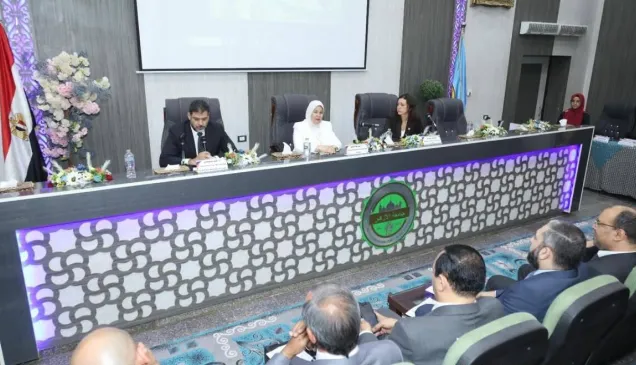
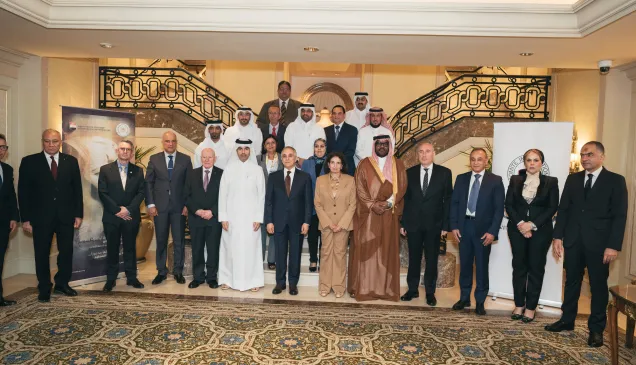
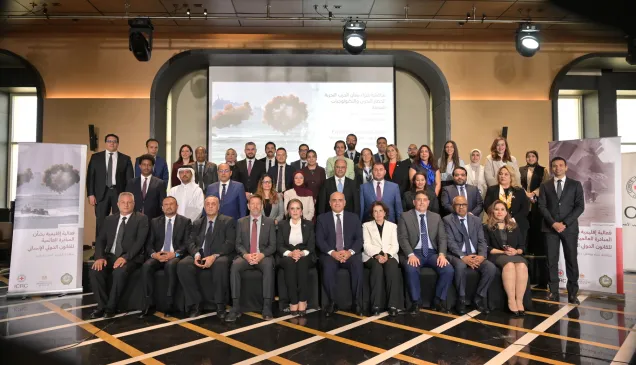
Heads and representatives of 17 Arab National Committees on International Humanitarian Law (NCIHLs) convened at the headquarters of the League of Arab States (LAS) in Cairo for the Thirteenth Regional Meeting of Arab NCIHLs, held from 8 to 9 December.
The meeting focused on addressing the challenges facing international humanitarian law (IHL) in contemporary armed conflicts, examining the role of NCIHLs in the national implementation of IHL, and exploring mechanisms to strengthen their capacity to promote a global culture of respect for IHL.
The event, organized by the International Committee of the Red Cross (ICRC) in cooperation with the Egyptian NCIHL and LAS, serves as a key regional platform for Arab States to share experiences, best practices, and lessons learned related to the national implementation of IHL.
The meeting discussed the challenges facing IHL in contemporary armed conflicts, including the use of emerging technologies and urban warfare, as well as recent developments related to the Global Initiative to Galvanize Political Commitment to IHL. The Initiative is a joint effort launched by Brazil, China, France, Jordan, Kazakhstan, South Africa, and the ICRC to elevate IHL as a political priority amid an estimated 130 ongoing armed conflicts worldwide.
The Global Initiative is structured around seven thematic workstreams, each co-chaired by a group of supporting States and the ICRC. Several Arab States have joined the Initiative, five of which hold leadership roles as co-chairs of various workstreams—namely Egypt, the United Arab Emirates, Qatar, Saudi Arabia, and Algeria.
The meeting provided a valuable opportunity for the Arab co-chairs to present their efforts to promote participation, foster constructive dialogue, and contribute to the development of meaningful outcomes across the workstreams.
“I commend this initiative, which aims to strengthen political commitment to and respect for international humanitarian law, and to enhance its effectiveness in the face of ongoing challenges,” said Adnan Fangary, Egypt’s Minister of Justice and Head of the NCIHL, during the opening ceremony.
Ambassador Hussein Hindawy, LAS Assistant Secretary-General, stated during the ceremony that IHL is distinguished by its “exceptional nature, as it is applied during times of greatest vulnerability, namely armed conflict.” He added that the importance of this law lies in its role as the “voice of the global conscience, protecting humanity regardless of identity, race, or religion.”
The second day of the meeting focused on LAS’ efforts to advance the implementation of IHL in the Arab region during the period 2023–2025, with particular emphasis on the recently established Permanent Arab Committee on IHL, which is set to commence its activities in 2026. In addition, Arab States presented their national efforts to promote and implement IHL, alongside a review of progress achieved in implementing the Regional Action Plan (2023–2025) adopted at the previous meeting, held in Doha in 2023.
“National IHL Committees across the region have played a pivotal role in promoting the adoption of national legislation to integrate IHL, establishing the mechanisms necessary for its implementation, advancing treaty ratification, and strengthening efforts to disseminate the law,” said Anna Praz, Head of the ICRC Cairo Delegation.
Participants then discussed the draft regional plan of action for the implementation of IHL in the Arab region (2026-2028), including measures related to the dissemination of and training on IHL, the ratification of relevant international conventions, legislative adaptation, and the strengthening of international and Arab cooperation.
The Regional Meeting for Arab National Committees on IHL was first convened in 2001 in Cairo, Egypt, which continued to host the event for the subsequent five years. The meeting later transitioned to a biennial format and has since been hosted by various Arab States.
National Committees of IHL exist in many countries to advise and assist governments in implementing and spreading knowledge of IHL, and they play an active role in assisting States to fulfil their obligations under the Geneva Conventions of 1949 and the Additional Protocols of 1977 and 2005 as well as other IHL instruments.
About the ICRC:
The International Committee of the Red Cross (ICRC) is an impartial, neutral, and independent organization ensuring humanitarian protection and assistance for victims of war and armed violence. It operates in more than 90 countries worldwide, including Egypt, where it has been present for over 100 years.
For further information, please contact:
Nesma Nowar, ICRC Cairo, tel: +2 0100 070 8515, email: nnowar@icrc.org