Ethiopia: ICRC responds to humanitarian needs amid renewed hostilities in the north

Renewed hostilities in northern Ethiopia have heightened humanitarian concerns for communities already affected by years of armed conflict, displacement and disruption to essential services. In Tigray, reports of drone strikes and fighting have raised concerns about the safety of civilians and their access to essential services. In neighbouring Amhara, continued armed violence has also affected communities, health facilities, and essential infrastructure.
For many families still struggling with the consequences of previous hostilities, the renewed escalation has added to existing hardship. Access to health care, clean water, food, electricity and other basic necessities remains a pressing concern, while insecurity continues to hamper humanitarian activities in some affected areas.
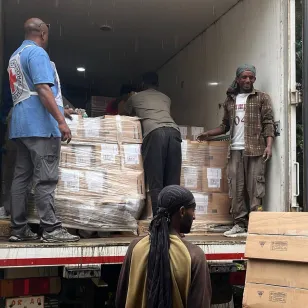
The International Committee of the Red Cross (ICRC) had pre-positioned emergency medical supplies and essential relief items to enable a timely response. As hostilities intensified in September, ICRC teams continued to engage with all parties concerned to facilitate impartial humanitarian activities and respond to the needs of people affected by the fighting.
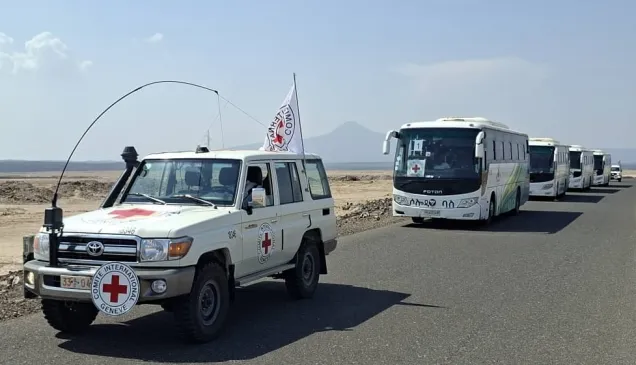
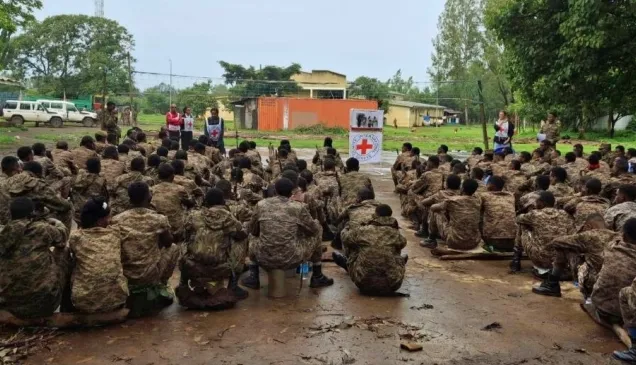
Acting as a neutral intermediary, the ICRC facilitated the evacuation of 161 people from Mekelle, in Tigray, to Semera, in Afar, on 28 September. The operation illustrates the importance of dialogue with, and agreement from, all parties concerned in facilitating safe passage during armed conflict.
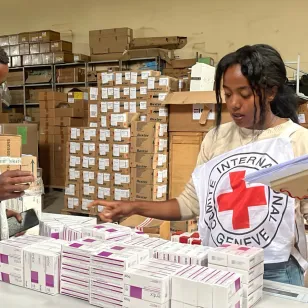
The ICRC also continued to support health facilities caring for the wounded and sick. Between 13 and 16 October, in coordination with the Ethiopian Red Cross Society (ERCS), essential medical equipment and medicines were delivered to Suhul-Shire Hospital in northwestern Tigray, as well as to Lemlem Karl Hospital in Maychew, Mehoni Hospital, Alamata Hospital and Chercher Health Centre in southern Tigray, and Ayder Referral Hospital in Mekelle. In total, 33 health facilities in Tigray received support, with supplies intended to help health personnel provide care for wounded and sick people. The ICRC also supported the transport of blood supplies to Suhul Hospital in Shire and continued to assist emergency medical care and physical rehabilitation services. In Amhara, where armed violence continues to affect communities, the ICRC has supported 32 health facilities and essential services. In Lalibela, emergency assistance and repairs to the water supply system helped restore access to water, supporting the health and well-being of the local population.
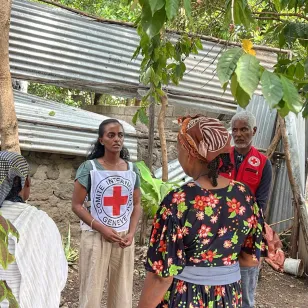
Working closely with the Ethiopian Red Cross Society (ERCS) and other International Red Cross and Red Crescent Movement partners, the ICRC has also pre-positioned essential household items and provided cash assistance to help health workers and patients affected by the conflict meet their most urgent needs. A total of 6,000 essential household kits were pre-positioned in Tigray and 2,000 in Amhara, with an additional 2,400 kits for distribution to recently displaced civilians in Afar.
Cooperation with ERCS and other partners remains essential to strengthening emergency preparedness and responding to evolving humanitarian needs. More than ETB 7 million has been allocated for preparedness activities by the Tigray Branch of the ERCS, and over ETB 5 million has been transferred to the Amhara Branch for emergency preparedness activities. These include the provision of hygiene materials, ensuring ambulance readiness, and supplying first-aid and medical supplies.
Alongside its emergency response, the ICRC continues its protection activities, including visiting detainees, helping separated families restore contact and maintaining bilateral and confidential dialogue with parties to the conflicts on their obligations under international humanitarian law.
As humanitarian needs persist, the ICRC remains committed to carrying out its mandate to protect and assist people affected by armed conflict, guided by the principles of neutrality, impartiality and independence.
The ICRC reminds all parties engaged in armed conflict of their obligation to respect and ensure respect for international humanitarian law, particularly the rules on protecting civilians, civilian objects, the wounded and sick, and medical and humanitarian personnel