Humanitarian Outlook 2026: A world succumbing to war

Armed conflict is now a defining feature of our time. Across continents, the rules and limits that should protect civilians in war are being stretched, ignored or dismantled. Conflicts are spreading, lasting longer, and becoming more complex. Civilians – the very people international humanitarian law exists to protect – are those who suffer the most.
Even for those who experience war only through the headlines, today’s conflicts are shaping a future that will affect every one of us. The erosion of the rules of war is not confined to distant battlefields; it threatens the stability, security and values that underpin our societies and our lives, no matter where in the world we live.
The Humanitarian Outlook 2026 is the ICRC’s publication accompanying our 2026 global appeals. It provides a forward-looking analysis of emerging humanitarian risks, based on real-world observations from our organization’s operations worldwide. The Outlook is designed to inform governments, donors and decision-makers about the evolving nature of armed conflict, the humanitarian consequences for civilians, and the priorities required to respond effectively and prevent further suffering.
In Humanitarian Outlook 2026, we draw on our work in more than 100 armed conflicts to warn of four converging trends pushing the world toward deeper instability and human suffering. The Outlook highlights a stark paradox: as needs rise rapidly, the resources available for principled humanitarian action are under growing strain.
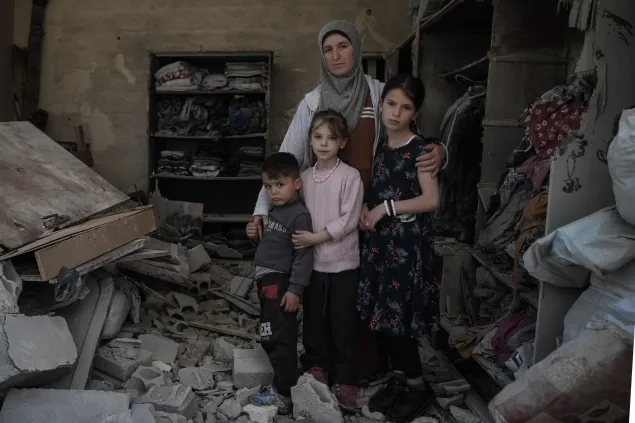
A family in a home destroyed by missile attack in Akkar, on the northern border of Lebanon.
A daily reality of living with war
The number of armed conflicts continues to climb, reaching around 130 in 2024 - more than double the number just 15 years ago. Over 20 conflicts have lasted for more than two decades, leaving entire generations who have known nothing but war.
Front lines today stretch across physical and digital worlds. The use of drones, artificial intelligence and cyber operations is accelerating and transforming the conduct of hostilities, too often with devastating effects on civilians. More than 204 million people now live in areas under the full or contested control of armed groups – beyond the reach of state institutions and basic services.
The consequences are severe:
- Homes, hospitals, schools and water systems are destroyed.
- Livelihoods collapse, displacing millions.
- Families are torn apart: 284,000 people are registered as missing by the International Red Cross and Red Crescent Movement – a 70% increase in just one year.
Personal stories reflect the scale of loss:
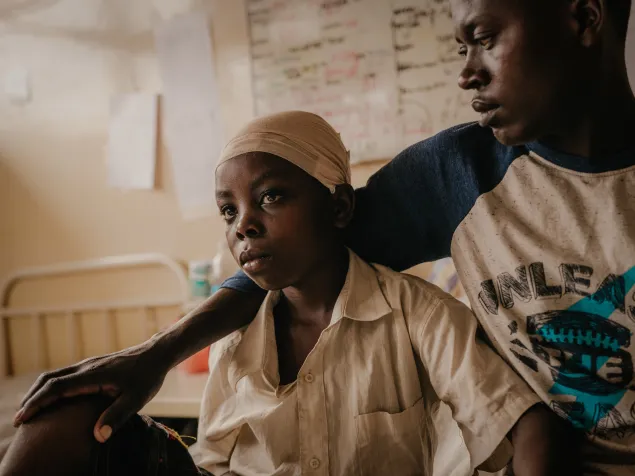
Grace, a 10 year old boy who was shot in the head, is cared for after surgery by his brother James. Grace has been unable to speak since his injury.
Trend 1: Dehumanization spreading on all fronts
Across many conflicts, the shared sense of humanity that restrains violence is eroding. Dehumanizing language - often echoed by political leaders or amplified through social media - fuels fear, polarizes communities, and justifies violations.
This shift has real consequences. When people are stripped of their dignity through words or policy, the threshold for violence rises. Civilians are misidentified as threats; detainees are denied legal protections; humanitarian workers face suspicion or hostility.
Fear is killing us more than the lack of food. We are dying from the fear and anxiety we feel.
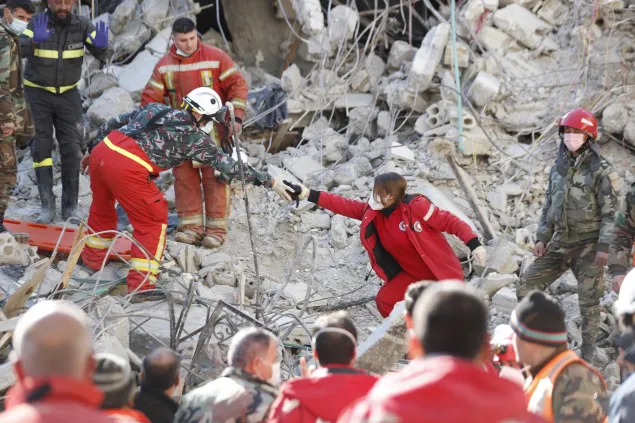
The impact of the earthquake in Jableh city, Latakia.
Trend 2: Principled humanitarian action under threat
Humanitarian and medical workers are increasingly targeted, despite protections under international law. In 2024 alone:
- 338 attacks against humanitarian workers were recorded.
- Over 600 attacks struck health facilities and personnel between 2023 and 2024.
- 27 Red Cross and Red Crescent volunteers and staff lost their lives in 2025.
Neutral, impartial humanitarian action is being politicized, manipulated or obstructed. Access to people in need remains critically restricted in places such as Gaza and Al-Fashir, leaving civilians without essential assistance.
Stray bullets are still a real threat. We found a bullet on the theatre floor.
Trend 3: Victory at any cost, and global responsibility in retreat
Respect for international humanitarian law (IHL) is weakening. In many conflicts, military objectives take precedence over the obligation to protect civilian lives.
Hard power is resurging, and multilateral cooperation is at risk. Global defence spending reached 2.7 trillion USD in 2024, while the entire humanitarian system appealed for just 50 billion USD – an amount that still went unmet. This imbalance signals a world preparing for war, not peace.

Civilians wait for a food distribution at the Lac Vert displacement camp.
Trend 4: Humanitarian needs rising, resources strained
At a time when needs are escalating, funding for neutral, impartial humanitarian action is increasingly uncertain. Without sustained support, millions of people risk losing access to essential services, protection, and life-saving assistance.
This widening gap is fundamentally at odds with the scale of human suffering seen across today’s conflicts.
Five calls to action in defense of humanity
States have a decisive role to play in preventing the world from sliding further into unrestrained warfare. The ICRC urges governments to act now:
1. Sustain principled humanitarian action
Provide predictable support for neutral, impartial and independent humanitarian assistance so aid can keep pace with rising needs.
2. Uphold international humanitarian law – and urge allies to do the same
Respect for IHL must remain universal. States must prevent violations, both in their own conduct and among those they support.
3. Counter dehumanization
Reject harmful narratives, misinformation and rhetoric that deepen suffering and normalize brutality.
4. Protect humanitarian workers and medical personnel
Attacks on aid workers are attacks on humanity. States must ensure they can work safely and reach people in need.
5. Work for peace and restore global solidarity
Humanitarian action can alleviate suffering, but only political solutions can end it. States must invest in diplomacy, conflict prevention and humanitarian restraint.

Iyad al-Wahidi returns with his sons to find his home destroyed in Gaza.
The choice before us
As wars multiply and the cost of destruction exceeds what any society can rebuild, the world cannot afford indifference. Upholding the rules of war is not only a legal obligation - it is a safeguard for our shared humanity.
Together, we can choose restraint over escalation, dignity over dehumanization, and humanity over unbounded violence.