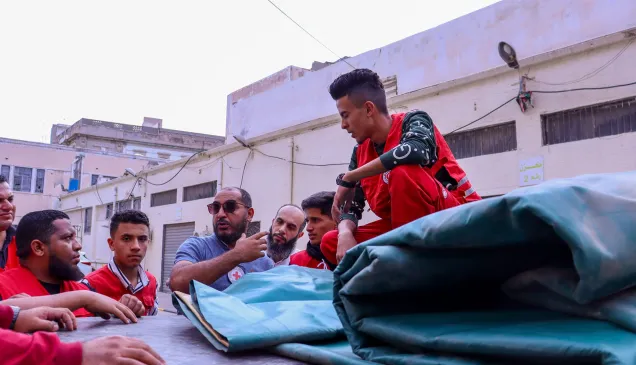
Libya: Ten years rebuilding lives, one step at a time

After ten years of supporting thousands of people affected by armed conflict, the International Committee of the Red Cross's (ICRC) physical rehabilitation programme in Libya has come to an end.
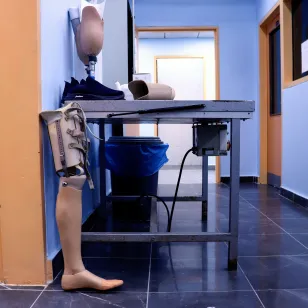
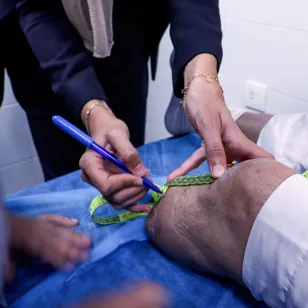
The programme ran four physical rehabilitation centres in Tripoli, Benghazi and Misrata, providing prosthetics, orthopaedic services and physical therapy to over 2,000 people with disabilities each year.
Rebuilding physical and mental health
People with physical disabilities face a wide range of challenges, including mental health issues.
“After eight years, I got used to the prosthetic limb. At least I can stand up, do what I need and walk around easily, even psychologically, there is mental peace,” recalled Emhemmed, whose right leg was amputated after he was shot while trying to raise a white flag during violent clashes.
One way to address these challenges is to support people understand their situation, which means helping them grasp exactly how their lives may change as a result of their injury.
“I started dressing well once again. [Before having a prosthetic leg fitted] I couldn't wear sneakers, I had to tailor all my trousers to be cropped on one leg,” remembers Salah, a patient at the Janzour Rehabilitation Centre in northwestern Libya.
“It's unbelievable. At home I have a young daughter who wished that I could pick her up and hold her while standing. As soon as she saw me bending down when I got my prosthetic leg, I held her and picked her up,” said Salah.
Promoting inclusion through sport
Promoting social inclusion through inclusive education, vocational training, microeconomic support and adapted sports programmes is part of the ICRC’s programme approach.
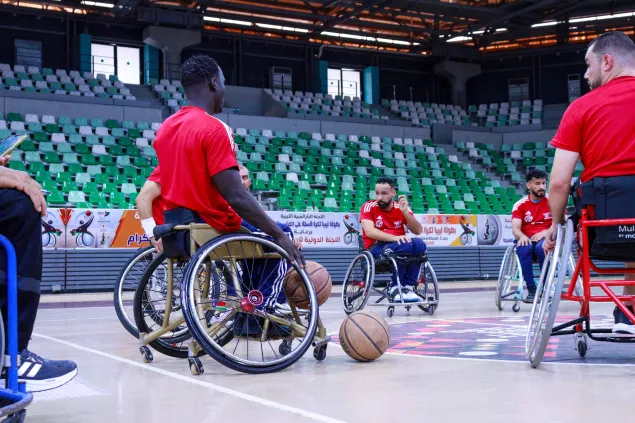
With financial support from the ICRC, the Libyan Paralympic Committee organized three national Paralympic championships and participated in three international wheelchair basketball tournaments abroad in the last ten years.
Donations of wheelchairs enabled more than 100 athletes with disabilities to participate in sports activities each year.
Supporting local capacities
In addition, this program supported 18 physical therapy students with scholarships in the fields of orthopaedics and prosthetics. These students were sent to specialized institutions in various countries, including India, Jordan and Turkey.
Similarly, technical support for the improvement of local skills was ensured through on-the-job training provided at the centres, as well as through the guidance and expertise of more than ten international experts in the field.
With the aim of developing the professional skills of people with disabilities, workshops and training courses were organized, ultimately benefiting more than 80 people.
A decade in Libya's memory
Since its launch in 2015, the ICRC’s physical rehabilitation programme has sought to restore people’s dignity in Libya.
“This program is an example of the ICRC’s commitment to improving the lives of people with disabilities and promoting their inclusion in society,” explained Muhanad Hussein, director of the ICRC’s physical rehabilitation project.
Looking ahead, the ICRC remains hopeful that the physical rehabilitation sector will grow and expand in Libya.
“Now that the physical rehabilitation program has ended, we wish our partners in Libya every success in leading and managing the physical rehabilitation sector, as well as in continuing to provide essential support to people with disabilities in Libya,” said Hussein.
The Physical Rehabilitation Programme in Libya
For over 10 years, the Physical Rehabilitation Programme in Libya has supported people in regaining their independence. While the programme may be coming to an end, its impact lives on in the lives of those it has helped.