Water crosses the border for 22,000 people in western Uganda

The Busunga-Sindila water supply improvement project was inaugurated in the Bundibugyo district of western Uganda in November 2025. The project benefits 22,000 people, including host communities and refugees.
Kizza John, an engineer at Umbrella Water and Sanitation, walks through the Rwenzori Mountains to the water source, where he explains how the International Committee of the Red Cross (ICRC), the Uganda Red Cross Society (URCS) and the Ugandan Ministry of Water and Environment developed the project.
Every day, thousands of people cross a bridge over the Lamia River north-eastern Democratic Republic of Congo, Uganda, either to trade, to visit family or to seek refuge from armed conflict. Now, with the Busunga-Sindila water supply system in Bundibugyo, Uganda, both local communities and migrants and refugees can now access safe drinking water at designated locations along the supply network.
Uganda hosts nearly two million refugees and more than 40,000 asylum seekers from over 34 countries, according to the Office of the Prime Minister. The district of Bundibugyo, in the west of the country, has a long tradition of welcoming people fleeing violence, particularly from neighboring Congo.
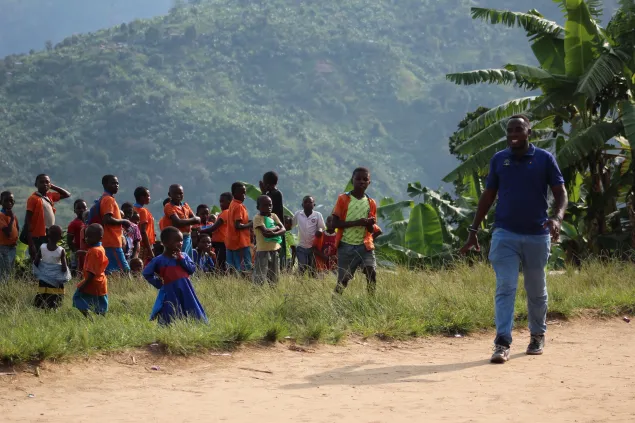
On the way to the water source for the Busunga-Sindila water system project from a nearby school, it is possible to see the border with the Democratic Republic of Congo.
Prior to the installation of the water supply system, Katusiime Rose, a resident of Bundibugyo district in Uganda, had to walk long distances to collect water from the Lamia River, which was also used by animals.
“Before we had tap water, we used to collect water from a contaminated stream. As a result, we often fell ill with stomach aches and diarrhoea,”
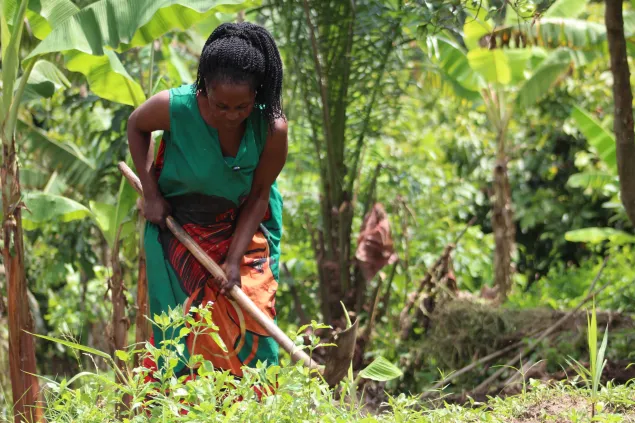
Katusiime Rose, Ugandan mother and resident of Bundibugyo District. She grows cocoa in her garden near a drinking water supply point.
For the ICRC, ensuring sustainable access to clean drinking water through this project is crucial for preventing disease and alleviating the burden on limited services. “Our goal is to protect refugees and host communities from disease and hardship by improving access to clean, safe water, and by improving health and hygiene, as well as quality of life, for all,” explained Kedir Awol Omar, head of the ICRC Regional Delegation in Kampala.
In its first phase, the Busunga-Sindila water supply system expanded access to safe drinking water for around 22,000 people in local communities and refugee camps. Once the third phase is complete, the system will benefit some 60,000 people.
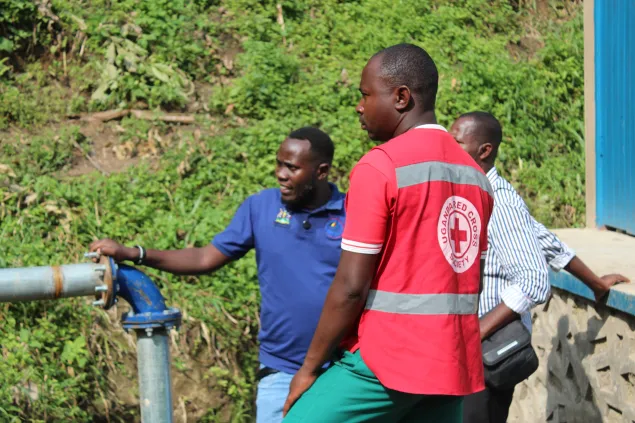
The Rwenzori Mountains are the site of the water supply network renovation project, which provides access to drinking water for around 22,000 people in the Bundibugyo district of western Uganda.
The ICRC, the URCS, and the Ministry of Water and Environment implemented the gravity-fed system in an area suffering from severe pressure on basic services, with technical support from Umbrella Water and Sanitation.
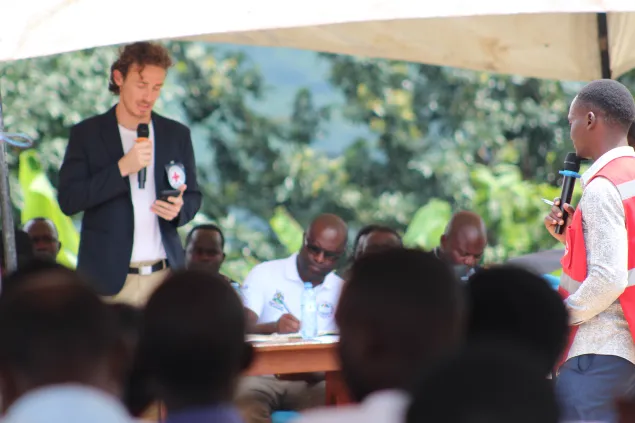
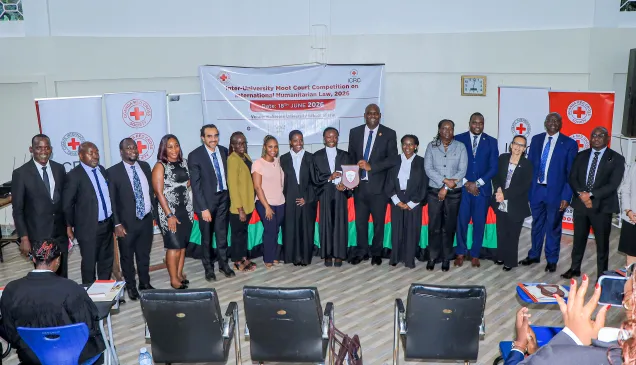
The inauguration ceremony for the Busunga-Sindila water supply improvement project took place in the Bundibugyo district.
This intervention builds on the ICRC's long-standing presence in Bundibugyo. In the late 1990s, the organization assisted the local authorities and the URCS in improving water and sanitation services in camps for displaced persons, as well as rehabilitating the sewage system at the local hospital. More than 25 years later, returning to the district reflects a relationship based on trust and shared humanity.
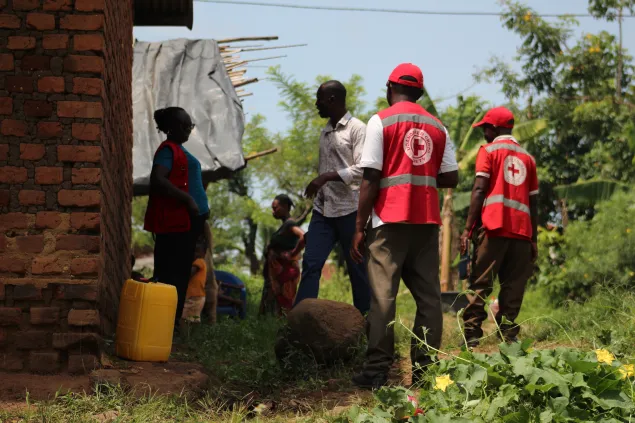
The ICRC and the Uganda Red Cross Society have been working in Bundibugyo for over 25 years to support improvements to water and sanitation services.