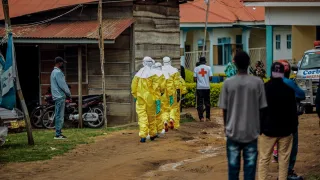
Health care on the front line
When fighting breaks out, access to health care becomes a matter of life and death. Yet this is precisely when health services are most at risk.
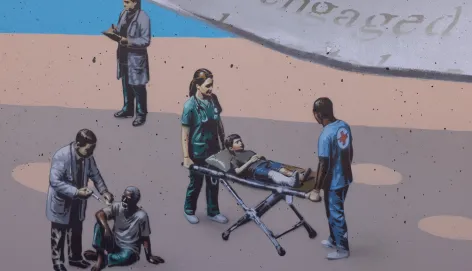
Around the world, doctors and nurses, ambulance drivers and paramedics, hospitals and clinics - and even the wounded and sick themselves - come under attack. These incidents are not isolated. They are part of a pattern of violence that disrupts care when it is needed most.
When health care is compromised, the consequences are immediate and far-reaching. People die from otherwise treatable injuries. Women are unable to give birth safely. Children miss vaccinations. Entire communities are cut off from essential services. In some cases, health systems collapse entirely.
Protecting health care is not only a medical concern - it is a humanitarian imperative.
Health care should never be a target.
The issue
Violence against health care takes many forms and affects every part of the system.
Attacks, threats, obstruction and misuse of health services undermine the ability of medical personnel to provide impartial care. They also prevent people from accessing the treatment they need, safely and in time.
Understanding these risks is the first step toward preventing them.