South Sudan at 15: A humanitarian journey through conflict, resilience and hope

As South Sudan marks 15 years of independence, millions of people continue to live with the consequences of conflict and violence. For more than 40 years, the International Committee of the Red Cross (ICRC) has worked alongside communities across the country, helping people survive conflict, recover from injury and rebuild their lives. Through these moments captured over the years, we look back at that journey and the humanitarian needs that continue today.
Fifteen years on, humanitarian needs continue to grow
South Sudan became the world's youngest nation in July 2011 with hopes of a more peaceful future. Fifteen years later, many communities continue to face the daily consequences of conflict and violence as well as climate-related shocks.
The humanitarian situation has become even more challenging in recent months. Renewed fighting since late 2025 has forced thousands of families from their homes, disrupted livelihoods and reduced access to health care. At the same time, arrivals of people fleeing conflict in neighbouring Sudan and declining humanitarian funding are placing additional strain on already overstretched services.
For the ICRC, remaining alongside these communities has meant adapting to changing humanitarian needs while maintaining one constant priority: protecting lives and preserving human dignity.
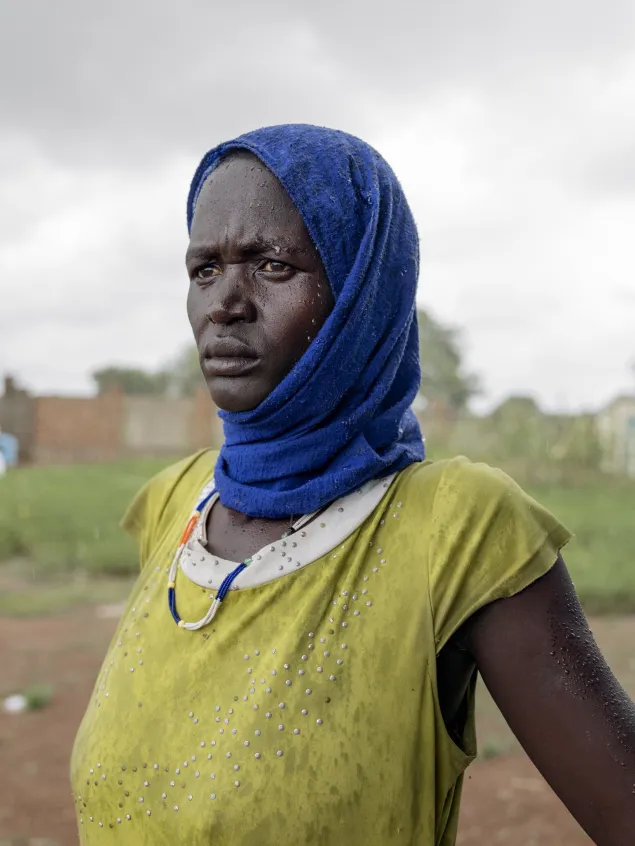
2025. After fleeing South Sudan in 2013, Adut Madut was forced to return when conflict erupted in Sudan. In Kuajok, the ICRC provided her family with food, household essentials and livelihood support to help them rebuild their lives.
When every minute matters
Access to life-saving health care remains one of the country's greatest humanitarian challenges.
During the first six months of 2026, the ICRC evacuated 266 wounded patients from conflict-affected areas across South Sudan, an increase of more than 50 per cent compared with the same period in 2025. Since 2014, more than 5,000 patients have been evacuated to receive emergency surgical care.
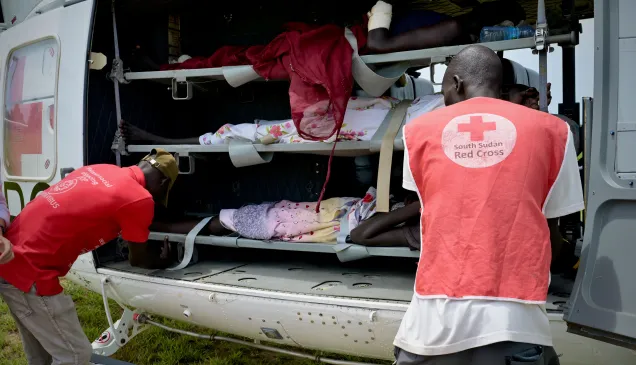
Many patients come from remote areas where roads are impassable, communications are unreliable, and health facilities are either inaccessible or unable to provide specialised trauma care. Most are transported by air to Juba Military Hospital, one of the country's main referral centres for war surgery.
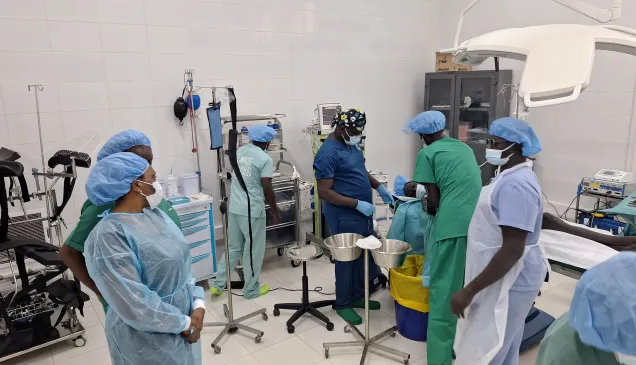
The increased number of casualties has placed enormous pressure on surgical services. During the first half of 2026, surgeries at Juba Military Hospital increased by nearly 30 per cent compared with the same period last year, leaving the ICRC-supported surgical department operating at more than 100 per cent capacity.
One of those patients is Ngor Gatluak, who was evacuated from Agany in Jonglei State, approximately 420 kilometres from Juba.
"I was shot in my arm during one of the battles. There is no hospital in our area, so I was taken from Agany for treatment. I was later referred to this hospital. I am feeling much better now, and I hope to return home soon."
For Rose Ochieng, the ICRC's Health Coordinator in South Sudan, the growing humanitarian needs are becoming increasingly difficult to meet.
Conflict is not getting any better and the humanitarian needs are also on the rise. This is further complicated with the fact that the funding has gone down. So, service provision at all levels of health care is reduced, and this causes a lot of strain in the hospital levels."
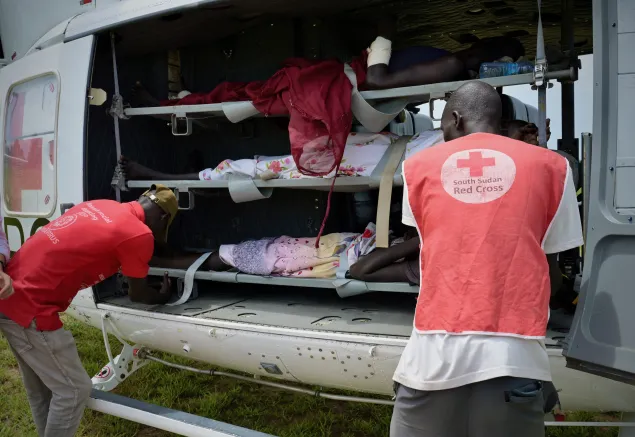
2026. South Sudan Red Cross Society volunteers assisting patients before they are evacuated to Juba.
Recovery is about more than surviving
For many people injured by conflict, the journey does not end after surgery.
Since 2014, nearly 40,000 people have accessed physical rehabilitation services through ICRC-supported centres in Juba, Wau and Rumbek. Prosthetic limbs, wheelchairs, crutches, physiotherapy and psychosocial support help people regain mobility, independence and confidence after life-changing injuries.
Over the years, these centres have also become places where people reconnect with their communities. Sport, rehabilitation and peer support offer opportunities for inclusion and recovery that extend far beyond medical treatment.
The need for these services continues to grow as conflict leaves more people living with permanent disabilities.
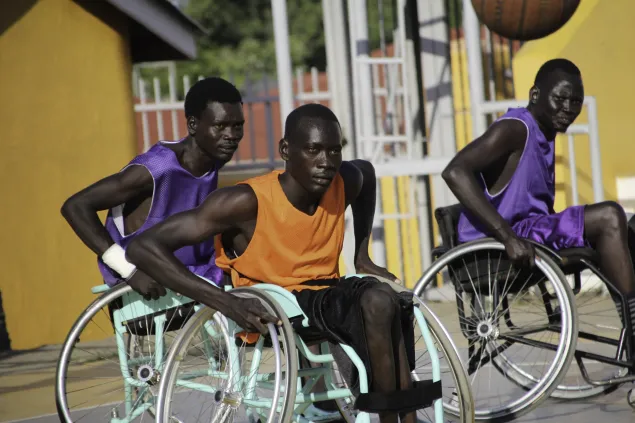
2018. Participants at an ICRC-supported rehabilitation centre in Juba take part in wheelchair basketball, demonstrating that recovery is not only about healing physically, but also restoring confidence, independence and inclusion.
Beyond the front lines
The impact of conflict extends far beyond those directly wounded.
Today, an estimated 7.8 million people face high levels of acute food insecurity, while 2.2 million children under the age of five suffer from acute malnutrition according to WFP. South Sudan also continues to have one of the world's highest under-five mortality rates, with many children dying from preventable diseases.
Conflict and insecurity have also forced families from their homes. According to UNHCR, by the end of 2025, approximately 1.3 million people were internally displaced, while hundreds of thousands sought refuge in neighbouring countries or returned from Sudan after violence escalated there.
Meeting these needs often requires reaching communities isolated by insecurity or flooding, where humanitarian access remains extremely challenging.
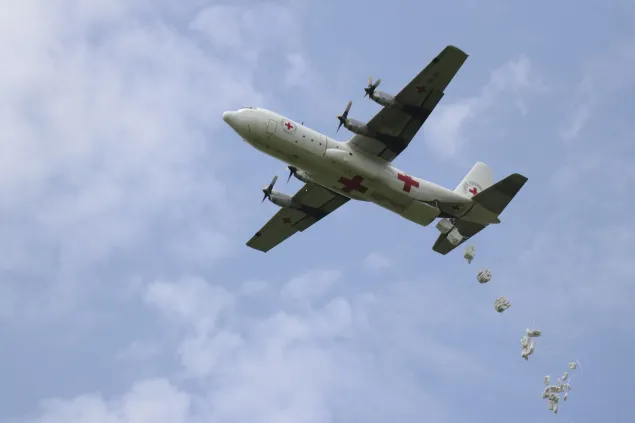
2018. ICRC food distribution in Leer.
Standing alongside South Sudan for the years ahead
For four decades, the ICRC has remained present in South Sudan as a neutral, impartial and independent humanitarian organisation.
Since 2014 alone, ICRC-supported surgical teams have admitted almost 9,000 weapon-wounded patients, performed more than 29,000 life- and limb-saving surgeries, evacuated more than 5,000 wounded patients for specialised care, and helped nearly 40,000 people regain mobility through physical rehabilitation programmes.
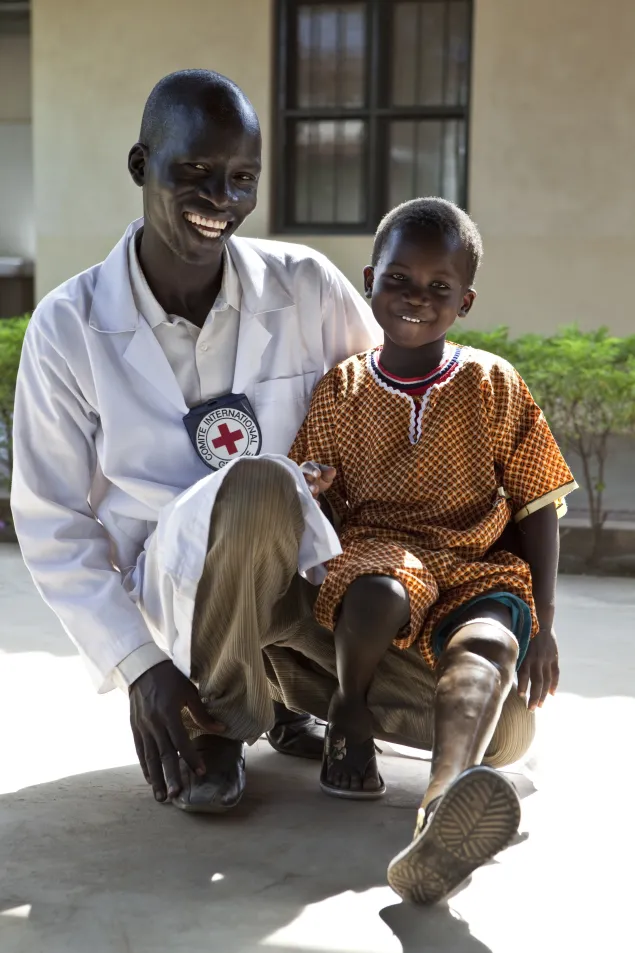
2012. Juba physical rehabilitation centre co-run by the ICRC. A six-year-old amputee with a physiotherapist from the centre where he received treatment and an artificial leg.
As South Sudan marks 15 years of independence, humanitarian needs remain immense, but so does the resilience of its people.
Together with the South Sudan Red Cross, health authorities and other partners, the ICRC will continue working to ensure that people affected by conflict can access life-saving care and humanitarian assistance wherever they are.
The ICRC also reiterates its call on all parties to the conflict to respect and protect health-care workers and medical facilities, collect and evacuate the wounded and sick without adverse distinction, and facilitate safe and unimpeded humanitarian access to civilians in need.