Ethiopia: Beyond survival, a journey defined by possibility

In late April 2026, the ICRC in Ethiopia launched a network of counterparts engaged in the promotion of International Humanitarian Law (IHL). One of the flagship members of the network is a young South Sudanese, Tibitha Nyamal Gatwech. From refugee firelight in the Gambella region of southwestern Ethiopia, to active commitment to the rule of law, she recounts how she transformed hardship into strength to act for a better world.
Witnessing injustice as a child
In my earliest memory, my mother is crouching over a small pot of boiling water in Dima Refugee Camp, one of the settlements in Ethiopia’s Gambella region. The fire hissed in the cold night air as she urged my siblings and me to stay close, warning us not to wander beyond the dim circle of light. In the camp, darkness often meant danger.
I grew up among people whose only wealth was hope, a community fractured by conflict and poverty, where justice felt distant and unreachable. Those early nights planted the first questions that would later shape my life.
I was born in Dima, after my parents fled Sudan [1] due to the conflicts of the 1980s. War had stolen their home long before I arrived. No child should have to witness what I experienced in the camp: women humiliated without consequence, children abused, entire communities shattered…
Even as a child, I sensed that without law, the powerless often suffer in silence. I began to ask questions that still guide me today: Who protects the vulnerable? What does justice mean if it never reaches those who need it most?
My mother never had the chance to attend school. She carried a quiet strength that shaped my understanding of resilience. My father was orphaned by war. He left school in ninth grade and joined an armed force, because life offered him few other alternatives at the time.
[1] South Sudan was part of Sudan until its independence in 2011.
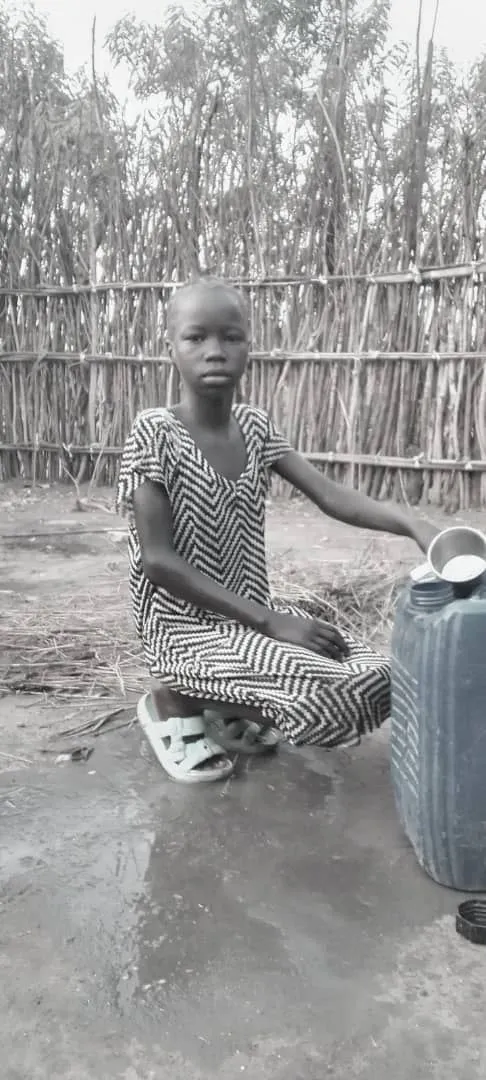
Young Nyamal fetching water at the well, part of daily life for little girls at a refugee camp, Gambella region.
In search of stability
Our family later moved to Khartoum, where we lived for seven years. My mother worked in Arab households while my father spent weeks and months away on military missions that often brought little or no pay. My mother’s labor sustained our family, but our future remained uncertain.
Eventually, we moved to Uganda in pursuit of better education. For the first time, I experienced the transformative power of the classroom. Each new English word felt like a key unlocking doors far beyond the boundaries of displacement. Education gave me confidence, belonging, and the courage to imagine a life defined not by survival, but by possibility.
The independence of South Sudan expanded this hope, but only two years later, conflict erupted again. Finishing high school in Uganda became a struggle and once again, my mother carried the burden. She baked cookies and took on countless small jobs to keep us in school. Watching her perseverance strengthened my own resolve.
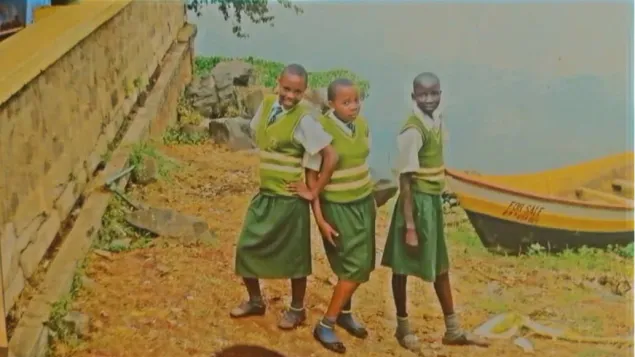
Early school years in Uganda, full of hope and discovery at a school tour.
Law studies in Hawassa, bridging back to Gambella
Through these struggles, I came to believe that justice for communities like mine would not come through weapons or shifting political power. It would come through the rule of law. I decided that I wanted to be a part of that solution.
After receiving a government scholarship to study law in Ethiopia at Hawassa University, I approached my education with urgency, understanding what was at stake. I graduated at the top of my class, became a two-time medalist in the International Humanitarian Law competition organized by the ICRC in 2025, and received the Peace Ambassador Award from the Ethiopian Law Schools Association shortly after. What mattered most was realizing that law can bridge humanitarian principles and the realities of displaced communities.
My undergraduate thesis brought me back to Gambella, where my story began. I examined the protection gaps facing South Sudanese refugees by comparing domestic and international legal frameworks with the harsh realities they face on the ground.
Conducting this research was deeply personal. I was no longer observing refugee life through the eyes of a child, but analyzing it through the lens of law and policy.
My research reinforced my belief that lasting peace requires more than the cessation of violence—it requires legal institutions capable of ensuring accountability.
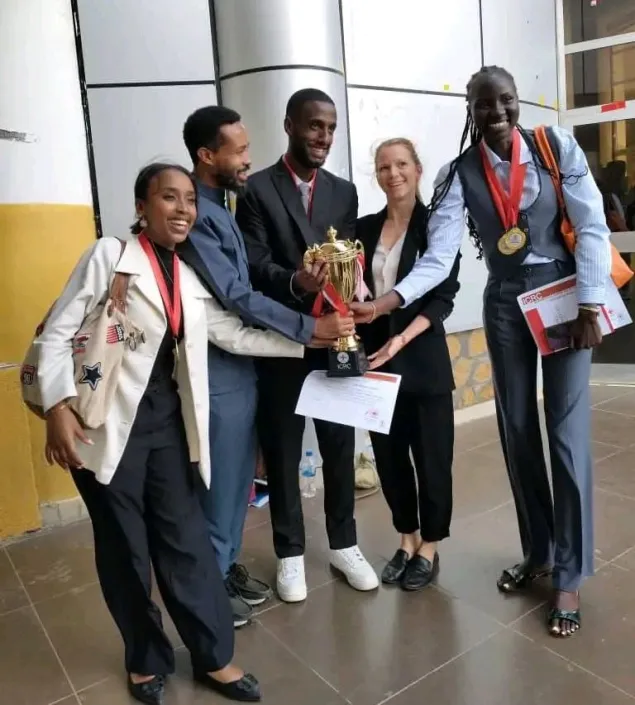
Nyamal with her team at the IHL National Moot Court competition in Gondar, representing Hawassa University, in May 2025.
Helping to build a future of justice and peace
Today, I continue this work within the Post-Conflict Reconstruction and Development unit of the Political Affairs, Peace and Security department at the African Union. I help to support societies transitioning from conflict: strengthening governance institutions, supporting reconciliation processes, and helping fragile states rebuild the foundations of peace.
Through an internship with GIZ in southern Ethiopia, I supported land governance projects and the reintegration of internally displaced persons, witnessing how legal clarity can restore dignity and stability. I have also provided pro bono legal aid to inmates at Gorgorios Correctional Facility in Hawassa who could not afford representation.
Leadership and advocacy have further shaped my commitment, as President of the Scholarship Students Association at my university, and as Public Relations Officer for Connect to the World, a youth diplomacy initiative. I also advocate with Girls Not Brides to end child marriage and expand opportunities for girls to pursue education and leadership.
A message to girls and children born of conflict
Yet beyond professional roles and academic achievements, my motivation remains deeply personal. My ongoing journey is not only about overcoming adversity; it is a message to girls and children born of conflict who may feel they have no place at the world table.
I want them to know their dreams are valid, their voices matter, and their futures can be re-written.
As I reach the end of my tale, I smile at the land where my story began, now carrying renewed purpose. Ethiopia gave me the chance to transform hardship into strength. Fragile beginnings can produce enduring purpose.
When I think back to that small fire in the refugee camp, I realize it illuminated more than our shelter in the darkness. It marked the beginning of a journey to transform my lived experience into a lifelong commitment. To help build legal systems protecting communities affected by conflict, and to help ensure that no child’s right to dream is stolen by war.

Nyamal at the African Union Summit in Addis Ababa, in February 2026, as part of her current legal advocacy work.