South Sudan: Finding Loved Ones Again Through the Power of Digital Connectivity

Abubaker Ali Adam had never been so worried. In 2023, he fled the civil war raging on in his native Sudan, ending up at the Gorom Refugee Settlement on the edge of the South Sudanese capital Juba. He came with nothing except memories of his once serene and bustling village in the western region of Darfur. His dream was to begin a new and quiet life in a country that was itself still reeling from decades of conflict and violence.
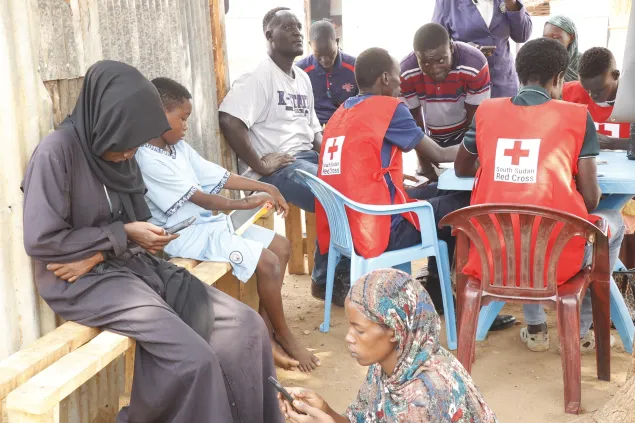
The ICRC in South Sudan has launched a new digital connectivity system to help people separated by conflict reconnect with their loved ones more conveniently.
But he also continued to be haunted by memories of his family, especially that of his aging mother who was still trapped in a village near El Fasher, the capital of North Darfur. On 04 November 2025, fighters of the Rapid Support Forces (RSF) took control of the city.
That was the last time Adam had any contact with his mother, until late February 2026 when the International Committee of the Red Cross (ICRC) deployed a new communications technology in the refugee settlement to enhance connectivity.
The initiative aims to complement the ICRC’s existing family tracing services by helping people separated by conflict, including internally displaced communities in South Sudan and refugees arriving from Sudan, reconnect with their loved ones more conveniently through a satellite-based solution using Starlink technology.
For Adam, this was something of a bonanza, as it enabled him to reestablish contact, first with one of his brothers, and later the rest of the family in Sudan. “He [the brother] assured me that, by the grace of Allah, our relatives are all fine,” said Adam, heaving a sigh of relief.
It was almost impossible to get hold of loved ones on the run and Adam was excited to finally reconnect with his family. His brother informed Adam that the family was safe in Tawila, a town in North Darfur that had become a major overcrowded hub for hundreds of thousands of internally displaced people (IDPs) fleeing intense violence around El Fasher.
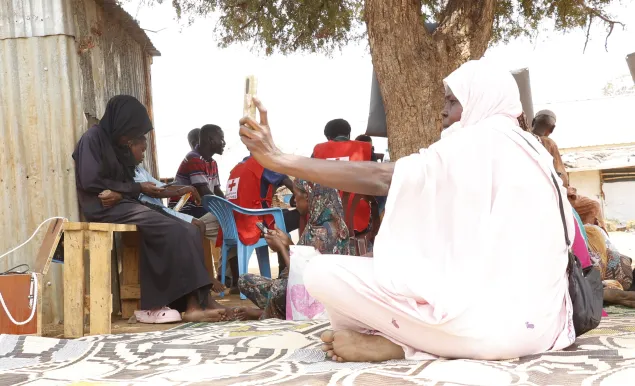
The conflict in Sudan has forced populations to flee to countries where their GSM telephone networks do not work and can connect with loved ones only through the internet.
“We have many pending cases under follow-up,” said ICRC Deputy Protection Coordinator, Talent Moyo. “In some cases, searches must be conducted in areas our teams cannot access, which delays the process. At the same time, telecommunications networks are often disrupted, preventing families from contacting relatives even when they have their phone numbers,” he explained.
Moyo added that with the arrival in South Sudan of the Starlink technology, the ICRC saw an opportunity to use digital connectivity to strengthen family tracing services.
“I am glad I was able to communicate with my brother, uncle and other relatives in Khartoum,”
said Ikram Mahjoub, an 18-year-old Sudanese lady, who had been particularly concerned about her brother, who chose to stay in war-ravaged Khartoum. “I learned about his condition and the general situation in the country,” she added, after using the new service.
Internet access in South Sudan remains among the lowest in the region. During times of conflict or crisis, disruptions in connectivity can further isolate families already separated by violence and displacement. Previously, the ICRC relied mainly on Thuraya satellite phones.
These devices were expensive, allowed only one user at a time, and limited calls to three minutes to allow more people to access the service. They were also only useful when families already had a working phone number for their relatives. With the increasing availability of high-speed internet through Starlink services, ICRC can deploy a system that supports large groups of users simultaneously.
ICRC teams visit the refugee settlement once a month to offer the service, which involves distributing coupons with usernames and passwords. These unique credentials enable users to login and connect their personal devices – smart phones, tablets, etc - to the internet and search for missing relatives or reconnect with loved ones on their own.
The system allows many people to connect to the network at the same time, making it easier for large groups of displaced people to search for and connect with their families,"
said Amit Dhar, ICRC Coordinator in charge of Information and Communication Technology, after launching the service at the Gorom Refugee Settlement earlier this year.
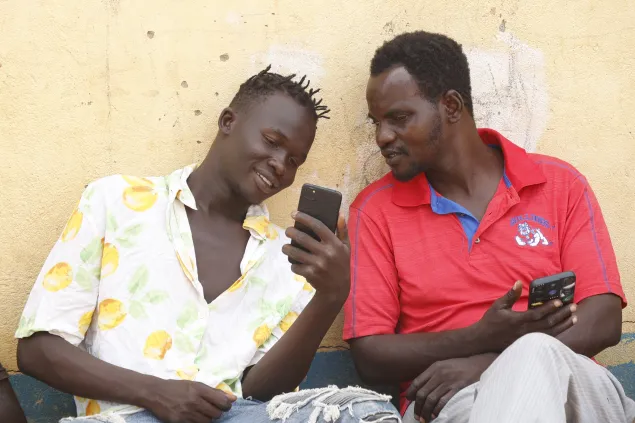
To ensure the service is primarily used to reconnect families, access is limited to messaging and social media platforms.
ICT teams also offer guidance on safe and responsible use of the service, something they often try to balance with user autonomy, according to Dhar. Moreover, “with this new service, they can stay on the phone (or other device such as a tablet) with relatives even for up to an hour or more, depending on the need,” he added.
The conflict in Sudan has forced populations to flee to countries where their GSM telephone networks do not work. Under such circumstances, the only way for the refugees to connect to their relatives in these areas is through internet and social media applications that enable users to easily reconnect with their loved ones.
“The service has strong potential to support efforts to locate missing family members and reconnect separated relatives in South Sudan,” said Moyo. Interestingly, the idea of offering internet connectivity came from the refugees and returnees themselves.
The affected communities mentioned that their families are mostly on Facebook and other platforms and that instead of phone numbers they have “profile names” for their social media and can connect more easily and even search through mutual friends.
I see this service as a critical emergency tool that complements all the other PFL (Protection of Family Links) services and allows individuals to independently search for their loved ones through social media platforms”, Moyo stressed.
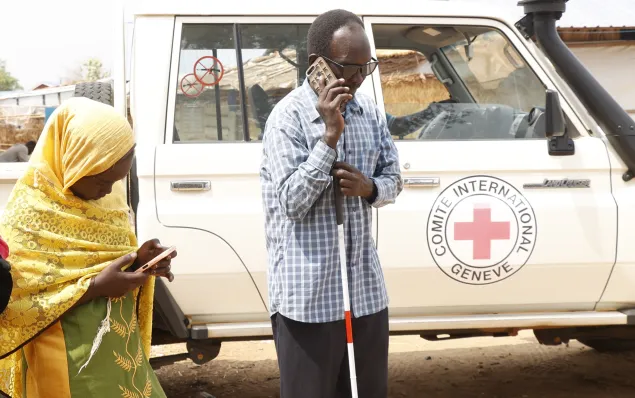
For the ICRC, connectivity has become an important humanitarian enabler that strengthens its Protection of Family Links services.
To ensure the service is primarily used to reconnect families, access is limited to messaging and social media platforms such as WhatsApp, Facebook and Viber.
Adam and Ikram are among 156 users reconnected with relatives through social media within two days of the service’s rollout, helping them learn about the location and whereabouts of 688 family members, something they had not been able to do for several months.
For the ICRC, connectivity has become an important humanitarian enabler that strengthens its Protection of Family Links services, complementing existing tracing and family contact efforts while helping people separated by conflict restore contact with their loved ones and regain a sense of safety, dignity and hope.