Gaza: Life altering experiences stay with civilians three years on from the escalation of conflict

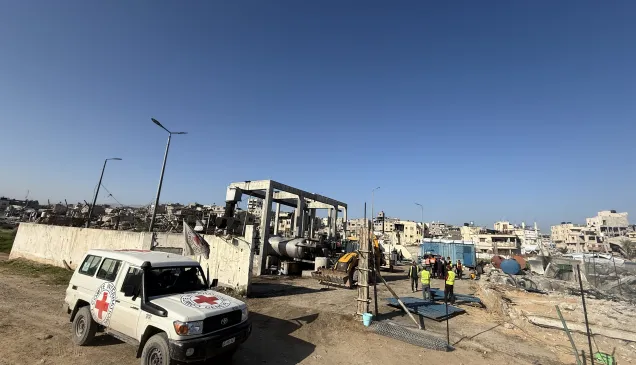
Three years have passed since the escalation of armed conflict in the Gaza Strip. Life for civilians remains extremely difficult with severe challenges affecting almost every aspect of their daily lives.
Many families are still mourning for the loved ones they have lost, live far from their former homes, and often struggle to access the medical care they need. People want to be able to rebuild their lives, but right now, they still struggle to survive.
This article shares what people in Gaza have told us in their own words about what they are going through, the difficult decisions they have to make, and what they are hoping for.
The harsh realities of displacement
Displacement has been an ongoing challenge for almost every family in the Gaza Strip – almost two million people. Leaving your home and not knowing when or even if it will be possible to return leads to inescapable uncertainty. When Lina Al Kurdi, 34, left her home, she took only her ID card and a few clothes. At the time, she thought she would be able to return after two days, but more than a year later she is still living in a tent. "It has been the most difficult thing we have been through," she says. "When we had to move, we separated from my other family members. At that time, I did not think of anything".
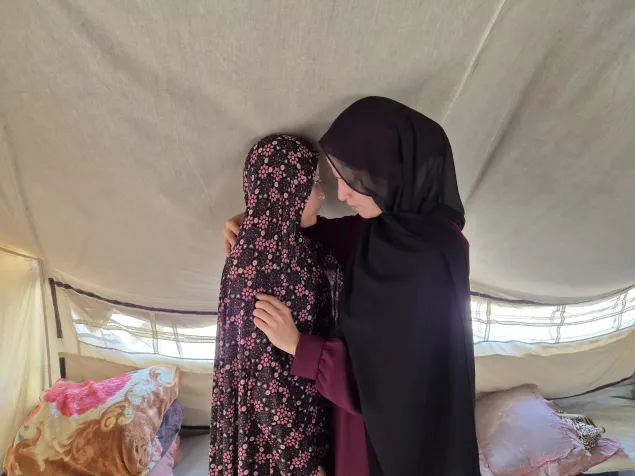
Lina Al Kurdi, 34, comforts her sister, Reem, 30, in their worn-out tent, hoping that their conditions will improve one day. Their greatest wish is to go back home.
Lina and her sister Reem now have only each other to lean on. More than anything, Lina says, she wants to be able to go home. " It is where I feel safe."
For 74-year-old Jihad Abu Awad, his former home holds all his memories of being with his children and grandchildren. It was his safe place. Jihad says, "Displacement is like you do not have a homeland. It is like you have no land. You have no family. You have no safety". He remembers when his wife was alive, before the escalation of the conflict. She used to cook a special meal to gather all his sons and daughters around it. “That was home,” he says. "But now everyone is struggling to survive.”
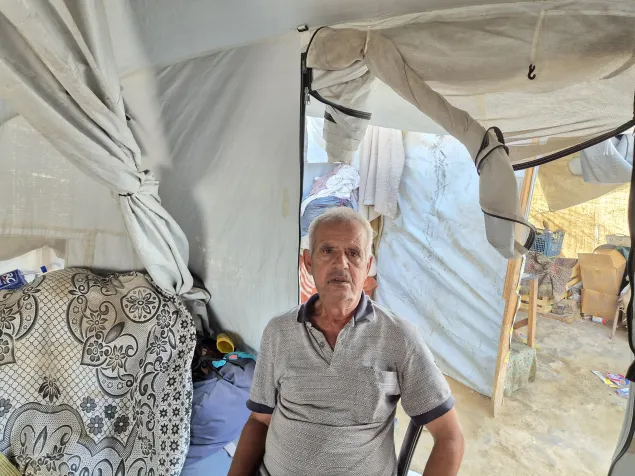
74-year-old Jihad Abu Awad rests on a chair in his tent in an IDP camp in Deir Al Balah, Gaza Strip.
The painful separation from family
The escalation of the conflict forced many families to make tough decisions for the sake of their loved ones. Mohanned Abu Shaban, a 38-year-old from Gaza, is a father of two children. In 2025, Mohanned said goodbye to his wife and their 11-year-old son, Kamal, who was being medically evacuated for treatment outside Gaza. Mohanned could not go with them. He has remained in Gaza, following Kamal’s treatment from a distance ever since.
"It was so hard for us as a family to see our son sick and not be able to do anything for him," Mohanned says. "The moment I heard he would be evacuated, I felt relieved and hopeful." Now he all he wants is to be with his family again. "My hope is to see them and to support my son during his treatment.'
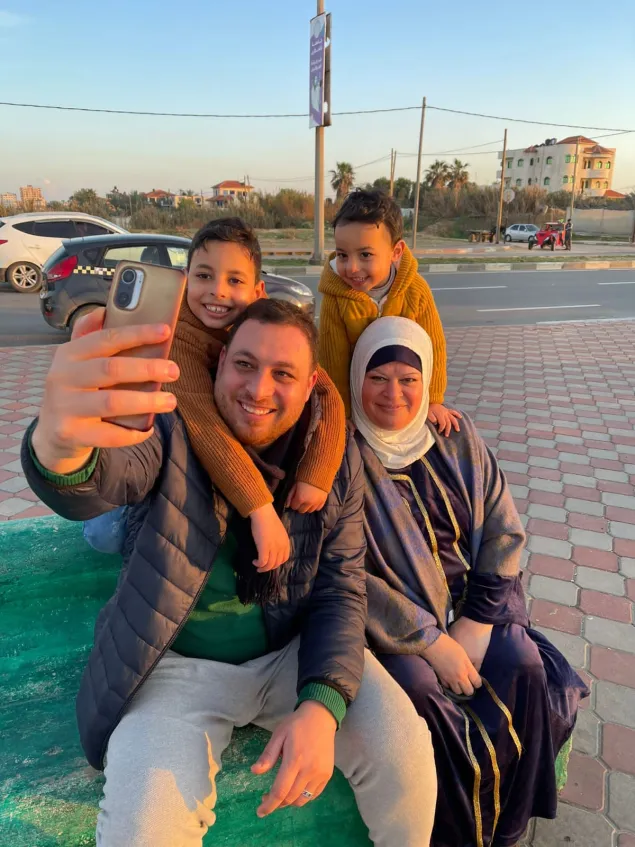
A family photo of Mohanned with his two children and his mother in happier times.
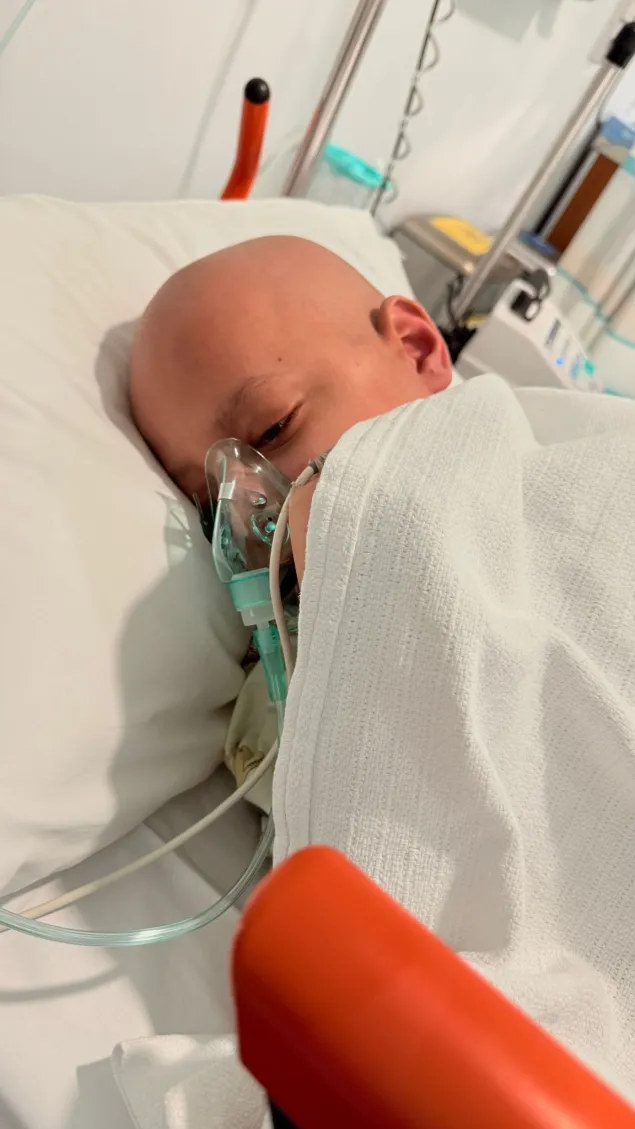
A photo of Mohanned’s sick son Kamal at the hospital.
The difficult access to health care
Three years of conflict has devastated the health-care system in Gaza. Many people in Gaza cannot access the medical care they need.
Jaber Zidan works with Palestine Red Crescent Society; he leads the teams that transfer patients to the border crossing for medical evacuation, in coordination with the World Health Organization. He tells us that he often thinks about his past patients, such as one who stayed awake all night because he was afraid he would sleep through the ambulance pick-up.
Working under immense pressure, hospitals that still function are short of fuel, medicines and equipment, at risk of collapse amid overwhelming demand. The waiting lists for those who need to see specialists or to be medically evacuated remain in the thousands. For those needing specialist medical services outside of Gaza, PRCS ambulances are a vital link to the treatment they desperately need.
Jaber recalls the many patients who had been severely wounded, children with amputations, and people in need of cardiac surgeries and more.
"When we get to them, our patients have often been waiting for months to receive proper treatment,” Jaber says. "Every time I join such a mission, I meet many people with different heartbreaking stories, and they all remain with me."
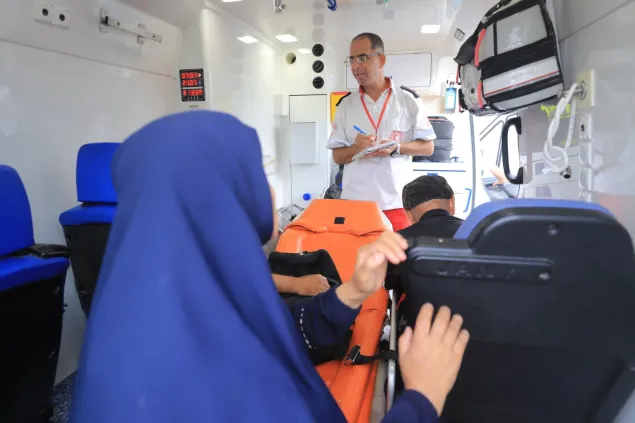
Jaber Zidan, who works with the Palestine Red Crescent Society (PRCS) in a PRCS ambulance checking names of patients before they move to the crossing.
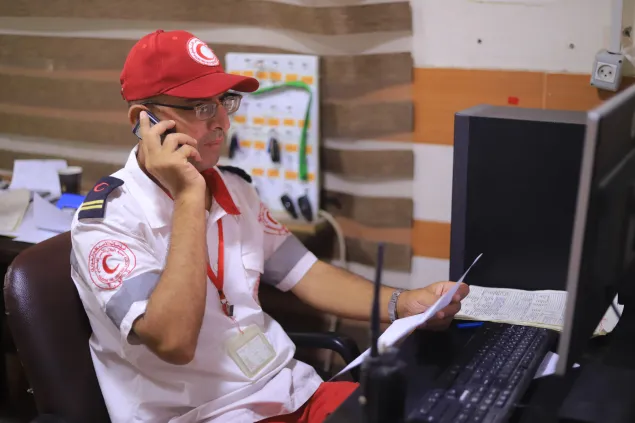
Jaber Zidan works with the PRCS to help with medical evacuation operations.
Three years on, life remains on hold for most people in Gaza; uncertainty and fear about the future dominate almost everyone’s waking moments. Amid all this, people hope for stability and safety, a home to return to, the chance to be reunited with and care for their families and to look to the future with choice and agency.