Publication

Restoring and rebuilding resilience: An economic lifeline for Kenya's border communities

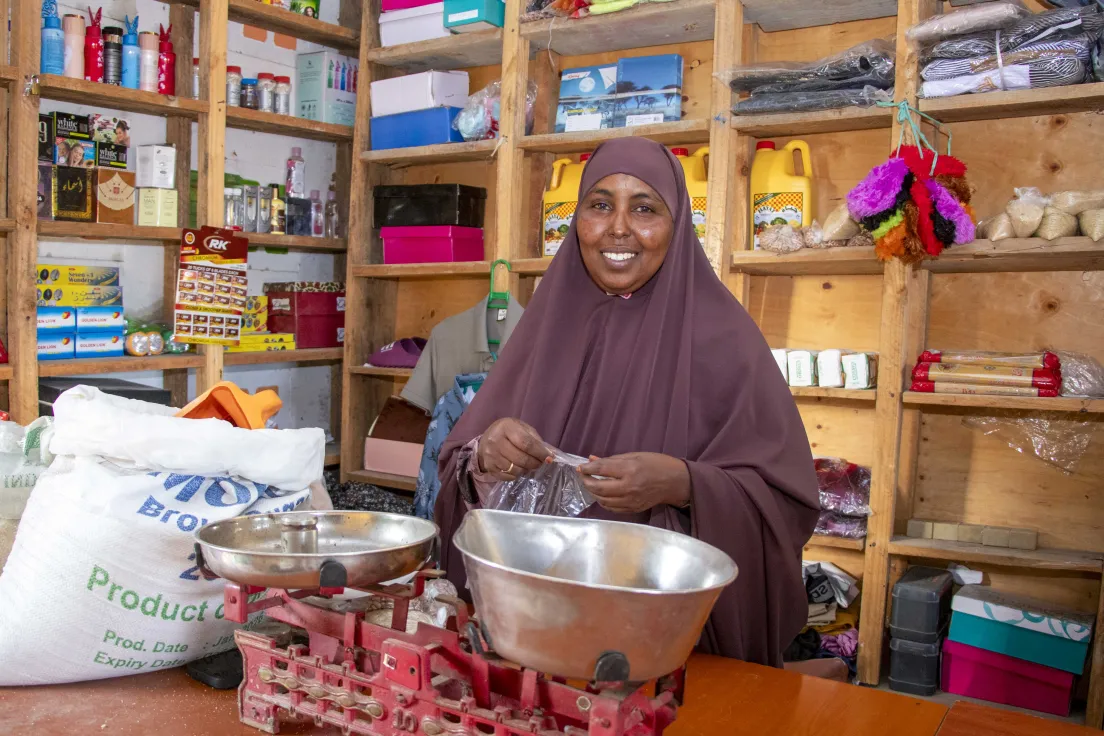
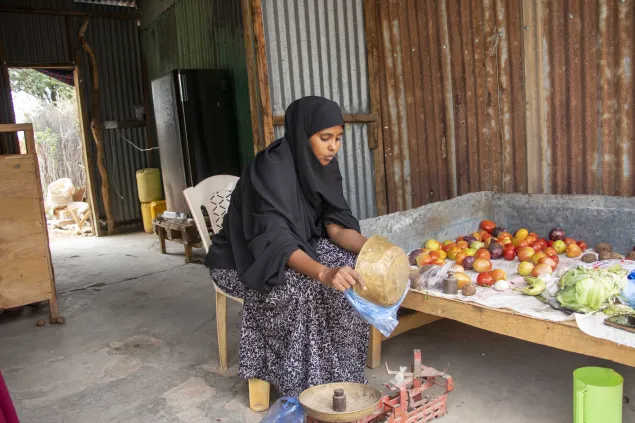
Photo of beneficiary in her ICRC supported shop

600 vulnerable households that included female-headed households, youth-led families, persons with disabilities, internally displaced persons (IDPs), and small business owners whose livelihoods had been disrupted by the extension of the Somalia conflict along the Kenya-Somalia border, received about $390 each alongside business management training.

Background

For many years, communities living along Kenya's border with Somalia have faced challenges that extend beyond insecurity. Recurrent conflict, displacement, limited economic opportunities, and restricted humanitarian access have disrupted livelihoods and left many families struggling to meet their basic needs.

Recognizing these challenges, the International Committee of the Red Cross (ICRC), in partnership with the Kenya Red Cross Society (KRCS), launched the Economic Security (EcoSec) Programme in northeastern Kenya in 2018. The programme was initially started in Garissa South (Ijara sub-county) before expanding to vulnerable communities across Garissa, Wajir, and Mandera counties.

The initiative was designed to strengthen household resilience and help families recover from the effects of conflict and economic shocks. Through a combination of cash assistance, vocational training, Village Savings and Loan Associations (VSLAs), livestock vaccination campaigns, beekeeping, agricultural extension services, and business development support, thousands of people have been empowered to rebuild their lives.
One of the recent programme's most impactful interventions was the Conditional Cash Grant Project implemented in 2025 in the Kenya-Somalia border areas of the three counties with limited humanitarian interventions. Through the initiative, 600 vulnerable households received about $390 each alongside business management training. The beneficiaries included female-headed households, youth-led families, persons with disabilities, internally displaced persons (IDPs), and small business owners whose livelihoods had been disrupted by the extension of the Somalia conflict along the Kenya-Somalia border.

In total, the project reached 200 households in each of the three border sub-counties of Liboi in Garissa County, Diif Sub County in Wajir County, and Elwak in Mandera County after beneficiaries successfully went through the application and selection processes.

From Hope to Prosperity

Located near the Kenya-Somalia border in Garissa County, Liboi has long served as an important gateway between the two countries. While its strategic location supports trade and movement, it has also exposed the community to the effects of insecurity and economic disruptions associated with the protracted Somalia conflict.

For many residents, opportunities are scarce, especially for women and young people seeking to establish sustainable livelihoods. It is in this environment that Shamhat Kahiye, a young single mother, struggled to find her footing. Before joining the programme, Shamhat spent months searching for employment opportunities without success.

"I stayed at home hoping to find a job through different channels, but nothing worked out," she recalls. "Life was becoming increasingly difficult," she adds.

Photo of Shamha, a beneficiary, seated and sorting her stock of vegetables.
©Abdihakim Yussuf/ICRC

Shamhat sits and organises her groceries for the day's sales. She has been keen on ploughing back her profits and has managed to upgrade the business, including purchasing a refrigerator, installing solar power panels.

Everything changed when KRCS and ICRC introduced the Economic Security Programme in her community. Using the $390 grant she received, Shamhat started selling vegetables, onions, and other household commodities. The business gradually grew, generating enough income for her to expand into a retail shop. Today, her shop is one of the most promising small businesses located in this small border town. Through the profits, she has been able to do a couple of things to upgrade her business, including purchasing a refrigerator, installing solar power panels, and still continues to expand her stock.

"The support gave me a new beginning. I started with vegetables, but now I own a shop. My dream is to become one of the biggest businesspeople in Liboi and build something that future generations will remember," she says.

Shamhat's journey reflects the transformation taking place across Liboi, where many beneficiaries have turned financial support into sustainable businesses that contribute to the local economy. According to Yussuf Abdinoor, the Chief of Liboi, the programme has brought meaningful change to a community that has often been overlooked.

"Because Liboi is located along the Somalia border, many organizations find it difficult to operate here," he explains. "This project has transformed lives. Families are earning incomes, businesses are growing, and people have regained hope. On behalf of the government and the community, we sincerely thank ICRC and KRCS for investing in our people," he added.

Rebuilding Lives in Elwak

Further north in Mandera County lies Elwak, a bustling border town known for its vibrant trade and pastoralist communities. Positioned along the Kenya-Somalia border, Elwak serves as an important commercial centre connecting people across the region. Among the beneficiaries here is Hassan Bilow, a small business owner whose struggles once threatened his family's future. Before the intervention, he operated a tiny shop with very little stock.

"The profits were so little that sometimes providing three meals a day was difficult. Paying school fees for my children was also a challenge," he remembers.

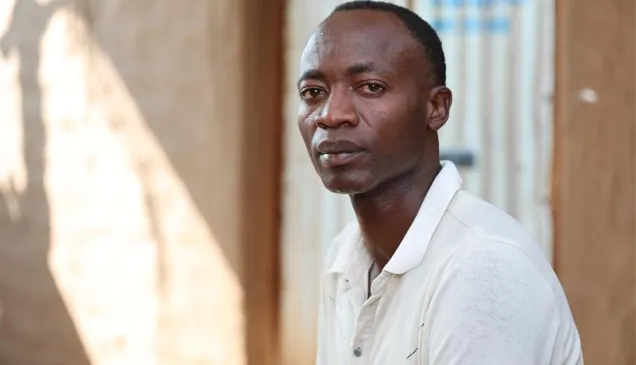
Photo of Hassan, a beneficiary in his shop.
©Abdihakim Yussuf/ICRC

Hassan Bilow happily show his well stocked shop in Elwak. The income from the shop has really improved his quality of life.

After being selected for the programme, Hassan received the money and participated in business training sessions covering bookkeeping, financial management, stock control, customer care, savings, and business planning. Instead of spending the money on his immediate needs, he invested every coin back into his business, and the results have been remarkable. Today, his shop is fully stocked and serves both retail and wholesale customers. The business generates enough income to support his family and keep his children in school.

"This project changed my life. Now I can provide food for my family, pay school fees, and plan for the future with confidence," he proudly says.

Zeinab's journey from displacement to dignity

Also living in Elwak is Zeinab, a mother of nine whose life was turned upside down by inter-clan conflict.

When violence erupted in her home area in Wajir County, her house was burned down, forcing her and her children to flee with nothing. With no transport and nowhere to go, Zeinab began their long journey towards Elwak on foot. Along the way, the exhausted family got lucky and hitched a ride from a passing lorry, which helped them finish their journey.

Upon their arrival, they settled in an IDP camp, and according to Zeinab, life in the camp was very difficult.

"I worried every day about how I would feed my children. I had lost everything," she says.

When KRCS and ICRC teams visited the camp alongside local authorities to identify vulnerable households, Zeinab applied and was selected among the beneficiaries. After receiving business training, she got the first instalment of $190 and started selling vegetables. She decided to diversify her business by adding household items and utensils after she received the second instalment. Today, she operates a growing shop that serves customers throughout Elwak.

"My life has completely changed. My children are back in school, and I can provide for them. I am grateful because this project restored my dignity,” she states with emotions overwhelming her.

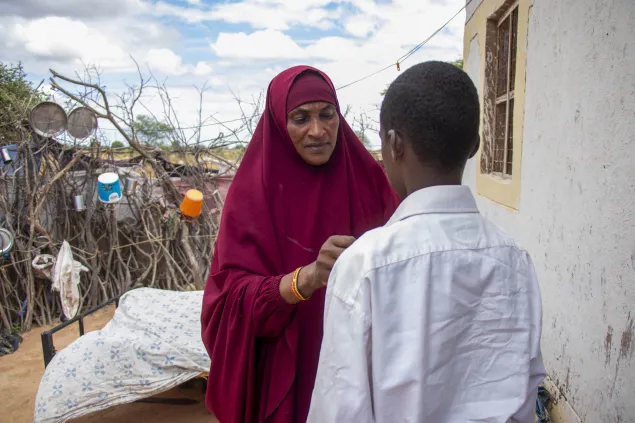
Zeinab, a beneficiary of the Ecosec program prepares her son for school
©Abdihakim Yussuf/ICRC

Zeinab prepares one of her children for school. Her children's education going uninterrupted is one of the things she hails the project for.

Her story demonstrates how a combination of financial support, training, and determination can help families recover from being displaced to rebuilding their futures.

Economic growth in Diif

In Diif Town, Wajir County, the project supported another 200 households. Like many border settlements, Diif has faced economic challenges linked to insecurity, isolation, and limited livelihood opportunities. However, the cash grant programme has helped stimulate local economic activity that has in turn strengthened small businesses throughout the town.

Today, many beneficiaries are running successful enterprises ranging from retail shops and food kiosks to livestock-related businesses. Opportunities are endless. Community elder Sacad says the programme has revitalised the local economy tremendously.

"Before this project, there were only a few small businesses in the town. Today, many families have businesses, and the town is more active economically. We have seen real growth because people now have capital to invest and support their families," he says.

Guaranteeing responsible and dignified project closure

After eight years of implementation, the EcoSec Programme has now come to an end due to reduced global funding that has affected humanitarian operations globally. However, the ICRC and KRCS have emphasised that ending the programme does not mean abandoning the communities they have worked with over the years.

Instead, both organizations committed to a responsible and dignified exit process designed to ensure the sustainability of the gains achieved over the years. Extensive consultations were conducted with county and sub-county authorities, community leaders, financial institutions, opinion leaders, and beneficiaries to develop an exit strategy that safeguards the progress made by the programme. Through coordination meetings, stakeholders were informed about the programme's closure and expressed their commitment to supporting beneficiaries beyond the project's lifespan.

As part of the exit process, refresher business training was conducted for all 600 beneficiaries. The training focused on strengthening business management skills, improving record-keeping, enhancing financial planning, and helping entrepreneurs continue growing their enterprises independently.

In addition, beneficiaries have been linked to banks, government programmes, savings groups, and other development partners operating in the region. These financial linkages are intended to ensure that communities continue accessing financial services and opportunities even after the programme concludes. Financial institutions have also been engaged to bring their services closer to border communities, allowing beneficiaries to interact directly with providers and select products that best suit their needs.

The final phase of the exit process involved community closure meetings where beneficiaries, local authorities, and stakeholders reflected on the programme's achievements and discussed the way forward.

A Lasting Legacy

While the programme may have ended, its impact will continue to be felt across the border areas of Garissa, Wajir, Mandera and Lamu for years to come. From Shamhat's thriving business in Liboi to Hassan's expanded shop and Zeinab's remarkable recovery from displacement in Elwak, the programme has helped hundreds of families move from vulnerability to self-reliance.

For the 600 households that received support, the project was more than just a cash grant. It was an opportunity to restore dignity, rebuild livelihoods, and create hope for a better future.

As communities continue building on these achievements, the legacy of the EcoSec Programme will live on through the same businesses, renewed skills, and strengthened resilience it has helped create across the Kenya- Somalia border regions.