A childhood interrupted: How weapon contamination disrupts education in Iraq
Across Iraq, weapon contamination continues to shape children’s lives in ways that extend far beyond physical injury. Explosive remnants of war remain present in fields, paths and everyday spaces, exposing children to risks as they go about daily activities such as herding livestock, playing, or travelling to and from school.

When accidents occur, the consequences often include prolonged interruptions to education, making learning more difficult or forcing children to fall behind or leave school altogether. Sirwan’s story illustrates how a single incident can abruptly alter a child’s education, with lasting effects for both the child and their family.
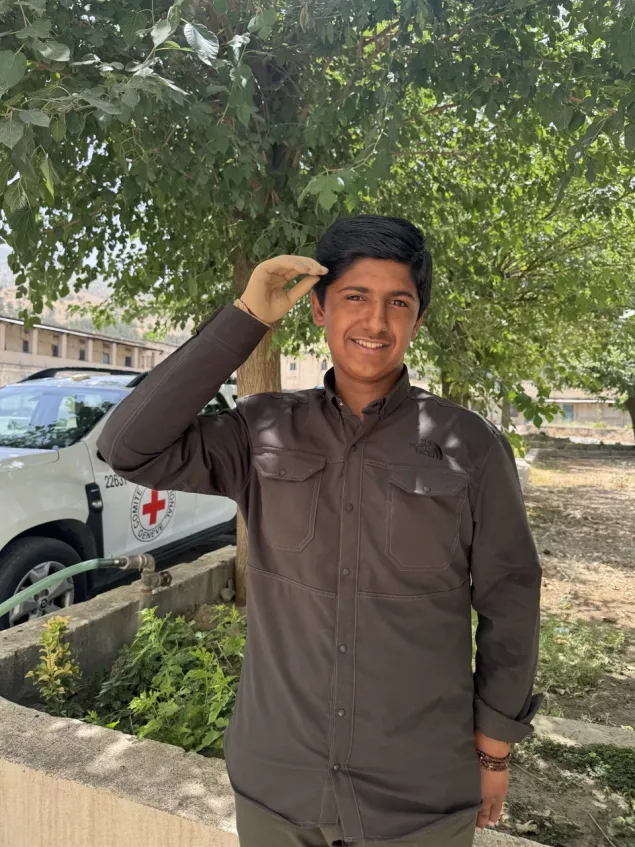
“I had lost my right hand; the hand I used to write with,” says Sirwan Nabi, who was only 16 years old when a single moment changed the course of his life and brought his education to an abrupt halt. Today, at 18, he is still determined to continue learning, but he remains several years behind his classmates after a landmine explosion near his home in the mountainous border area of Sidakan, in northern Iraq.
Sirwan grew up in a mountainous border area in Erbil Governorate, where weapon contamination continues to pose a serious threat. Like many boys in rural communities, he worked as a shepherd, helping his family tend livestock in areas used daily for decades, often without knowing the hidden dangers beneath the soil.
On a July morning in 2023, Sirwan was herding sheep in the mountains, less than two kilometers from his house. It was a place he passed by every day. He had stopped there for breakfast, as he often did.
“That day, I found something that looked beautiful,” he recalls. “It was small, like a pipe, yellow and shiny. It was lying clearly on the sand.”
When Sirwan touched it, it immediately exploded in his hand.
The blast shattered his right arm and left numerous metal fragments in his legs. Still conscious, he called for help, but at first, his family thought he had been injured by an animal. Four people carried him to a car. He was rushed from one hospital to another, ending up at Erbil Emergency Hospital, where surgeons were forced to amputate his right arm that same night.
No one told Sirwan before the operation that he would lose his arm. He only found out when he woke up. “I was 16 years old. I had lost my right hand; the hand I used to write with,” he says.
Education interrupted
The injury affected nearly every aspect of Sirwan’s daily life, but its impact on his education was immediate and profound. Writing, studying, and even holding school materials became a challenge. Learning to write with his left hand took time, and he fell behind in class.
“This incident changed 90% of my life,” Sirwan says. “I can’t do many things like before. Writing is hard. Eating is hard. But I am grateful to be alive.”
Across Iraq, weapon contamination continues to pose a threat on children. Explosive remnants of war and landmines contaminate areas where children live, walk to school, or play, and they are particularly vulnerable, often drawn to unfamiliar or shiny objects, unaware of the danger they pose.
Iraq remains one of the most contaminated countries in the world. Explosive ordnance affects vast areas of land, particularly in border regions, rural communities, and areas recovering from conflict. These hazards do not only kill and injure, they disrupt livelihoods, restrict movement, and undermine access to education and basic services.
Living with the consequences
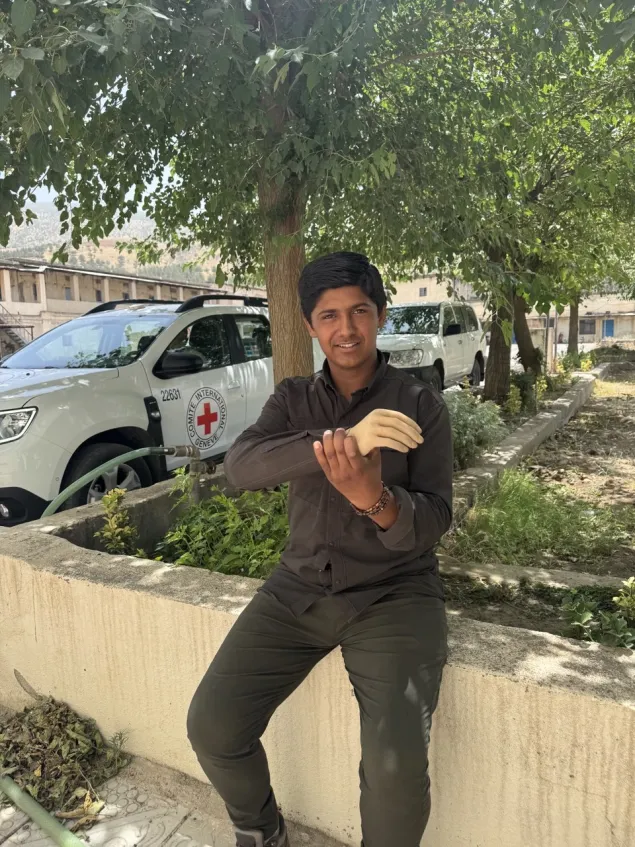
Sirwan now uses a prosthetic arm provided with support from the International Committee of the Red Cross (ICRC). While the device is mainly cosmetic, it helps him feel more confident in public. He removes it only at night.
“The ICRC came and asked us about the incident,” he explains. “They measured my arm, and after a short time, I received the artificial arm. They told me I could come back to the physical rehabilitation centre in Erbil if I had any problems with it.”
Sirwan still helps his family as a shepherd, but only close to his home. His legs still contain fragments from the explosion, a daily reminder of the incident. His siblings assist him with daily tasks, and he continues practicing writing with his left hand. “I have passed the seventh grade,” he says proudly. “I’m trying to cope.”
A family affected
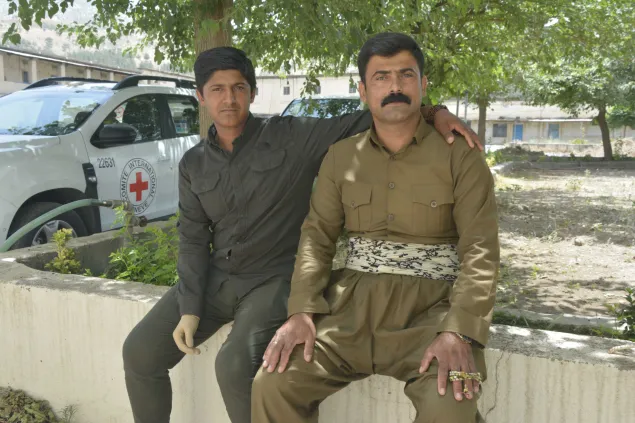
For Sirwan’s father, Nabi Saleh, the impact of the explosion extended far beyond physical injury.
“We were doing well financially,” he says. “After the incident, we spent months in hospitals. It affected the whole family.”
The emotional toll was heavy. Sirwan’s mother fell ill following the accident and now suffers from chronic chest pain linked to stress and grief.
“When something like this happens, it damages the entire family,” his father says. “But we support him, and we are grateful that he survived.”
Weapon contamination often creates long-term humanitarian consequences that extend well beyond the initial blast. Survivors and their families may face financial hardship, psychological distress, and lasting barriers to education, employment, and social inclusion.
Raising awareness to prevent future injuries
Sirwan now shares a message he wishes he had heard earlier.
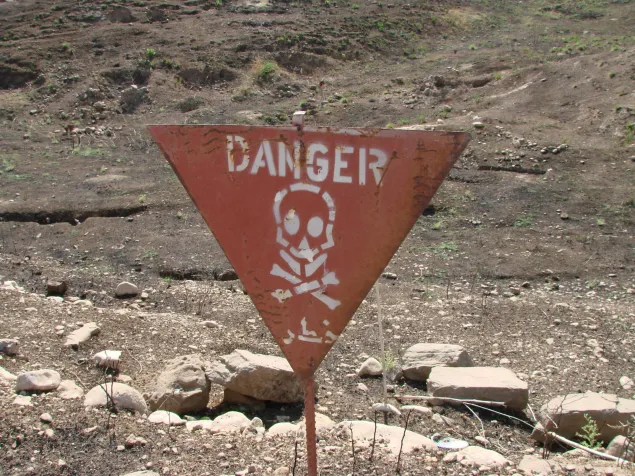
“If you see anything strange, even beautiful, or shiny, like a pen or a pipe, do not touch it,” he says. “It might explode. Call 182, the Iraqi Kurdistan Mine Action Agency. It’s free.”
Risk awareness and safer behavior are critical in a country where explosive hazards remain widespread. Shepherds, farmers, children, and people returning to their homes after conflict are among those most at risk.
The ICRC works closely with affected communities, national authorities, and partners to raise awareness about explosive ordnance risks, support victims, and strengthen national capacities to address weapon contamination. Through education, victim assistance, and advocacy, the ICRC aims to reduce harm and help communities live more safely.
For Sirwan, the journey continues one letter at a time, written slowly with his left non-dominant hand.
ICRC in Iraq
Present in Iraq since the Iraq-Iran war in 1980, the International Committee of the Red Cross (ICRC) focuses on addressing the consequences of armed conflicts and other situations of violence across the country. As large-scale military operations are over, more attention has been given to transfer of knowledge, recovery and reconstruction efforts, with many people across Iraq still in need of some form of humanitarian assistance and support.