Gaza: Aseel’s journey back to hope

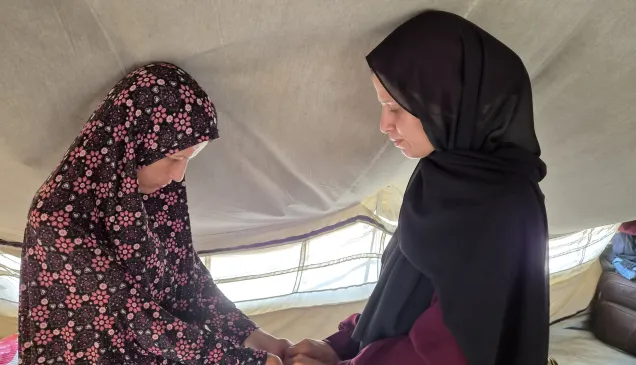
Aseel, a young woman from Gaza, was preparing to start a new chapter in her life. Like many Palestinian families displaced by over two years of hostilities, she and her relatives were living in a tent when an overnight blast changed everything.
Aseel was counting down the days to her wedding. She was busy with preparations, discussing arrangements with her family and imagining the day she would celebrate with her loved ones.
“We had barely drifted off to sleep when the bombing started,” she recalls. In the chaos that followed, the tent where she was staying was struck. “We only saw the tents flying over our heads,” she says.
When people carried her out, she realized her leg had been badly injured. By the next morning, her life had taken a devastating turn. The injury was severe, and medical resources were limited. “I was in so much pain that I just wanted to be rid of my leg,” she remembers. “I told them I just want to amputate it and be at peace.”
For Aseel, the amputation was not only a physical loss but also an emotional one. She worried about what life would look like afterward, especially in the difficult living conditions many families now face.
Learning to walk again
Aseel’s recovery began with rehabilitation and physical therapy supported by the ICRC.
“When I started physical therapy, I couldn’t imagine that I would be able to walk,” she says. But with regular therapy and support from the rehabilitation team, her strength and confidence grew. The day she learned she would receive a prosthesis was “the happiest moment in my life,” she says.
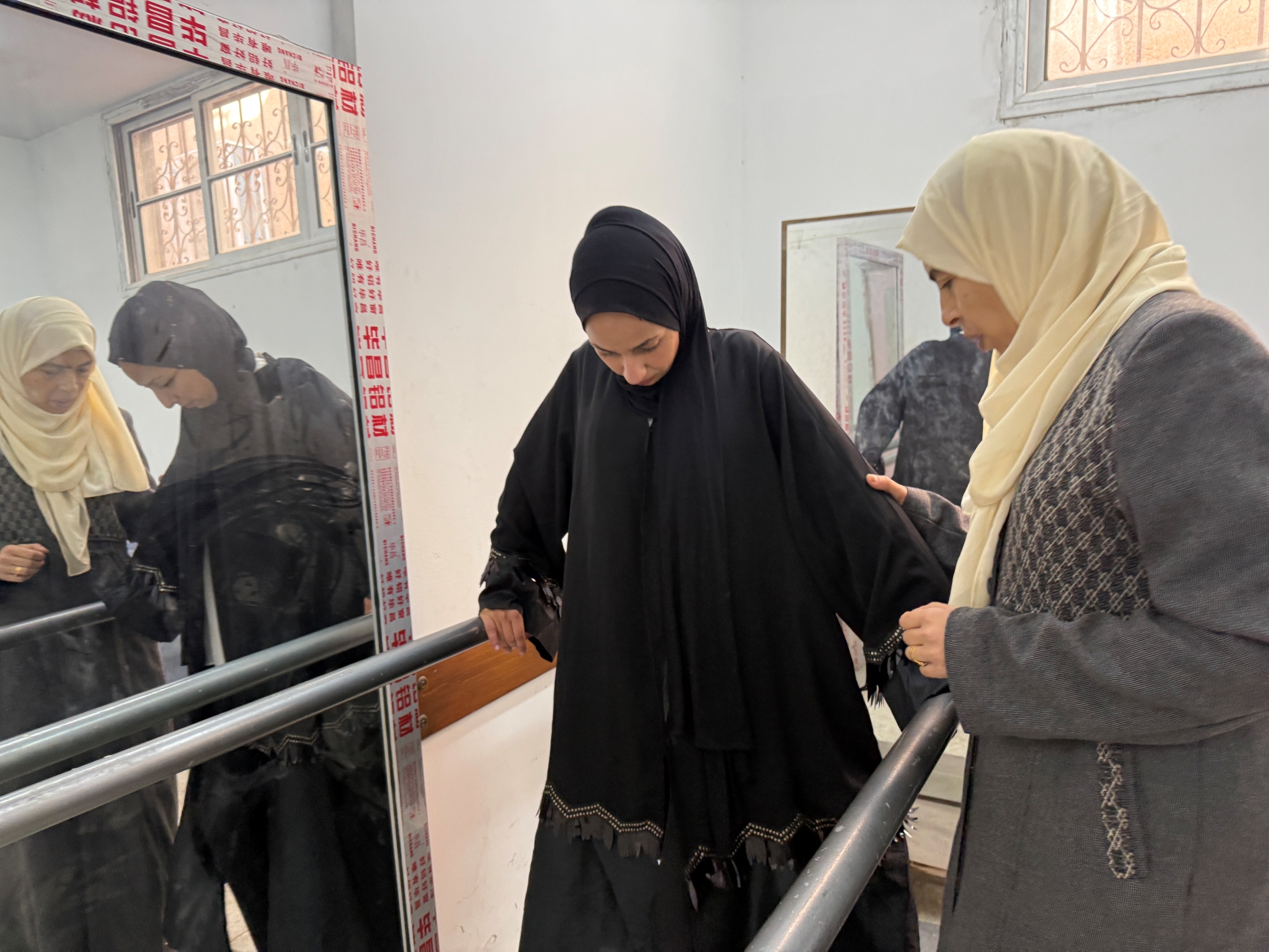
When she first put on the prosthetic leg, she was eager to move forward. “The doctor told me to walk step by step so I wouldn’t fall,” she says with a smile. “But instead, I wore it and started walking very fast.” Her physiotherapist had to remind her to slow down. But for Aseel, every step was a step back toward the life she had imagined.
A wedding day against the odds
As the wedding day approached, Aseel felt both excitement and anxiety. She worried that the prosthesis might fail her or that she might fall during the celebration. But the rehabilitation team helped her prepare, not only to walk, but even to dance.
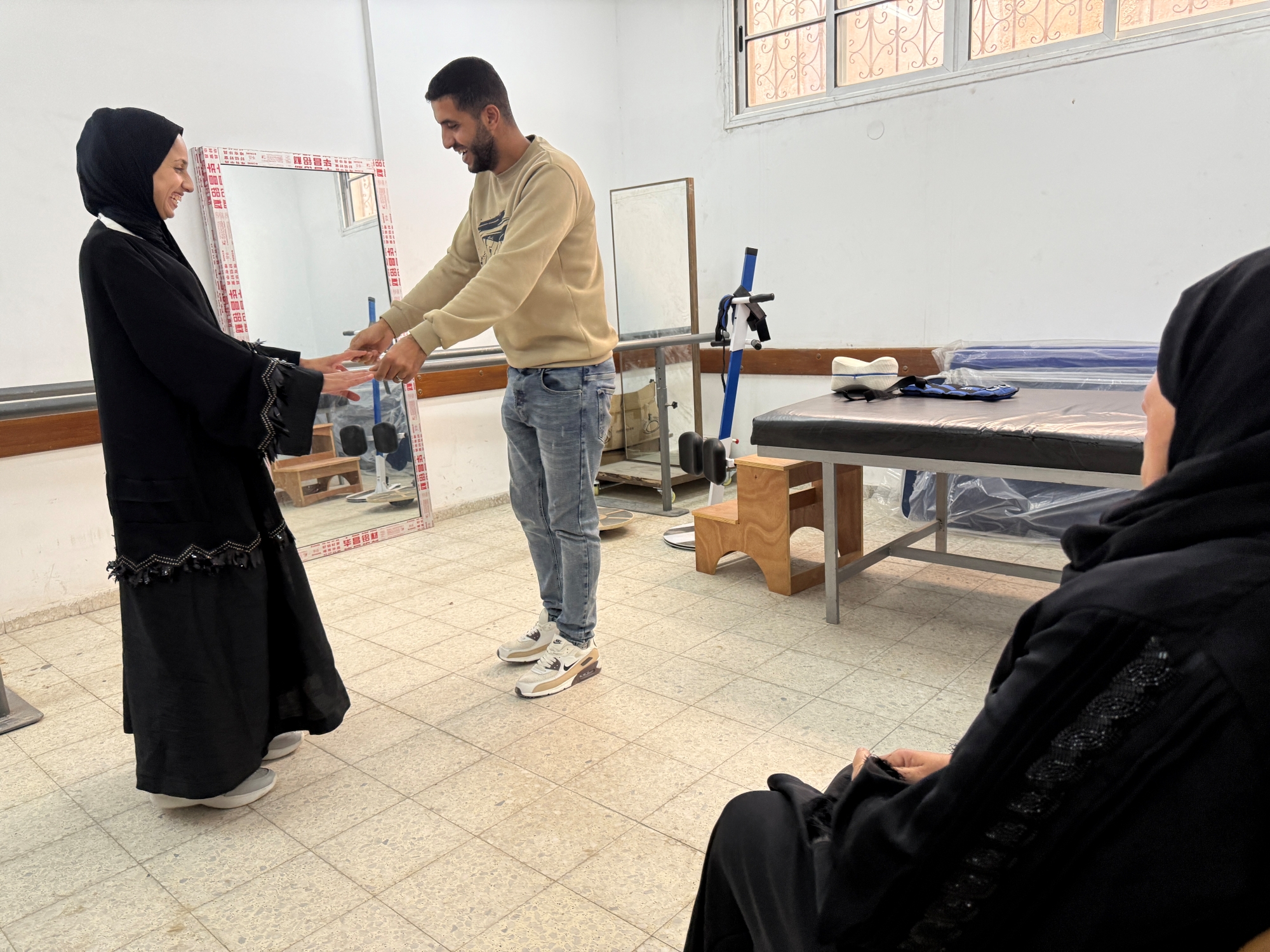
When the day finally came, the fears faded. “The wedding was amazing,” she says. “I can’t describe how happy I was.”
Many guests were surprised when they saw her walk. Some told her they could hardly notice she was wearing a prosthesis. “This is thanks to the team that prepared us for this phase, with support from the Red Cross,” says her fiancé.
Looking ahead
Today, Aseel is adjusting to her new life while continuing to face the challenges of displacement and living in a tent. Yet she remains determined and hopeful.
“My message is that no one should be ashamed of their injury,” she says. “Rehabilitation and physical therapy can truly change a person’s life.”