Gaza: Severe winter conditions compound humanitarian crisis for displaced Palestinians

Severe winter weather in the Gaza Strip has brought new challenges to communities where more than two years of conflict has left tens of thousands of people dead, injured or displaced, and shattered essential infrastructure.
Most of the more than 2 million residents of the Gaza Strip have already been displaced multiple times; the biting cold and torrential rains are not just a seasonal change, but ultimately a threat to survival.
A series of winter storms has recently caused widespread flooding in low-lying areas and displacement camps. For many, the nightmare is compounded by the collapse of buildings already weakened by hostilities. With no alternative shelter available, many displaced families have moved into structurally unsound buildings, where downpours and high winds increase the risk of sudden collapse, turning these spaces into life-threatening refuges rather than places of protection.
The struggle for shelter
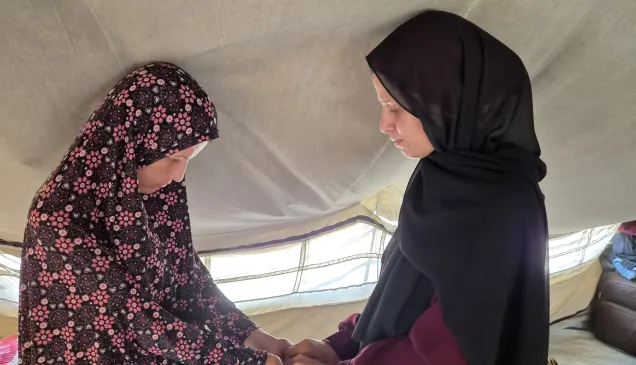
Since the storm hit, thousands of households have been affected by flooding with tents submerged, swept away, or torn apart by high winds. In Deir al-Balah and Khan Younis, families are living in makeshift shelters that offer little protection against the harsh weather conditions, without adequate privacy, safety or dignified living conditions.

Yousef Abu Ghadayeen, a displaced father from northern Gaza now sheltering in Deir al-Balah, describes the devastation.
The loss of livestock like Yousef’s donkey is a catastrophic blow to families who have lost almost everything in the past two years due to multiple displacements and the consequences of hostilities. They often depend on these animals for their meagre daily income.
The human toll
The impact on human life is profound. Beyond flooding and shelter damage, sustained exposure to the cold – especially at night in uninsulated tents – has become a major driver of illness and risk of death, particularly among children and older people.
For the most vulnerable, the drop in temperature represents a severe health risk. Hospitals are reporting a significant rise in the number of patients – particularly children – suffering from acute respiratory symptoms and dangerous drops in body temperature. In such harsh conditions, the need for warm shelter and adequate clothing is urgent.

Wafaa Khodeer, whose tent was flooded, shares her desperation.
Working alongside the community
The International Committee of the Red Cross (ICRC) is working alongside the Palestine Red Crescent Society (PRCS) to provide immediate, life-saving relief and we remain committed to our role as a neutral and impartial humanitarian actor.
The ICRC has been actively supporting communities in Gaza through a range of humanitarian initiatives, focusing on several critical areas of support:
- Emergency shelter support, such as the distribution of shelter materials, blankets, hygiene kits and sandbags for families affected by winter flooding
- Repairs to water and sewage systems, through the provision of tools, safety equipment and machinery to local municipalities
- Support to community kitchens, that serve as a vital resource for thousands of families, helping expand capacity to meet growing needs
- Health and protection activities, including conducting, in partnership with the PRCS, awareness sessions on the risks of unexploded ordnance and support to local authorities to address these hazards
Under international humanitarian law, the basic needs of civilians must be met. They must have access to food, water, medical and hygiene supplies, safe shelter, and other essential items.