West Bank: Water and livelihood support help Palestinian farmers return to their land
Many Palestinian families rely on agriculture for food and income but face challenges like violence and movement restrictions. In one part of the West Bank, two new projects seek to help them adapt.

The valley of Ein Al-Zarqa, near the village of Beitillu in the central West Bank, has long been recognized for its fertile and water-rich agricultural lands. “Ein Al-Zarqa is a uniquely beautiful landscape that deserves to be preserved and protected. It is deeply connected to the community of Beitillu, for its agricultural value and as a shared space where families gather and connect,” said Nidal Safarini, water engineer at the ICRC.
For decades, Palestinian families in the area relied on farming as a primary source of food and income. Yet, over the years, agricultural activities declined due to multiple challenges, including limited access to water, rising production costs, restriction of movement due to the closure of the main road to the area and Israeli settler violence. Large stretches of farmland and once-productive greenhouses lie unused, leaving the valley quiet and relatively abandoned.
To support the community, the International Committee of the Red Cross (ICRC) recently supported two projects allowing community members to resume agriculture and develop their farms: the construction of a water network, including two reservoirs and a distribution pipe system, and an agricultural project.
Water access for sustainable agriculture
The water network was constructed in close consultation with both farmers and the local community, with community members actively contributing labour and local knowledge. This ensured that the network reflects local priorities and can be maintained over time.
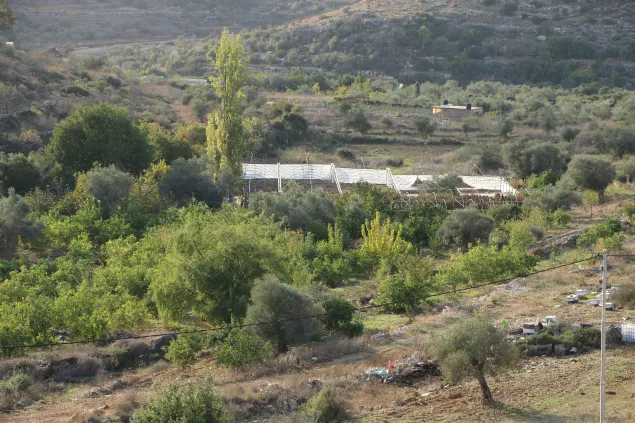
A rehabilitated greenhouse at Ein Al-Zarqa, West Bank.
“Through the project, we aimed to respond directly to the needs of local farmers, whose agricultural activities have declined over the years, especially since October 2023, due to several factors, mainly settlers’ attacks and violence,” said Nidal.
Insights from farmers and the village council guided the project, ensuring local priorities and realities were considered. “This project will certainly boost the farmers' income, especially since it will increase the cultivated areas,” said Nasser Radwan, who heads the village council.
Rehabilitating farms and greenhouses
In parallel, the ICRC supported farmers through cash grants, which enabled 21 families to rehabilitate and develop open farms and greenhouses. This support covered the repair costs of old structures, land preparation, essential agricultural tools and seedlings, allowing families to resume agricultural activities that had been idle for years.
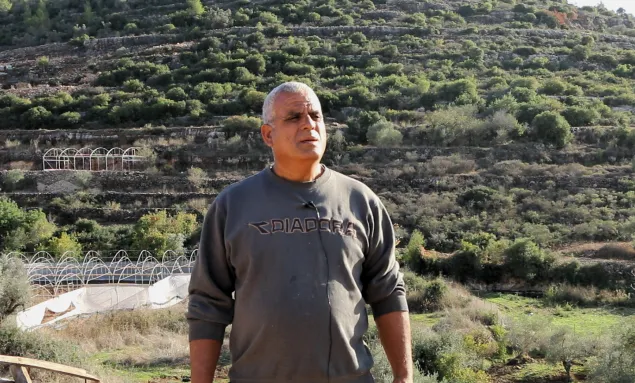
“This grant motivated me to expand my crops and cover a larger area, protecting the land,” said Akram Radwan, a local farmer who benefited from this financial assistance.
After the distribution of the grants, life is beginning to return to the valley. Greenhouses have been rehabilitated and farmers are now working their land with their families, cultivating their plots and building new greenhouses.
“This initiative wasn’t just about financial support; it raised morale, encouraged families to return to their land, and slowly the valley came alive again. Families gathered around fires, cooking and making tea, inviting us to join them, as they consider us family after the work we did with them.” added Salim.
Impact and community revival
Together, the water network and cash grants addressed both structural and immediate challenges. Reliable water access strengthened agricultural foundations, while the financial support enabled families to rehabilitate their land and restart production. Beyond the technical assistance, the interventions restored a sense of normality, community and hope.
Through these initiatives, the ICRC continues to work with Palestinian farming families across the West Bank to help them sustain their livelihoods, protect income sources and strengthen resilience, while fostering a vibrant agricultural and social life in the valley.