Every drop counts: Gaza's water crisis deepens as summer takes hold

Photo: ICRC
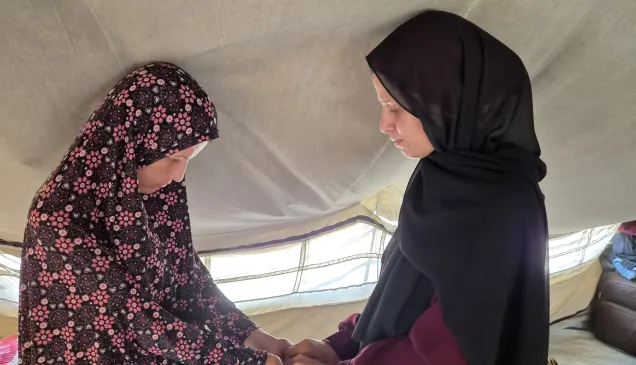
Despite the ceasefire, access to water is not getting easier for many across Gaza. This makes daily life harder for thousands of people forced to live in an increasingly small space, nearly three years since the escalation of armed conflict.
Water in Gaza is a scarce and precious resource.
Seawater contaminates ground water sources. Wastewater contaminates water used for drinking, cooking or washing. And with water distribution pipes largely damaged or destroyed, people rely on water trucks instead.
“Before the war, we did not have this struggle,” says Hanadi Al Aff, a mother of five children who has been displaced and lives opposite a rehabilitated water desalination plant in Gaza City.
“We now carry water in buckets. It has become a burden on our children. Instead of going to school and studying, they carry water.”
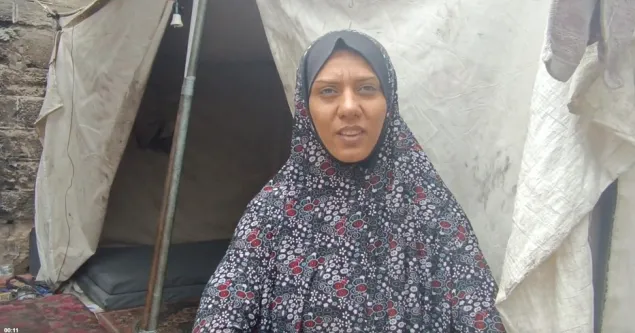
Photo: Amani Al Naouq/ICRC
Photo: Amani Al Naouq/ICRC
Children lugging buckets – some that seem bigger than themselves – barefoot through dusty streets behind trucks carrying water tanks fitted with cut-off hoses and taps are a common sight in Gaza.
The experience of Hanadi and her family reflects that of more than two million people in Gaza, where the area that is safe for them to live – and to safely access essential services, like water – is shrinking.
“This is a struggle for Gaza, for mothers, for children,” Hanadi tells us.
“We don’t have enough water for all our family needs. We save water and keep it for the most important thing, which is drinking, cooking and bathing the children. If there is extra, we use it for washing the dishes and doing the laundry.”
Those difficult decisions – choosing between drinking an extra cup of water or saving some to wash hands to prevent the spread of germs – are what a crisis of access to water looks like in practice. In Gaza, the crisis is dire.
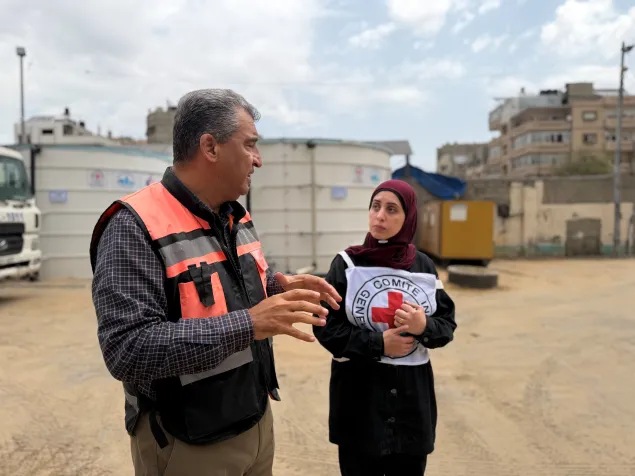
Photo: Patrick Griffiths/ICRC
Photo: Patrick Griffiths/ICRC
Omar Shatat is the deputy executive director of the Coastal Municipal Water Utility (CMWU), an essential service provider with around 350 employees across Gaza. “People all over the world, they have to [recognise] that we are badly in need of assistance in order to get rid of these harsh conditions and the catastrophic situation with regard to water and wastewater,” he said.
It is Omar and his CMWU teams – with support from the International Committee of the Red Cross (ICRC) – that maintain the newly rehabilitated desalination plant in Gaza City, keeping it running as best as they can.
Omar says providing good quality water is a way to preserve life. “We are keeping their dignity, you know, to live in this area,” he says.
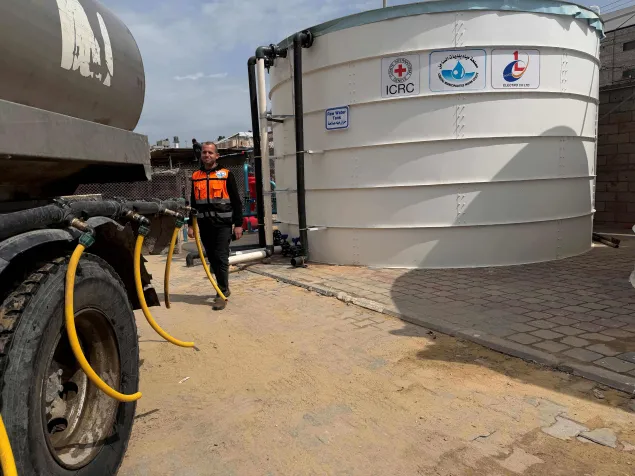
Photo: Patrick Griffiths/ICRC
Photo: Patrick Griffiths/ICRC
The challenge they face is steep. With Gaza located next to the sea, most of the water available from wells and boreholes is brackish, a mix of salt and freshwater. That makes it undrinkable and is why desalination plants, to make water drinkable again, are vital.
But a lot of the infrastructure needed to clean, store and distribute water is either damaged or destroyed – Omar estimates more than 80 per cent – or lies in areas where it is not safe for people in Gaza to go.
And there are other hurdles. To operate wells and boreholes, desalination plants and sewage pumping stations electricity is required.
“We are living now for more than two and a half years without any electricity supply to Gaza,” Omar says. They rely on generators instead. Fuel and oil supply to run those generators, as well as many of the materials and machinery that are needed to run water storage and distribution networks – let alone repair and replace them, are scarce.
All this means that water production has dropped radically – to around 40 per cent of what it was before October 2023. Independent water production – from wells in Gaza – is less than a third of what it was.
In terms of water that can be used for drinking, cooking and hygiene, Omar says they can barely ensure six litres reaches all the people who need it across Gaza every day. That’s not just below the UN’s recommended minimum of 15 to 20 litres for each person per day. It’s below their absolute baseline required for survival, which is 7.5 litres.
With many people living in tents, which become scorching hot in summer, and with a looming sanitation crisis connected to the scarcity of water, the work of Omar and his colleagues is needed more than ever.
Husam Al Nunu is an engineer and part of the ICRC team that worked with the CMWU to rehabilitate the desalination plant in Gaza City where we met Hanadi and Omar.
The works involved digging a borehole, constructing two water tanks and a filling point for water trucks, while also repairing the desalination machinery. The plant now produces 40,000 litres, including 10,00 litres of drinkable water, per hour – benefiting 30,000 people across Gaza City.
“This desalination plant is essential due to the gap of the water source availability in the Gaza Strip and the high demand of the need of the water, especially with the summer season coming,” he says.
Husam says that access to water is about dignity. It’s about having options and not needing to make hard choices just to get through the day.
For too many families in Gaza, when it comes to water, there are no easy answers.
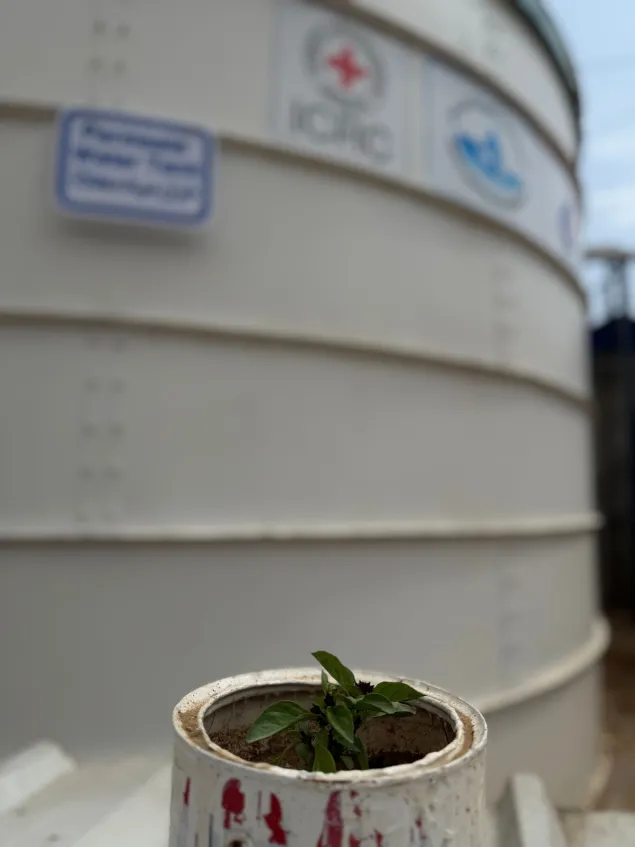
Photo: Patrick Griffiths/ICRC
Photo: Patrick Griffiths/ICRC