The daily struggle for a dignified life continues for Palestinians in Gaza

For hundreds of thousands of Palestinians in Gaza, the living conditions remain extremely difficult amid constant fear, insecurity, often-repeated displacement and a profound uncertainty about what the future holds. While the hostilities may have decreased, people in Gaza are yet to see any meaningful improvements in their daily lives.
Continuing to face death, destruction and displacement, and with insecurity still very much a reality, families are now trying to make a life for themselves in small, cramped and inadequate surroundings.
Every day remains a struggle for communities to be able to access the essentials needed to live with dignity. Reliable access to clean water, sanitation, adequate shelter, affordable and nutritious food, as well as health care and education, remains essential for Palestinians in Gaza to live with dignity.
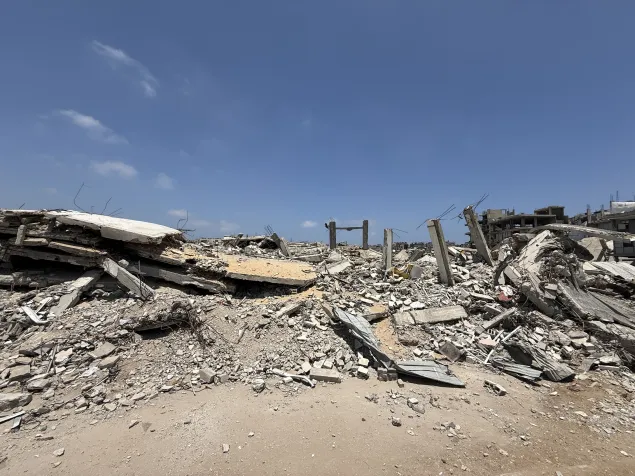
Al-Baqara neighbourhood, northeast of Gaza City, where some families live with limited access to essential services including water, sanitation, health care and education.
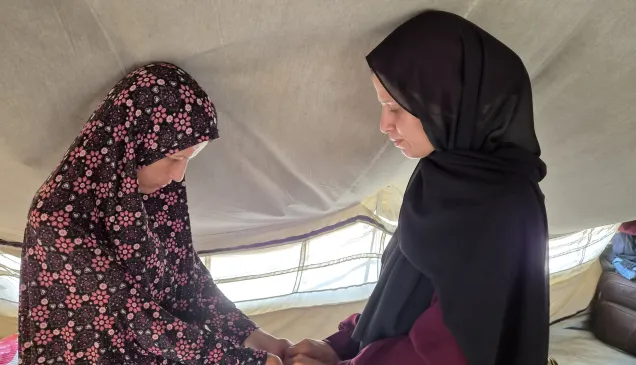
For thousands of displaced families that have been living in makeshift shelters or damaged buildings for more than two and a half years, summer brings further immense hardship. Under the burning sun, with little or no shade, often standing directly on dust, sand, rubble or waste, tents become unbearably hot. Many families rely on worn-out tarpaulins or blankets - materials never meant to offer sustainable shelter. Others seek refuge in damaged or partially collapsed buildings that offer little safety or relief. But people in Gaza have no other options, and their living conditions are becoming increasingly difficult.
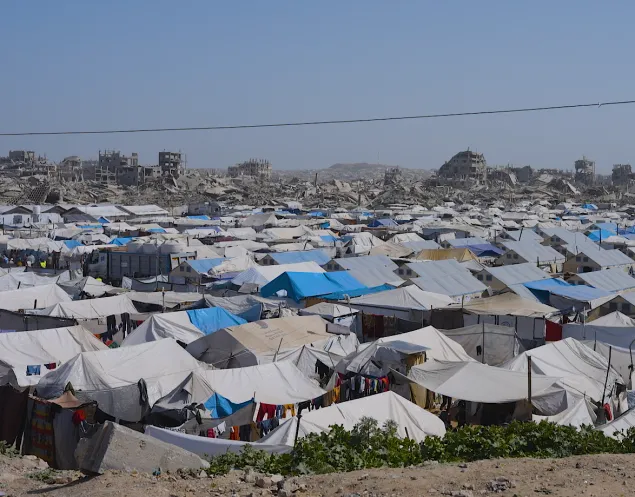
Al-Musallaba Camp, in the Al-Zaytoun neighbourhood south of Gaza City, is home to hundreds of families who lost their homes in the area. Like many displaced people, residents face extremely difficult living conditions, particularly during periods of heavy rain and low temperatures. They also endure extreme heat in the summer, along with the spread of insects and rodents, increasing the risks to their health and well-being.
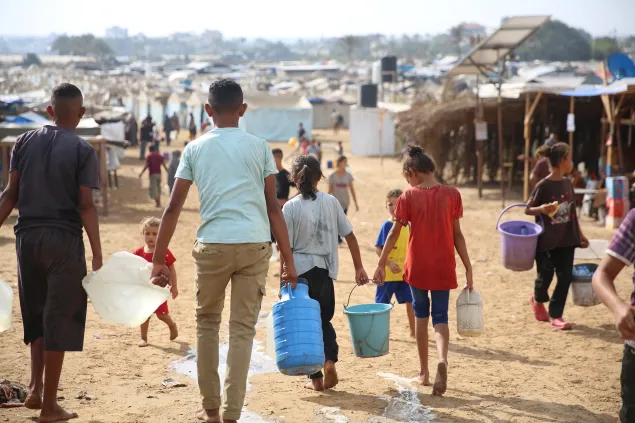
Distribution of drinking water to displaced persons at one of the shelters in Deir al-Balah in the central Gaza Strip, through a partnership between the ICRC and the Coastal Municipalities Water Utility (CMWU).
Access to water
Water infrastructure, including wells, desalination facilities and pipelines, has been largely damaged or destroyed. Running water remains out of reach for thousands of households in Gaza. People rely on limited and damaged infrastructure – like wells – and water trucks to get the water they need. Still, lack of spare parts, engine oil and electromechanical materials makes it challenging for water services to reach all communities.
In Gaza, the ICRC has helped thousands of people access clean water by supporting local service providers in the rehabilitation and maintenance of water facilities, as well as the repair of water networks and the supply of essential materials, including water trucks, tanks, oil and pipes, to operate the water infrastructure.
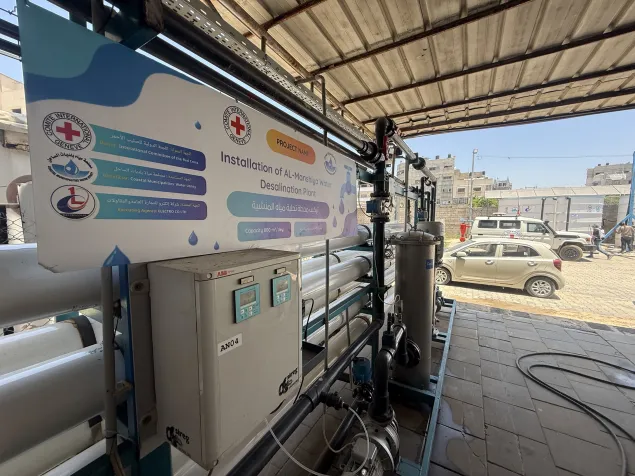
Al Manshiya Desalination Plant is being rehabilitated in Gaza City to provide reliable access to safe drinking water for around 30,000 people through water trucking, supporting surrounding neighborhoods and displacement camps.
Sanitation and public health
Due to the hostilities, essential infrastructure – like wastewater treatment plants – have been damaged or destroyed. This exposes communities to severe risks. Maintaining adequate sanitation and hygiene becomes next to impossible. Preventable diseases become widespread, threatening countless lives. Rodents and other pests have also become more common.
Since October 2023, the ICRC has been working with local service providers in Gaza to improve sanitation for communities – especially those living in tents – that have been displaced from their homes. Much more is needed, and we remain committed to supporting access to clean water and improved sanitation.
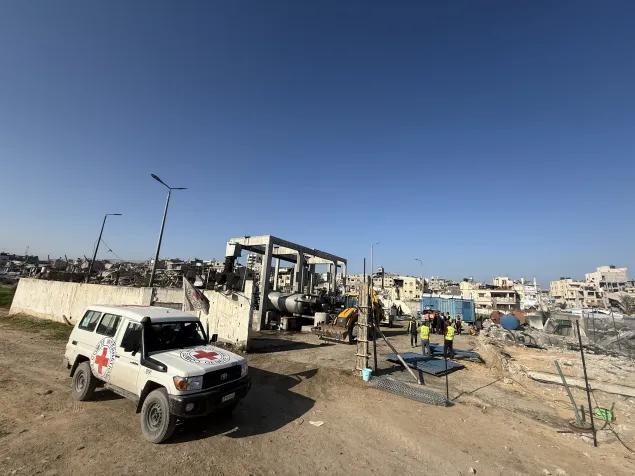
Damaged during the conflict, the Al-Wafiya Pumping Station is a critical part of Khan Younis’s sanitation network. Through a partnership between the ICRC, the CMWU, and Khan Younis Municipality, rehabilitation works are underway to restore safe wastewater management and protect nearby communities.
Rehabilitation of the Al-Wafiya Pumping Station helped to restore essential wastewater services, reduce environmental and health risks, and now serves more than 100,000 residents across surrounding neighbourhoods.
Primary health care centres
Primary health care centres play a vital role in providing essential services to the communities. In Gaza, the few facilities that remain operational are often overcrowded and face severe supply shortages, placing additional pressure on these services. These services must remain flexible to accommodate growing numbers of patients driven by continuous population movement.
The ICRC supports the provision of care in five primary health-care centres and has recently supported the rehabilitation and renovation of the Fathi Arafat Primary Health Care Centre of the Palestine Red Crescent Society (PRCS) in Deir Al-Balah (picture attached). These efforts strengthen the centre’s capacity to help those in need and enables better quality services for hundreds of displaced families living nearby.
All supported facilities (Al-Zawaida, Al-Daraj, Al-Shati and Asdaa MP) are also receiving structural improvements, together with medical supplies, hygiene materials and specific training to reinforce the skills of the personnel.
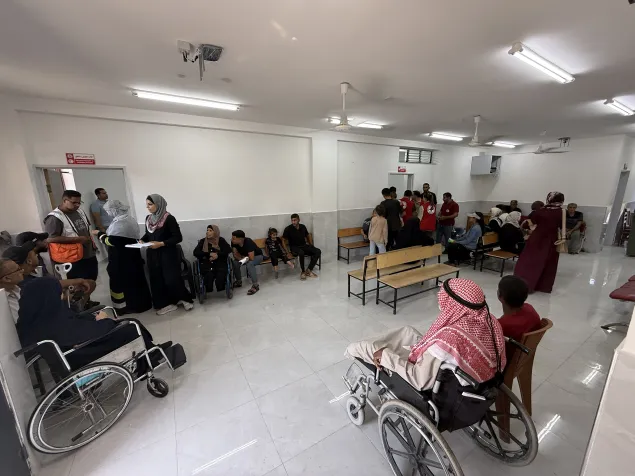
The PRCS’s Dr Fathi Arafat Primary Health Care Centre in Deir al-Balah, where the ICRC renovated and upgraded the ground-floor reception area and the second floor. The improvements enhance the quality and accessibility of health-care services, facilitate faster service delivery, strengthen privacy and patient flow, and increase the centre’s capacity to provide essential health-care services.