Measured in decades: The enduring human cost of anti-personnel mines and other explosive ordnance

Magnum for ICRC
ICRC teams working in weapon-contaminated areas see the same patterns repeating again and again: parents are afraid to let their children play outside or walk to school, farmers cannot safely cultivate their land, families are unable to return to homes they fled months or years earlier. In many places, explosive hazards hidden in fields, roads and rubble are the silent threat that can change lives in an instant.
Anti-personnel mines are among the most persistent of these dangers. Designed to explode when someone steps on or disturbs them, they remain active long after the conflict that placed them in the ground has ended. As we mark the International Day for Mine Awareness and Assistance in Mine Action on 4 April, these realities are a reminder that the legacy of conflict does not end when fighting stops. For millions of people, the threat remains - hidden in the ground beneath their feet.
Nearly three decades after its adoption, the Anti-Personnel Mine Ban Convention (APMBC) remains one of the most important international efforts to reduce this harm.
The myth of military advantage
Anti-personnel mines have sometimes been justified as defensive weapons intended to slow advancing forces. Yet experience from past conflicts shows a stark imbalance between any alleged short-term military effect and their long-term humanitarian impact.
In 2003, during the invasion of Iraq, coalition forces encountered extensive minefields laid around Baghdad. These barriers were breached in a matter of hours.
But years later, civilians continue to be injured and killed by those very same mines and unexploded ordnance left behind.
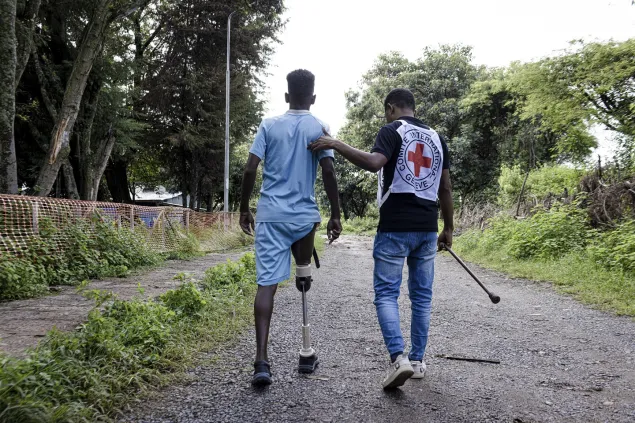
Tigray, Shire Hospital. A member of ICRC's physical rehabilitation team helps a patient practice walking with his prosthesis.
Rural areas of northern Ethiopia that have experienced heavy fighting in the past years remain heavily contaminated by unexploded ordnance. Weapon contamination poses severe risks for civilians, especially children.
A treaty that has saved lives
Adopted in 1997, the Anti-Personnel Mine Ban Convention prohibits the use, stockpiling, production and transfer of anti-personnel mines.
Its humanitarian impact has been significant. The treaty has helped reduce the global use of these weapons, led to the destruction of millions of stockpiled mines, and enabled large-scale clearance of contaminated land.
Since 1999, 94 states have destroyed more than 55 million stockpiled anti-personnel mines (according to Landmine Monitor 2025).
These achievements have allowed communities to reclaim farmland, rebuild homes and restore essential services essential for recovery after conflict.
Perhaps most importantly, the Convention has helped establish a powerful global norm: that weapons which cannot distinguish between combatants and civilians should not be used.
Yet the danger of unexploded ordnance persists.
In 2024, at least 6,279 people were killed or injured by anti-personnel mines and other explosive remnants of war (ERW). Around 90 per cent of victims were civilians, and almost half were children.

Dashkesan, Azerbaijan. The ICRC conducts risk awareness and safer behaviour sessions for herders and their families in relation to the dangers posed by anti-personnel mines and other unexploded ordnance.
Everyday life shouldn’t pose deadly threat to children
For communities living with weapon contamination, ordinary activities can turn life-threatening.
Children are particularly vulnerable to being threatened by unexploded ordnance, not only because of where they go or play, but how they see the world.
In Iraq, teenager Sirwan Nabi was only 16 years old when he picked up an object he found on the ground because “it looked beautiful… small, like a pipe, yellow and shiny.” It exploded in his hand, causing him to lose his arm and changing his life forever.
Moments like these do not only cause devastating injury. They interrupt childhood.
For many children, the consequences extend far beyond the initial blast. Education can be disrupted immediately. After losing the hand he used to write, Sirwan had to relearn basic skills and fell behind in school. “Writing is hard,” he explains. “I’m trying to cope.”
Across affected communities, children may miss months or years of education, struggle to keep up with classmates, or leave school altogether.
Even for those not directly injured, the presence of explosive hazards shapes daily life - limiting movement, restricting play, and creating a constant sense of risk.
Today, 52 countries and territories remain affected by anti-personnel mines and other explosive remnants of war (according to Landmine Monitor 2025).
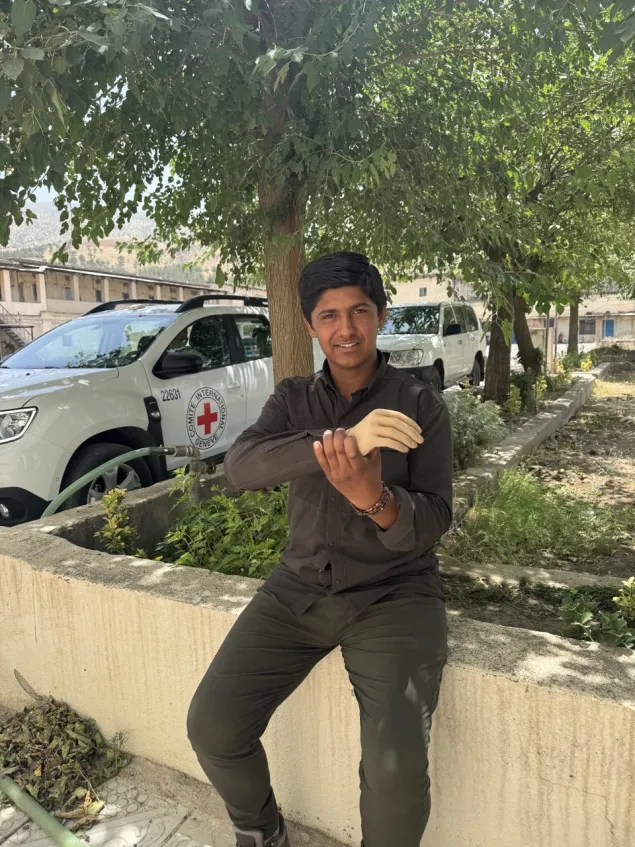
“I had lost my right hand; the hand I used to write with,” says Sirwan Nabi, who was only 16 years old when a single moment changed the course of his life and brought his education to an abrupt halt.
No such thing as a “safe” anti-personnel mine
Some discussions today point to technological developments, such as mines designed to self-destruct or deactivate, as a way to reduce humanitarian risks.
However, the fundamental problem remains unchanged: anti-personnel mines are victim-activated weapons. They explode when someone steps on them or disturbs them, making it impossible to control who will be harmed.
In real-world conditions, these mechanisms can also fail. Environmental factors such as weather, soil movement or damage can increase the risk that mines remain active longer than intended.
Regardless of design, anti-personnel mines continue to pose the same risks: long-lasting danger for civilians.
The broader threat of explosive remnants of war
Anti-personnel mines are only one part of a wider problem facing civilians in armed conflicts.
Explosive remnants of war include unexploded ordnance and abandoned munitions left behind during fighting. These hazards can remain unstable and unpredictable for years.
Failure rates of explosive munitions vary depending on the type of weapon and the conditions in which they are used, ranging from roughly 1 per cent to as high as 40 per cent.
Even relatively low failure rates can leave large numbers of unexploded hazards scattered across cities, farmland and infrastructure.
In urban warfare, the risks multiply. Destroyed buildings, debris and damaged infrastructure make detecting and clearing explosive hazards far more complex and dangerous.

Destin Nalanda, a Weapons Contamination Specialist, focuses on managing the risks associated with unexploded ordnance in a sensitive area, where markings are made to delineate danger zones. These markings aim to prevent accidents by alerting workers to contaminated areas. They are regularly renewed to ensure safety, particularly if new hazards are discovered.
Protecting civilians during and after conflict
International humanitarian law requires parties to armed conflict to take precautions to protect civilians from explosive remnants of war.
This includes mapping hazardous areas, marking, fencing, and removing hazards, warning communities of risks and supporting education to help people avoid explosive hazards.
The Mine Ban Convention reinforces these efforts by prohibiting a weapon whose humanitarian consequences have proven devastating and long-lasting.
Did you know?
- Before the Mine Ban Convention, 15,000–20,000 people were estimated to be killed or injured by anti-personnel mines each year worldwide (according to Landmine & Cluster Munition Monitor 2004).
- In 2024, 6,279 people were killed or injured by anti-personnel mines and other explosive remnants of war
- 90% of victims are civilians, and 46% are children
- 52 countries and territories remain contaminated by anti-personnel mines and other explosive remnants of war
- Since 1999, 94 states have destroyed more than 55 million stockpiled anti-personnel mines
- Failure rates of explosive munitions can range from 1% to 40%, leaving dangerous unexploded hazards behind