Lebanon: ICRC supporting life-saving medical services during hostilities

Across Lebanon, the intensification of hostilities, coupled with evacuation orders covering entire districts in Beirut, southern Lebanon and the Bekaa Valley, has placed enormous strain on the country’s health-care system.
In areas affected by evacuation orders, many hospitals are unable to evacuate due to various constraints, leaving patients and staff in vulnerable conditions. For those hospitals that do manage to evacuate, the process places additional strain on the health-care system, as patients, staff, and critical equipment must be transferred, and other facilities are forced to absorb a sudden influx of patients.
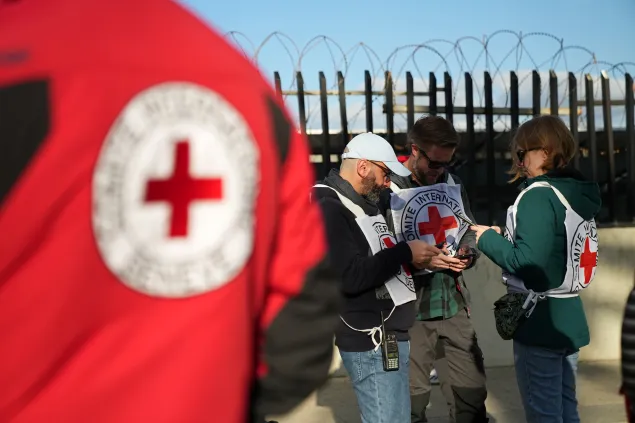
The International Committee of the Red Cross (ICRC) is working closely with the Ministry of Public Health, the Public Health Emergency Operational Center and its partners, including the Lebanese Red Cross, to help ensure the continuity of medical care for people affected by the hostilities.
“Medical facilities and personnel are a lifeline for civilians. Hospitals and medical services must remain sanctuaries and must not come under threat. This is equally true for all medical and paramedical personnel involved in life-saving operations,” said Agnès Dhur, ICRC Head of Delegation in Lebanon. “Communities across Lebanon who fear for their lives and those of their loved ones need safe and reliable access to healthcare services,” she added.
In response to growing needs, the ICRC’s health response has prioritized ensuring continued access to quality medical and surgical care for weapon-wounded individuals in areas most affected by hostilities, including southern Lebanon, Bekaa, Beirut, and Hermel, as well as the dignified management of the deceased.
Support to hospitals treating weapon-wounded patients:
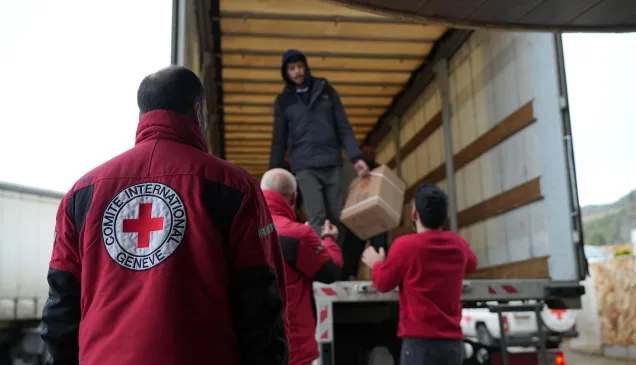
Up until 13 March, the ICRC in Lebanon supported Emergency Medical Services providers across the country by providing them with medical equipment and consumables enabling them to respond to the surge in the number of patients.
In southern Lebanon, the ICRC deployed medical teams to Tebnine Governmental Hospital and provided support to Marjayoun Governmental Hospital, two vital facilities serving civilians affected by the hostilities.
Tweet: https://twitter.com/ICRC_lb/status/2032360376533225496
At Tebnine Governmental Hospital, the ICRC has provided medications and medical supplies (weapon-wounded kits), to ensure the continuity of essential medical care. In addition, the hospital received 15,000 litres of fuel, two new generators, plumbing spare parts, oxygen cylinders and drinking water filters.
At Marjayoun Governmental Hospital, the ICRC plans to donate oxygen cylinders to help the hospital respond to growing needs in addition to previously donated medical supplies.
In the Baalbek Hermel governorate, ICRC teams have supported hospitals with medical consumables and weapon-wounded kits for the treatment of conflict-related injuries. Body bags were also donated along with a mobile morgue to ensure the dignified management of the deceased.
In addition, the ICRC has agreements with four hospitals to cover the hospitalization fees of patients injured due to the conflict who do not have a financial guarantor. As of March 11, the ICRC has assisted eight hospitals with medical/ surgical sets and medication for 430 patients, and two weapon-wounded kits.
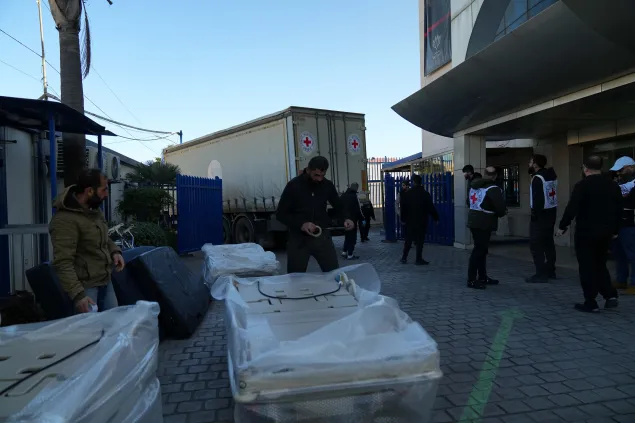
Coordination and transfer of medical equipment:
On March 8, to ensure continuity of care for patients, the ICRC transferred medical equipment and Intensive Care Unit (ICU) beds from Al Rassoul Al Aazam hospital, located in the area affected by evacuation orders in Beirut’s southern suburbs, to Rafik Hariri University Hospital. ICRC teams continue to coordinate the transfer of medical equipment from Bahman Hospital in Beirut’s southern suburbs in a similar operation.
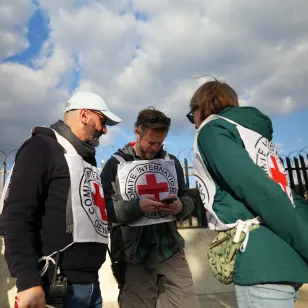
ICRC support for primary healthcare centres and physical rehabilitation:
The ICRC also supports primary healthcare centres and provides services through Medical Mobile Units, ensuring access to essential healthcare in remote and underserved areas.
Three primary health-care centres (PHCs) received medical supplies for acute and chronic conditions, as well as dressing and burn sets. Medication for non-communicable diseases, psychotropics and oral intra-emergency health kits were distributed to the PHCs in Baalbek Governorate.
In collaboration with the Ministry of Social Affairs, the ICRC continues to support a Medical Mobile Unit operating in Marjayoun district covering ten surrounding villages. The Unit delivers primary health-care services and medication to populations with limited access to health facilities, ensuring continuity of care for both acute and chronic conditions.
Through its physical rehabilitation programme, ICRC helps partners with the provision of mobility aids to internally displaced persons with disabilities across Lebanon. A stock of crutches, wheelchairs, commode chairs and walking frames was donated to the Lebanese Red Cross Physical Rehabilitation Centre in Aley, which oversees the health needs of persons with disabilities in collective shelters, mainly in Mount Lebanon, in coordination with the Ministry of Social Affairs.
As hostilities continue, the ICRC reminds all parties that even when advance warnings are issued, health-care workers, anyone wounded and sick, and all other civilians who have stayed behind must be protected from attack, so long as they do not directly participate in hostilities. All feasible precautions must be taken to avoid, and in any event minimize, incidental harm to them as civilians. Medical facilities and medical transport, including ambulances, must also be respected and protected in all circumstances, which means they must not be attacked, obstructed or misused. Medical teams and first responders must be able to rapidly and safely reach those in need.
Photos and footage available on request. Please contact press@icrc.org.