Somalia: Rebuilding life beyond the emergency
Throughout decades of recurring conflict, emergency humanitarian aid has become a lifeline for millions of Somalis. This assistance saves lives and is crucial, but it cannot rebuild what conflict destroys – livelihoods, homes and economic stability. Without long-term alternatives, families remain trapped in a cycle of dependence, surviving but unable to recover, with no pathway back to self-reliance.

This is why our work goes beyond emergency response. Alongside support for the immediate needs, we run multiple livelihoods programmes that help families restart their businesses, secure a stable income, and rebuild their independence. For families supported by the International Committee of the Red Cross (ICRC) in Somalia, livelihood recovery comes in the form of a business grant, a fishing boat for coastal communities, quality seeds for farmers, and most recently, in the form of five goats.
Livestock Restocking
When the evacuation orders came over a year ago, Jowhara Ismail had to abandon her tea shop, her home, and the life she had built for herself and her eight children. Tossed into a life of uncertainty, she fled from Tisjic, a village perilously close to the Cal Miskaad frontline, to the dusty plains of Waciye in Bari region in search of safety.
Jowhara’s was one of 300 families who fled their homes since the fighting broke out in Cal Miskaad. She received five goats to help her start livestock farming.
“When they reproduce, I can sell one to feed the children,” she said.
This support is part of a wider distribution of 1,500 goats to conflict-displaced families in Waciye and Kalabayr, Bari region. The ICRC also trains community animal health workers across the country, ensuring animals stay healthy and productive.
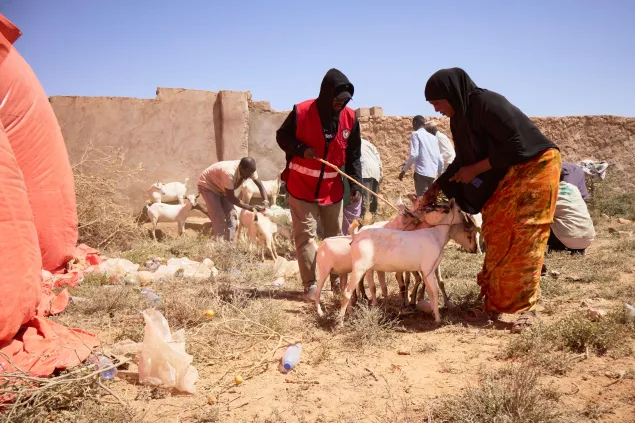
Photo: Rahime Issack/ICRC
Photo: Rahime Issack/ICRC
Business Support
Fadumo Mohamud, 60, has 40 years of market experience. She is no stranger to having to rebuild her life crisis after crisis. A single mother of seven, she strives to beat the odds, still supporting not just her children, but her grandchildren too. At 60, most people would be winding down, but not Fadumo.
Last year, her vegetable vending business at Ansalooti market in Mogadishu nearly collapsed. Then came a 500 dollar business grant that helped stock up her stall.
"The money I received, I did not spend it on anything else," she said firmly. "I invested it in my business."
The ICRC continues to support women-headed households like that of Fadumo in different markets across Somalia. In 2025, more than 1,000 conflict-affected families were supported with cash grants to restart or expand their existing small businesses.
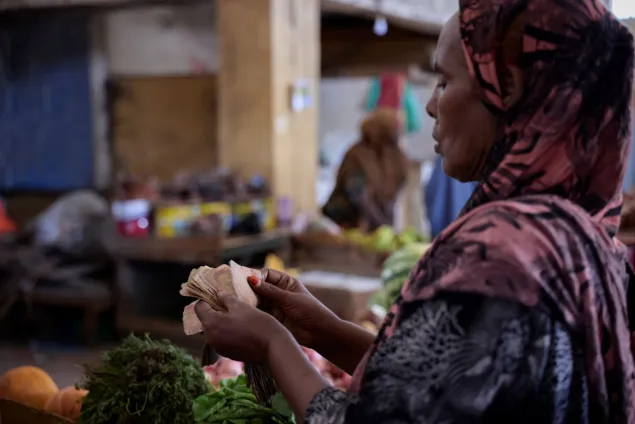
Photo: Abdikarim Mohamed/ICRC
Photo: Abdikarim Mohamed/ICRC
Fishing Communities
Buruc, Bari. There are no roads here, only the ocean and small boats that connect the fishing community to the world beyond. Ali Osman chairs the Ambar fishing cooperative, that has 52 members. For most families, the ocean has been the main source of livelihood.
Nearly half of the village’s residents are people displaced by the increasing hostilities in the north of the country since the beginning of the year. In 2022, the cooperative received support including boats, boat engines, fishing equipment and refrigerators to help preserve their daily catch.
The ICRC has supported fishing communities along Somalia’s coastline from Jubaland to Mogadishu to Galmudug. Most recently, a total of 50 people in Shangani, Banadir region, received cash support to purchase refrigerators, grinders, jikos and business skills training and additional tools to help them expand their fishing businesses.
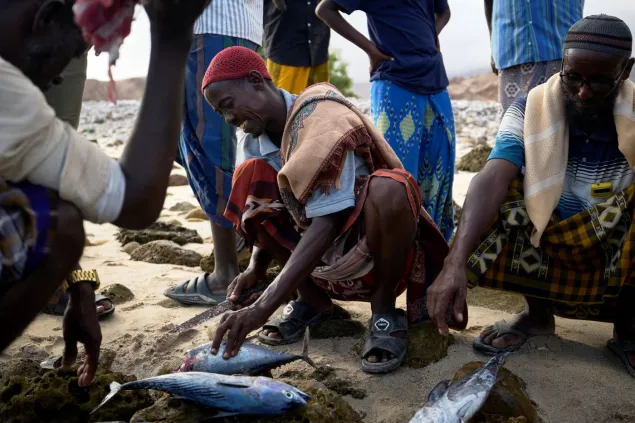
Photo: Abdikarim Mohamed/ICRC
Photo: Abdikarim Mohamed/ICRC
Food Production
Central Somalia is home to hundreds of farmers, offering them a vast green landscape of rich, fertile soil. In Baarey village, Jowhar, Yussuf Hussein, 48, has been a farmer for nearly 30 years. He is a part of one of three agro-cooperatives that consists of 250 farmers in Jowhar and Beletweyne.
When we met him in August of 2025, he was celebrating an exceptional year. Favourable weather and quality seeds had produced nearly double the usual maize harvest. This meant his family was well fed and he had enough to sell in the market.
The ICRC supports these three agro-cooperatives in central Somalia by providing training on producing quality seeds and buying 50% of the cooperatives’ harvests to give back to the farmers for newer planting seasons.
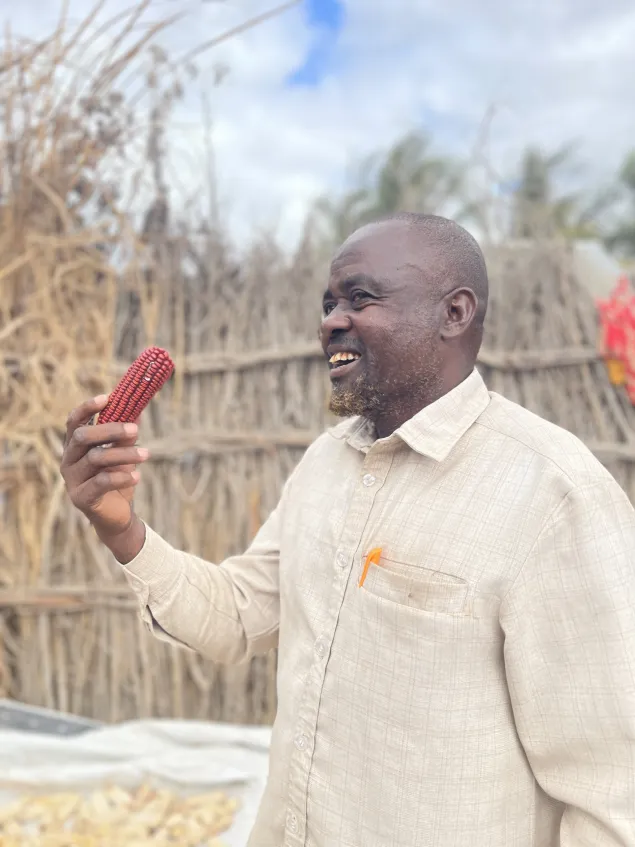
Photo: Rahime Issack/ICRC
Photo: Rahime Issack/ICRC
Our Support in 2025
- Micro economic initiatives: 1,093 affected people were supported with business grants to restart or boost their businesses.
- Asset replacement: 300 families in the North were supported with 1,500 goats (5 goats per family).
- Fishing: 100 people were trained and given equipment.
- Beekeeping: 100 people supported.
- Community animal health workers: 159 were trained to deliver quality veterinary services.
- Agro cooperatives: 3 cooperatives in Beletweyne and Jowhar were supported. In total, the cooperatives support 250 farmers.
- Fodder (animal feeder) support to 45 families.