Mali: Access to health-care services and water the focus in 2017

In 2017, we continued to provide humanitarian assistance to the many people affected by the violence in Mali, in particular in the north of the country, and stepped up our efforts to help an increasing number needing help in central Mali.
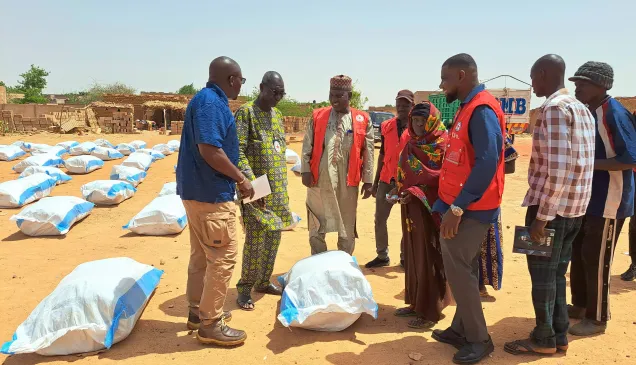
In partnership with the Mali Red Cross, we distributed food, shelter materials and essential household items to displaced people, provided drinking water and health-care services, and put families separated by the conflict back in touch. We also monitored the treatment and living conditions of hundreds of individuals held in prisons across the country.
We continued our work teaching weapon bearers and civilians alike about international humanitarian law. The aim is to prevent and reduce the suffering of people affected by the conflict and to facilitate humanitarian work.
Highlights of our work in Mali in 2017
 |
More than 54,000 displaced people received food and other essential household items. |
 |
More than 1,960 operations were carried out, including on 300 people wounded or injured in the fighting. |
 |
More than 22,000 people living in the Kidal Region had clean drinking water again after our staff built or repaired water-supply facilities. |
 |
More than 80,000 head of livestock were vaccinated against or treated for contagious bovine pleuropneumonia. |
 |
More than 4,200 detainees were visited in 29 detention facilities. |
 |
More than 10,500 families received seed and farming equipment and 1,500 families received fishing equipment. |
 |
More than 10,500 disabled people used our physical rehabilitation services. |
 |
More than 1 700 members of the armed forces, security forces and non-State armed groups received training in humanitarian law. |
For more information about our activities in 2017, download our facts and figures (in french).
Read more :
News and press release about Mali