Thailand: 2014 highlights from the region

The ICRC first established a presence in Thailand in 1975 to support its operations in the country as well as in Cambodia, the Lao People's Democratic Republic and Viet Nam.
Today, the ICRC seeks to protect and assist vulnerable populations, visit detainees and supports the authorities in improving prison management, help in meeting the needs of disabled persons through physical rehabilitation programmes, and raise awareness of humanitarian issues.
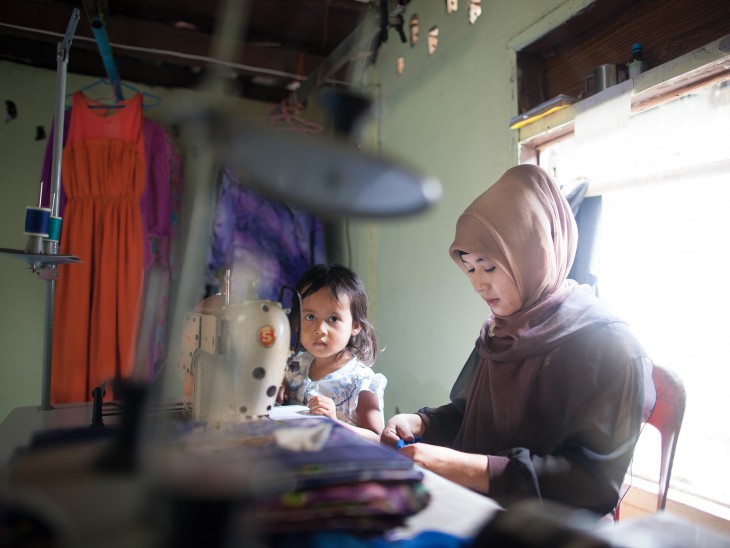
When Harrina's husband was arrested, she lost all source of income. The ICRC assisted her by providing her a sewing and stitching machine. She was soon able to open her business and now makes enough money to take care of her daughter, and regularly visit her husband in prison and provide for his daily fees. © ICRC / Olivier Matthys
Highlights of the ICRC's work in 2014
- Over 8,400 detainees received access to safe drinking water and functioning sanitation facilities
- More than 1,400 phone calls were made to families of Bangladeshi and Myanmar migrants in Thai detention centres
- Nearly 432 people benefited from Micro Economic Initiatives
Cambodia:
- Nearly 12,300 detainees had their living conditions improved
- Over 10,000 disabled people received orthopaedic services
- More than 1,400 phone calls were made to families of Bangladeshi and Myanmar migrants in Thai detention centres
Learn more
Download the full report on the ICRC's work in 2014 across this region.
Visit the Thai-language blog to learn more and read stories of the ICRC and the Red Cross and Red Crescent Movement from Thailand, Cambodia and beyond.