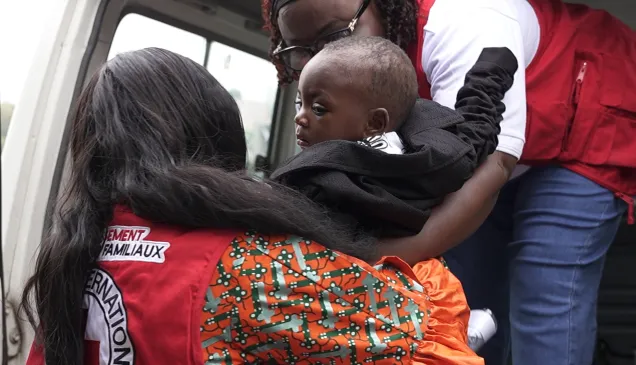
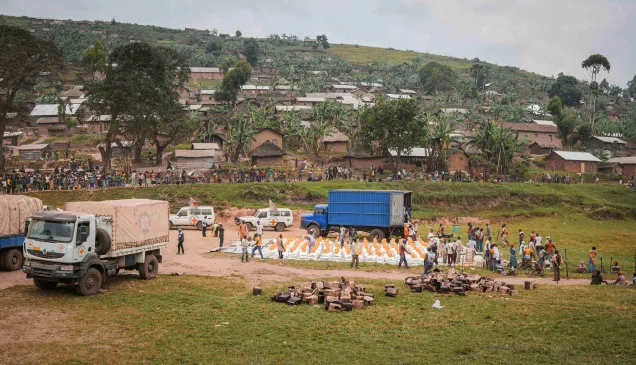
Kinshasa (ICRC) – Armed clashes in several parts of South Kivu continue to cause deaths and to force thousands of families to flee, leaving everything behind. Some have fled to other areas in the east of the Democratic Republic of the Congo (DRC), others to neighbouring countries. Many have lost touch with their loved ones in the process. Teams of the International Committee of the Red Cross (ICRC) and the Red Cross Societies of the DRC, Burundi and Rwanda are restoring family links and treating the wounded.
In the town of Uvira (South Kivu), life is gradually starting up again. But fighting continues elsewhere, such as in the territories of Mwenga and Fizi, injuring civilians and forcing others to flee.
Moussa Badji is the ICRC medical coordinator for the DRC. “The ICRC is supporting Fizi General Referral Hospital, and between 2 and 16 December 2025 they treated almost 20 people who had suffered weapon wounds, most of them injured in recent fighting in the territory of Fizi,” he explains. “In parallel, over 40 wounded civilians are receiving treatment at Uvira General Referral Hospital, bringing the number of casualties treated since 2 December to over 100.”
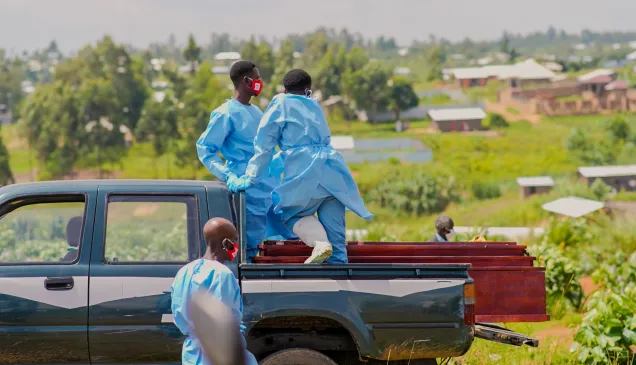
The ICRC has provided support in the form of logistics and equipment to the RDC Red Cross for the management of dead bodies in the town of Uvira and on Ruzizi Plain, enabling dignified and safe burials to take place since 11 December 2025.
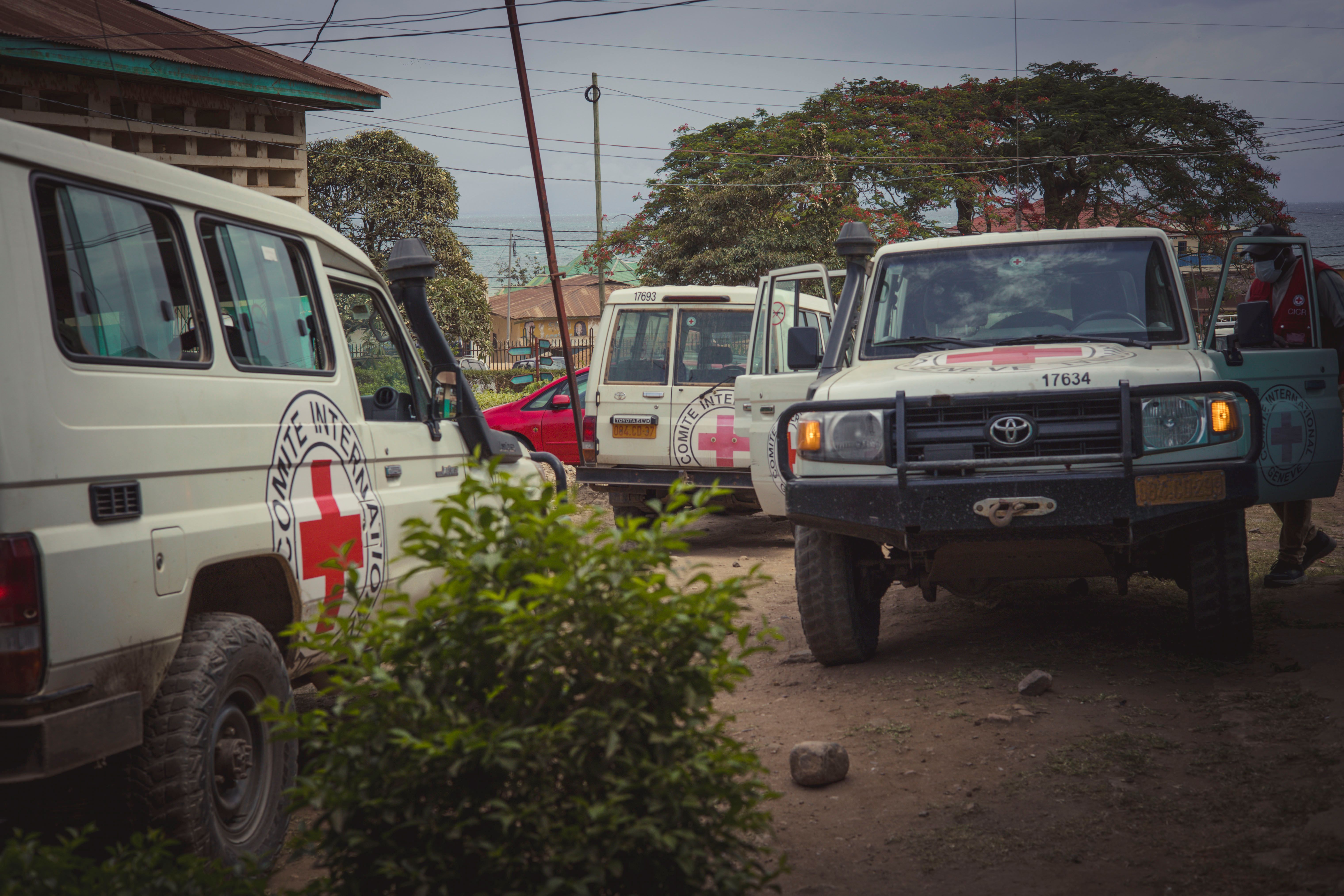
Medical evacuation, Uvira. Photo: ICRC
Unexploded munitions contaminate residential areas
The clashes have left behind a significant quantity of munitions, especially along the Kamanyola–Uvira axis, where some of the fiercest fighting took place, involving the use of artillery and explosive weapons. There are also large quantities of unexploded or abandoned munitions in other areas where clashes occurred, especially in Luvungi and Sange, in the territory of Uvira.
Marwan Nadim is an ICRC specialist in the prevention of risks related to abandoned and unexploded munitions. “The presence of ordnance, whether unexploded or abandoned, poses a serious danger,” he tells us. “We are concerned about the immediate danger these munitions pose to people as they start to return to their villages and houses.”
It is essential to raise awareness among the population about the danger of unexploded ordnance and the need to adopt safe behaviour to prevent accidents. Under international humanitarian law, the parties to the conflict must take the measures necessary to limit the exposure of civilians to these potentially dangerous munitions.
Displaced people in search of safety
In recent weeks, fighting and tension in several parts of South Kivu have forced thousands of families to flee to areas less affected, especially in the territories of Baraka and Fizi, South Kivu. Other population movements have been observed in Kalemie, in the neighbouring province of Tanganyika.
Valeria Caccavo is in charge of ICRC operations in South Kivu. “While some families are starting to return to their homes in areas where things have become relatively calm, many others remain displaced and continue to flee,” she explains. “They have to abandon everything in search of refuge. Local organizations tell us that people are forced to risk their lives taking extremely dangerous routes across Lake Tanganyika to find safety in Burundi.”
The United Nations estimates that almost 500,000 people have been displaced in South Kivu since 2 December 2025.
Displaced into precarity
Thousands of displaced persons have arrived in Burundi from the DRC, having abandoned all their possessions, and the humanitarian response is nowhere near sufficient to keep up with the needs.
Chantal Bisimwa has just arrived in Burundi. “We’re sleeping on the ground. We have to relieve ourselves in the bushes, because we don’t have latrines,” she explains.
It is currently the rainy season in the region. A combination of rain, mosquitoes and a lack of hygiene and medical facilities could quickly increase health risks in areas already affected by a cholera epidemic.
“The refugees’ living conditions are extremely difficult. They’re in urgent need of shelter, food, drinking water and hygiene,” explains Awol Omar, head of the ICRC Regional Delegation for Rwanda, Uganda and Burundi, who arrived in Bujumbura (Burundi) this week to meet the authorities and discuss the humanitarian response.
Volunteers from the Burundi Red Cross (Croix-Rouge du Burundi, CRB) are supervising the distribution of drinking water from a tanker in Buganda, north-west Burundi. The volunteers are also disinfecting places where the refugees are living, to destroy or repel harmful insects at these locations, where many people have no proper shelter.
Since 2 December 2025, ICRC teams and CRB volunteers have been helping thousands of displaced persons to re-establish contact with members of their families. Eleven unaccompanied children have been reunited with their relatives and over 1,000 phone calls took place between displaced persons and their families.
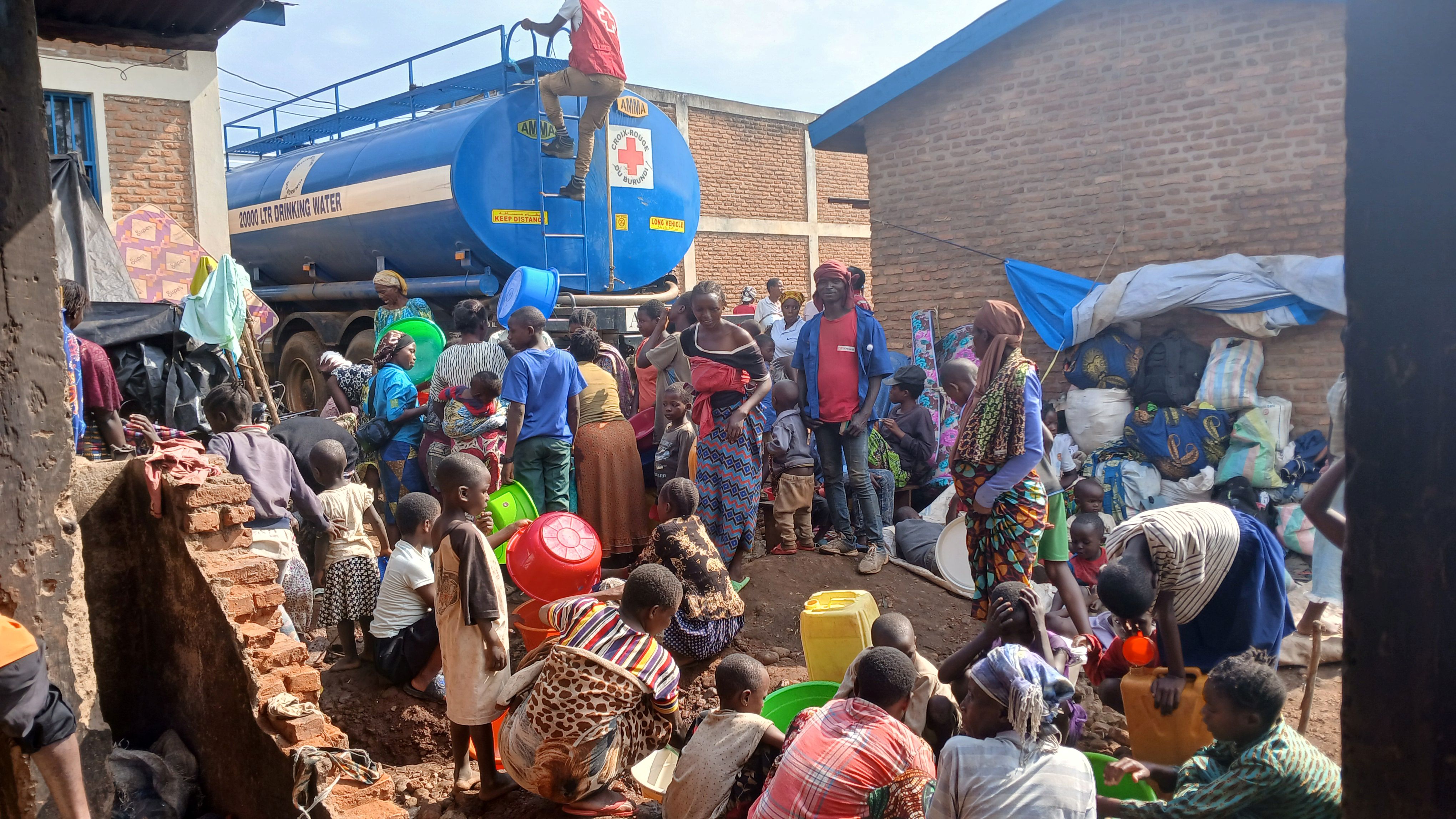
The ICRC and the Burundi Red Cross are working to respond to the influx of refugees. Photo: Dieudonné Hakizimana
[1] Article in French on the UN website: Plus de 60.000 personnes venant de la RDC se sont réfugiés au Burundi en dix jours après l'offensive du M23 au Sud-Kivu (Over 60,000 persons from the RDC have taken refuge in Burundi in ten days following the M23 offensive in South Kivu)
ICRC activities since 2 December 2025
DRC:
- Over 190 people who had suffered weapon wounds were treated between 2 and 16 December in ICRC-supported hospitals, including 110 at Uvira General Referral Hospital, 63 at Bukavu General Provincial Referral Hospital and 20 at Fizi General Referral Hospital.
- The general referral hospitals in Uvira and Fizi received several casualty stabilization sets.
- All hospital in-patients wounded by weapons received meals every day, as did the people accompanying them.
- The RDC Red Cross received support so they could manage dead bodies and conduct safe, dignified burials.
- Uvira General Reference Hospital received 1,000 litres of fuel and the water supply authority received 2,000.
- The ICRC acted as a neutral intermediary to accompany personnel from the electricity supplier who were restoring power in Uvira.
Burundi:
- Between 9 and 15 December, CRB volunteers and ICRC personnel made over 1,000 phone calls to restore contact between people who had become separated from each other.
- CRB and ICRC teams facilitated the reunification of eleven unaccompanied children with their families.
- A 20,000-litre tanker truck containing drinking water was made available to the transit centres at Cishemere and Kansenga, Bukinanyana commune, north-west Burundi.
- The CRB received financial support enabling it to help the most vulnerable of the people who are arriving from the RDC.
Rwanda:
- Rwandan Red Cross and ICRC teams made almost 400 emergency phone calls to restore contact between separated family members.
About the ICRC
The International Committee of the Red Cross (ICRC) is a neutral, impartial and independent organization with an exclusively humanitarian mandate that stems from the Geneva Conventions of 1949. It helps people around the world affected by armed conflict and other violence, doing everything it can to protect their lives and dignity and to relieve their suffering, often alongside its Red Cross and Red Crescent partners.
Further information:
To preview the ICRC video about Uvira and download it in broadcast quality, go to www.icrcvideonewsroom.org
Contact:
Francine Kongolo, ICRC Kinshasa, tel: +243 81 992 23 28, email fkongolo@icrc.org
Eléonore Asomani, ICRC Dakar, tel: +221 78 186 46 87, email easomani@icrc.org
Mateo Jaramillo, ICRC Nairobi, tel: +254 716 897 265, email mjaramillo@icrc.org