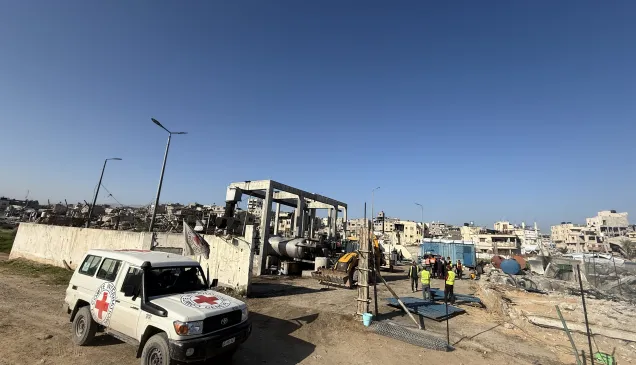
The scale of the destruction that, we've been witnessing going from Rafah, which doesn’t exist anymore to further north, where you do not see a single building that has not been affected by the fighting over the past two and a half years, and it is still going on.
The second thing that you see is just the suffocating density where the people are living. There are so many people that live on so little space, in tents, with very, very few facilities.
And you can just imagine what this means in terms of access to water, what this means in terms of access to shelter, what that means in terms of dignity, privacy, building a new life, and this is something that I heard.
“We try to build something. We need to build something, but how can you do this when you first need to go for water? When you first need to cover your basic necessities, when you first need to go for basic, vital things before you can really build up something that you need?"
So, it was very, very impressive, the suffering is far from over. Much more needs to be done so that even a semblance of normality can come back, and we are far, far away from this.
And I believe it is once more, just such a stark reminder how important international humanitarian law is, in order to protect a minimum of humanity those most difficult circumstances, because the people in Gaza continue to live in conditions that are neither sustainable nor acceptable.