Afghanistan: Operational update on humanitarian response in Kamdesh and Barg-e-Matal Districts, Nuristan Province

The escalation of hostilities between Afghanistan and Pakistan in mid-February 2026 disrupted the road connecting Kamdesh District and Barg-e-Matal District in Nuristan Province for two months, leaving communities isolated and vulnerable.
The humanitarian impact in the two districts was severe: people were left without access to food and essential services, resulting in dire humanitarian needs. According to the authorities and the United Nations Office for Coordination of Humanitarian Affairs (OCHA), approximately 17,000 households (136,000 individuals) were affected.
Since early April, the International Committee of the Red Cross (ICRC), Afghan Red Crescent Society (ARCS) and UN agencies engaged in sustained dialogue with all parties to the armed conflict to establish conditions for neutral and impartial humanitarian assistance to the two districts. On 21 April, a joint humanitarian response - coordinated by the ICRC, ARCS and World Food Programme (WFP) - was initiated.
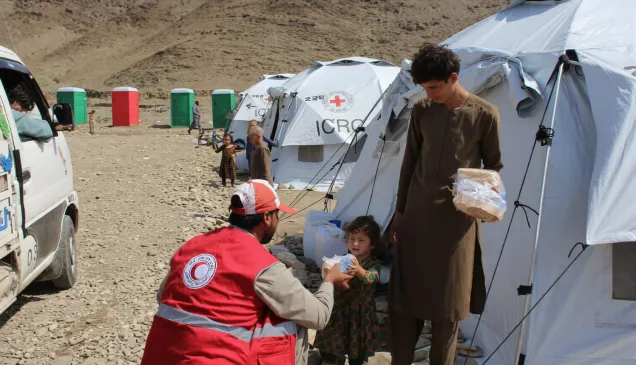
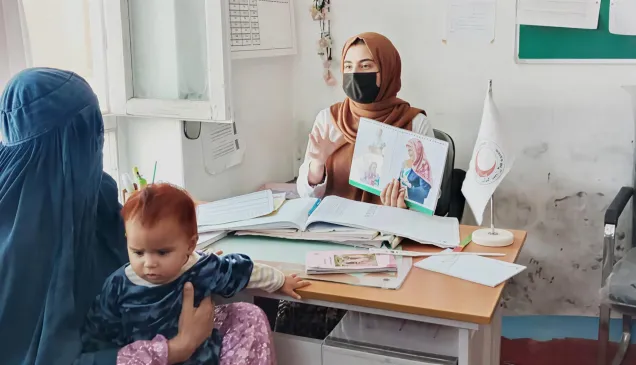
The response included the delivery of food, medical supplies and other essential relief items. The ICRC delivered nine trucks weighing 17 metric tonnes of medical supplies, essential items and physical rehabilitation devices for communities in need. The medical supplies were distributed to hospitals, health centres and ARCS mobile health teams to ensure continued provision of health care services in Kamdesh District Hospital and Bargi-Matal Basic Health Centre. The medical supplies included weapon-wounded kits, dressing packages, intravenous (IV) packages and oxygen cylinders. In parallel, ARCS mobile health teams and volunteers operating in both affected districts were equipped with dressing and oral packages, IV packages and First Aid kits, enabling them to provide rapid frontline assistance to affected communities in hard-to-reach areas.
At the same time, the ICRC’s Physical Rehabilitation Centre (PRC) in Jalalabad supported 150 people with disabilities and patients requiring rehabilitation services in the affected regions with wheelchairs, crutches and walking frames. In the Kamdesh and Bargi-Matal Districts, 34 people with disabilities received physical rehabilitation services through the District Hospital Physiotherapy Department.
Additionally, the ICRC with the contribution of UNICEF provided water purification and hygiene items including chlorine, soap to ensure safe water and sanitation for 12,000 households.
Approximately 17,000 households, representing 136,000 people in Kamdesh and Barg-i-Matal Districts received food assistance. The WFP delivered 1,041 metric tonnes of food (wheat flour, vegetable oil, salt and pulses) with up to 15 trucks per day delivering supplies for over nine days. The packages distributed to each family included 50 kilogrammes of wheat flour, 6.25 kilogrammes of yellow split peas, 0.5 kilogrammes of salt, and 5 liters of cooking oil to meet their food security needs.

A multi-day humanitarian response commenced in Kamdesh District and expanded to reach communities in Barg-i-Matal District of Nuristan Province, where ongoing armed conflict and prolonged restricted access have left thousands of families in urgent need of assistance. The operation was launched to provide support to conflict-affected communities who have faced weeks of limited access to food, fuel and essential items and services, including health care. The armed conflict, insecurity, and difficult terrain had significantly restricted movement.

Approximately 17,000 households, representing about 136,000 people in Kamdesh and Barg-i-Matal Districts in Nuristan Province, received food assistance to help meet urgent humanitarian needs. Each family received a standard food kit provided by the WFP, designed to support immediate household food security. The package included 50 kilogrammes of wheat flour, 6.25 kilogrammes of yellow split peas, 0.5 kilogrammes of salt, and 5 litres of cooking oil.

Due to the prevailing situation, civilians in the affected districts were left without access to food or essential services. The movement of people was also restricted, limiting access to health care and other basic services.

Working together under the Fundamental Principles of the International Red Cross and Red Crescent Movement, the ICRC and ARCS collaborated to respond to urgent needs in inaccessible and vulnerable areas. The ICRC provided emergency medical supplies, technical expertise, security coordination, and operational support for the overall humanitarian intervention, while ARCS mobilized its local networks, volunteers and community-based presence to facilitate direct access to affected families.

Afghan Red Crescent Society (ARCS) volunteers played a vital role in ensuring that humanitarian assistance reached the most affected and hard-to-reach communities during the response. Volunteers were instrumental in transporting supplies, guiding humanitarian teams and supporting mobile health services.

The need for medical supplies in Kamdesh and Barg-i-Matal Districts remained urgent as ongoing armed conflict, displacement and limited access to services placed immense pressure on already fragile health facilities. For weeks, many communities in these remote areas faced severe shortages of essential medicines, trauma care materials, oxygen supplies and basic treatment equipment, while access to referral hospitals remained extremely limited due to insecurity and damaged roads.
Learn more about our work in Afghanistan
- Afghanistan: Humanitarian assistance to conflict-affected communities in Nuristan Province
- Afghanistan: A year of providing healthcare and institutional support
- Afghanistan: Unexploded ordnances continue devastating communities, mainly children
- Afghanistan: Operational facts and figures, January to December 2025
- Frequently asked questions: Our work in Afghanistan