Afghanistan: Searching for water is a daily battle for many Afghan families

In Afghanistan, water is becoming harder to access, afford, and manage. Water scarcity affects daily life, livelihoods, and health. In rural areas protracted crises and past conflicts compounded with drought, declining rainfall, rapid population growth, returnees from neighboring countries, and declining groundwater levels are putting traditional water systems, like wells and Karezes (underground natural water system), under stress.
Families often rely on unsafe surface water or walk long distances to meet basic needs, with women and children continue to bear the heaviest burden. Urban centers such as Kabul, Mazar, and Kandahar face similar pressures. Rapid population growth, returnees, and uncontrolled groundwater abstraction have contributed to groundwater depletion, while households increasingly depend on private wells or tankers.
On World Water Day, Afghanistan’s water situation highlights the need for better data, stronger systems, and coordinated action to safeguard health, livelihoods, and stability.
In Kandahar, majority of its residents lack access to safe piped drinking water, and in several city districts, water shortages have become so acute that fetching water takes up a large part of daily life for many households. Reports indicate that most wells in the city have dried up, while groundwater levels in others have declined to depths of more than 100 meters, forcing families to buy expensive water from tankers or travel long distances each day just to secure small amounts for drinking and household use.
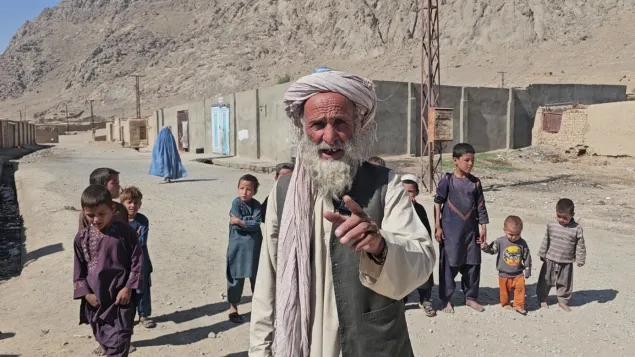
PHOTO: ICRC/Mohammad Masoud SAMIMI
PHOTO: ICRC/Mohammad Masoud SAMIMI
Fazil Rahman, a community leader in Kandahar city’s District 09, described the severity of the situation: “Water is the most critical challenge faced by our community. I personally drilled an 86-meter-deep borewell, yet no adequate water was found. Most families here cannot afford to construct their own borewells.”
He further explained the social and economic impacts of water scarcity: “Children are often forced to abandon their studies to travel long distances to find water. They leave in the morning and return in the afternoon with only a few buckets, which is insufficient for household needs. Due to economic difficulties, residents are unable to purchase water from commercial tankers. Moreover, the return of families from neighboring countries has further increased pressure on already limited water resources.”
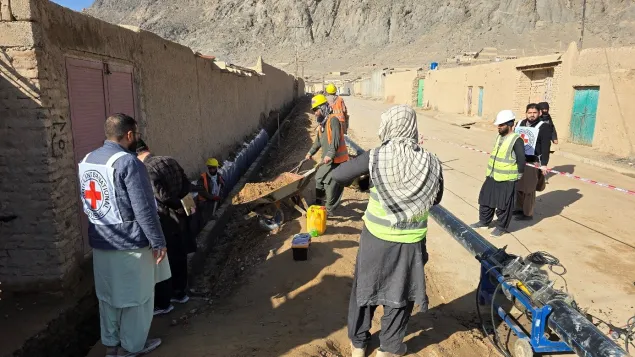
PHOTO: ICRC/Mohammad Masoud SAMIMI
PHOTO: ICRC/Mohammad Masoud SAMIMI
In 2025, the ICRC initiated a water system improvement and upgrading project in District 09 of Kandahar city, while supporting the service provider, the Urban Water Supply and Sewage State-Owned Corporation (UWASS) to operate and maintain the system, aimed at improving access to safe and reliable water for approximately 106,300 people. The project includes the extension of 12.5 kilometers of water distribution pipelines, along with the supply and installation of related infrastructure. It also provides 850 new household connections equipped with water meters.
The project significantly reduces the burden on women and children who previously spent long hours collecting water from outside their community sources.
This project is improving water access by linking reliable water supply with clean energy. Solar-powered booster pumps now drive three 55 kW pumps, reducing dependence on diesel generators and extending daily pumping hours. By using renewable energy, the community benefits from a more continuous and sustainable water supply while lowering energy costs and carbon emissions, showing how practical energy solutions can strengthen water services for people and the environment.

PHOTO: ICRC/Mohammad Masoud SAMIMI
PHOTO: ICRC/Mohammad Masoud SAMIMI
“The objective of the network extension project is to provide safe and reliable drinking water to vulnerable communities in District 09 of Kandahar city that currently lacks adequate access to water. In parallel, the sustainable energy booster pump solarization initiative was agreed with the UWASS as a critical measure to increase the operational hours of the pumping system. This intervention will expand water coverage for consumers while significantly reducing the high fuel costs associated with diesel-powered generators, thereby offering a sustainable and environmentally responsible solution over the long term,” Ahmad Noori, ICRC’s Water and Habitat Engineer in Kandahar stated.
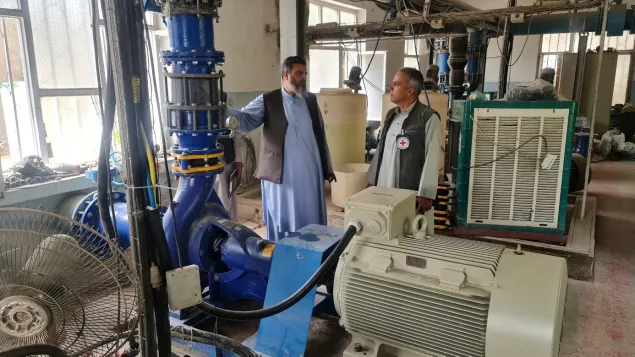
PHOTO: ICRC/Dawajan RAHIMI
PHOTO: ICRC/Dawajan RAHIMI
In another project, the ICRC upgraded the main booster pumping station of Herat city’s water supply department, which supplies water to more than 400,000 residents through 40,623 connections. The intervention included the provision and installation of four high-capacity booster pumps, extension of the pump station building, and upgrading of electrical systems. By replacing aging and inefficient pumps, the project strengthened the reliability, efficiency, and safety of the city’s most critical water distribution asset, ensuring sustainable urban water service delivery to thousands of households.
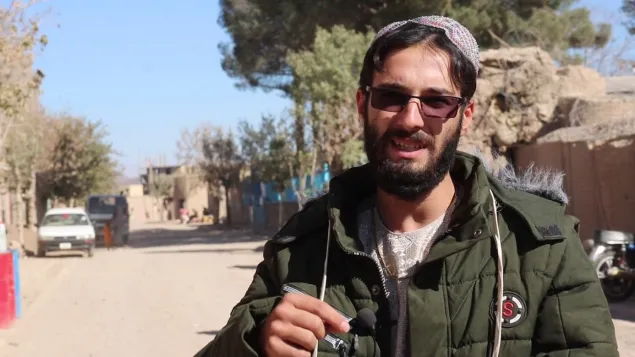
PHOTO: ICRC/Dawajan RAHIMI
PHOTO: ICRC/Dawajan RAHIMI
“People's access to water is very low here and the water is also salty in the borewells which is not usable. There is scarcity of drinking water and we travel long distances to bring drinking water. This project will remedy the challenges of communities with clean drinking water,” Mohammad Mohammadi said.
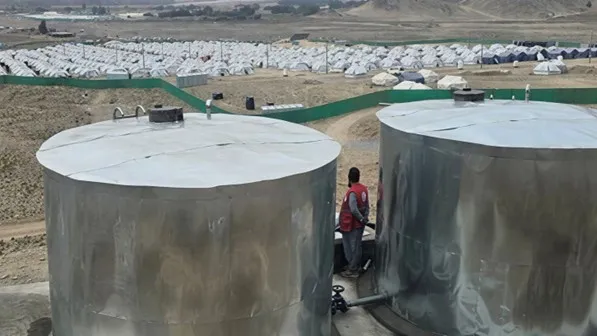
The post-emergency water supply system established for Patan IDP camps in Chawki district, Kunar Province serving 7000 individuals
PHOTO: ICRC/Noorullah Siddiqi
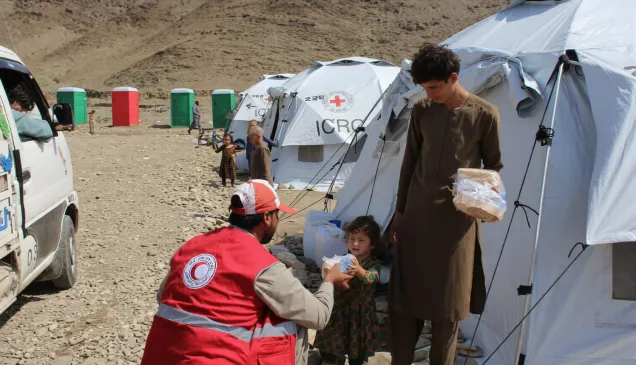
Water is critical for emergency preparedness and response. In protracted crises, often worsened by droughts, floods, and displacement, access to safe water and sanitation can rapidly decline. Timely support helps prevent disease outbreaks and protect vulnerable communities and IDPs when services are disrupted. In Afghanistan, the ICRC, in partnership with ARCS, has supported such responses, including during recent Pakistan–Afghanistan conflict and after the Kunar earthquake, reaching over 27,000 people.
Water scarcity also undermines agriculture, the main livelihood for rural communities. Reduced irrigation lowers crop production and weakens food security, increasing risks of malnutrition and waterborne diseases. It can also fuel tensions as communities compete for limited resources. To address both immediate and long-term needs, the ICRC rehabilitates key agro-infrastructure, such as irrigation canals, karezes, and flood protection walls, helping communities secure water, protect farmland, and build resilience.

PHOTO: ICRC/Ahmad Samim Ahmadi
PHOTO: ICRC/Ahmad Samim Ahmadi
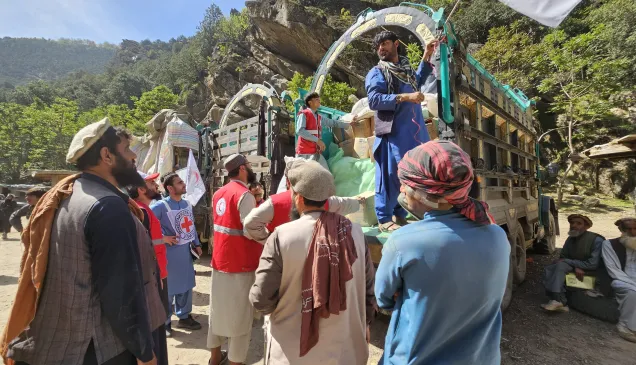
In Parwan Province’s Salang District, the ICRC rehabilitated two canals in the Koklami Valley to restore water access for surrounding communities. The canal in Onamak village supports irrigation, micro-hydro electricity generation, and livestock watering but had been damaged by floods in previous years. The second canal provides irrigation for the villages of Alocha Kham and Do Ab, helping farmers sustain agricultural production. In total, the ICRC also in partnership with ARCS rehabilitated nineteen small water irrigation infrastructures across the country during 2025.
The ICRC urban and rural water programs in coordination with relevant governmental entities, play a role in improving access to safe water, reducing the burden of people travelling long distances to fetch water, and the exposure to public health and safety concerns. More than that, the ICRC’s interventions aim at improving water management systems which prioritize conservation, reduce losses, and address the negative impacts of water scarcity and climate change.
In 2025, over 775,000 people living in urban areas and 160,300 people living in rural areas gained improved access to water through ICRC interventions.
To improve the situation, humanitarian interventions alone are not sufficient. Sustainable solutions require coordinated investment in water infrastructure, efficient irrigation, source water protection, and community-based governance. Strengthening national and local institutions, alongside effective policies and inclusive local participation, is essential for equitable water management and resilience.
ICRC's work to improve access to water for people in Afghanistan:
- Over 935,000 people (775,000 urban; 160,300 rural) gained improved access to water in 2025 through ICRC interventions.
- 106,300 people in Kandahar now benefit from a strengthened urban water network, including 12.5 km of new pipelines and 850 household connections.
- More than 400,000 residents in Herat have improved water supply reliability following the upgrade of a major booster pumping station and installation of high-capacity pumps.
- Over 27,000 people reached with emergency water and sanitation support during crises, including conflict and earthquake response.
- 7,000 displaced people provided with emergency water supply in Patan IDP camps (Kunar Province).
- 19 irrigation systems rehabilitated nationwide, restoring water access for farming, livestock, and local livelihoods.
- Solar-powered pumping systems introduced, extending water supply hours while reducing fuel costs and environmental impact.
- Reduced burden on women and children, who previously spent hours each day collecting water from distant or unsafe sources.