Bangladesh launches first-ever Junior Amputee Football Programme, empowering young athletes through sport

For Sathi, Lamia, Sifat, and 25 other young athletes, the Junior Amputee Football Programme was more than just a game. It was a place where they could rediscover courage, experience belonging, and celebrate what they can do — not what they cannot.
For five days in October, the Shaheed Farhan Faiyaz Playground, nestled in the middle of the bustling capital city of Dhaka, turned into a sanctuary for young athletes with disabilities from across the country. An inclusive sports facility dedicated to persons with disabilities, the Playground came alive with laughter and camaraderie, as a motley group of 28 players joined a football training camp, their determination resonating in the rhythmic thuds of footballs.
Organized by Sports for Hope and Independence (SHI) with the support of the International Committee of the Red Cross (ICRC), this historic camp marked the first-ever junior amputee football programme in Asia. Guided by the National Paralympic Committee of Bangladesh (NPC) and the World Amputee Football Federation (WAFF), it provided a platform where young athletes with limb loss could reclaim their confidence and step into a world of possibilities. The five-day camp was a vibrant mix of excitement and learning. Laughter and cheers echoed across the field as participants encouraged one another, shared tips, and celebrated every goal and every small victory. The atmosphere was electric — a place where physical challenges did not define the them, but where determination, teamwork, and joy took centre stage.
Rekindling Dreams
For many participants, playing football had seemed impossible. Lamia Jahan, 13, from Bogura — a district over 200 kilometers north of Dhaka — had lost her leg at seven and had never had the chance to participate in organized sports. Traveling the long journey with her mother, Lamia arrived full of hope: “I always watched others play, but I never had a place where I could join. This camp showed me I can do it too.”
Sifat, 17, from Teknaf in the far south near the Myanmar border, had heard all his life what he could not do. Scoring a decisive goal in an exhibition match, he felt the exhilaration of triumph and possibility:
People used to say I couldn’t do anything because I have one leg. Today, I played and became a champion. One day, I want to represent Bangladesh internationally.
Sport as a Bridge to Confidence and Inclusion
For these young athletes - 24 of them boys and girls between 12-18 - football is more than a recreation. It is a pathway to independence, resilience, and social belonging. On the field, they are recognized for their abilities, not their disabilities. Through shared experiences, they form friendships, find courage, and begin to change how society sees them. And their families also share in the joy, witnessing transformation beyond the game, as Karina’s mother reflects: “My daughter has not smiled this much in years. Seeing her play, fall, laugh, and get back up — it was the best moment for our family.”
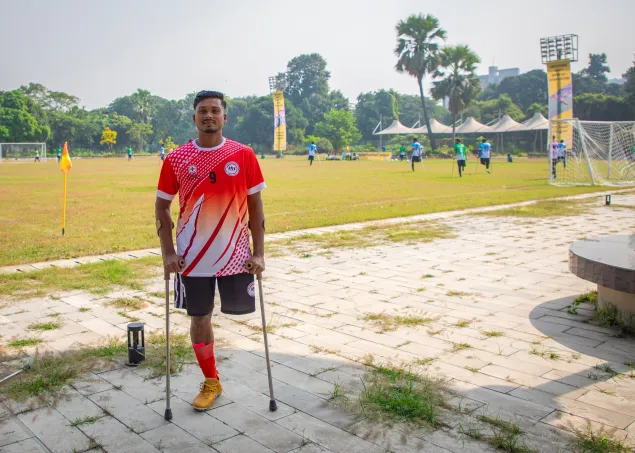
The impact of amputee football extends across generations. Mizanur Rahman from Mymensingh, now a senior player and role model, reflected on his own journey: “After my accident in 2013, I was too shy to go out. Joining amputee football in 2022 changed everything. People once called me Protibondhi (disabled) — now they call me Mizan Bhai.” He hopes future programmes will include longer 20–30-day training camps to help players compete at higher levels.
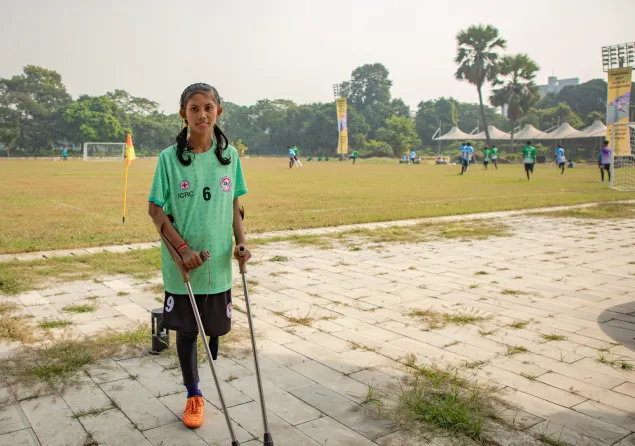
For Ovipsa Barua Moni, football has brought both joy and wellbeing. “I’ve been playing amputee football since 2023, and it makes me truly happy,” she said. “I was often sick before, but now I feel healthy and active.”
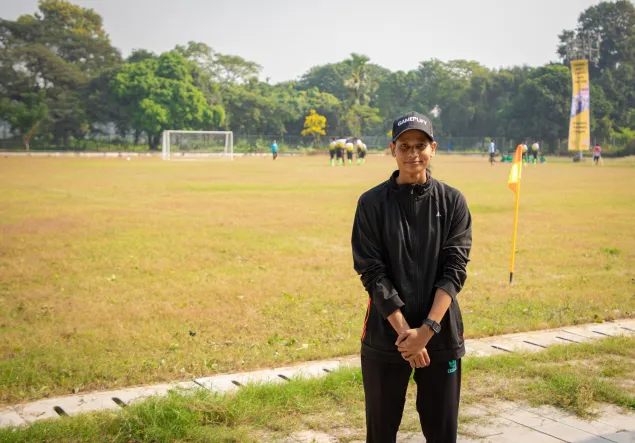
The growing participation of girls is another sign of change. Coach Kajoli Akter Sharna, who has been instrumental in developing women’s and girls’ amputee football, has seen the shift firsthand: “When I started in 2023, only a handful of girls came, even after calling hundreds. Now the interest is overwhelming.”
She believes the team will one day compete on the world stage — opening doors for many more athletes with disabilities.

A Future with Hope
While for the participants, it is a glimpse of what they can achieve, for their families, it is the joy of seeing their children thrive. As Lamia, standing tall after her first match, says: “This camp showed me what I can do. I feel strong, and I want to keep playing.”
The programme also sets the stage for a lasting impact, creating pathways that guide young athletes from local grassroots participation all the way to national-level opportunities. By connecting youth with local and regional networks, and drawing on years of ICRC and SHI initiatives, it lays the foundation for sustainable inclusion, empowerment, and opportunity.
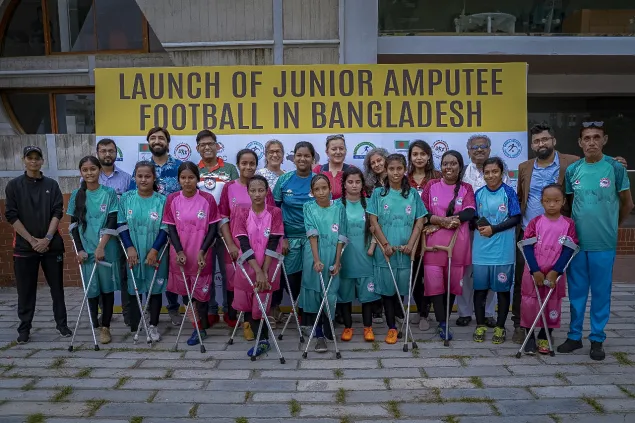
In Bangladesh, the development of this football programme for persons with disabilities began in 2022. Two years later we launched the Women’s Amputee Football Program, which opened doors for female athletes to compete, lead, and inspire. The recent Junior Football Program was another step to help empower the next generation of persons with disabilities to dream big and play strong. With continued support these young athletes are forging a path where resilience, skill, and optimism shape not only their football journey but their everyday lives.
Learn more about our work in Bangladesh
- Bangladesh: Training empowers staff, volunteers of Bangladesh Red Crescent to deliver humanitarian aid safely
- Bangladesh: How Amputee Football is changing the lives of women and girls with disabilities
- Bangladesh: Our work in 2024 - facts and figures
- The ICRC in Bangladesh: 2024 in images
- From the classroom to the courtroom: The journey of Bangladesh law students advocating for international humanitarian law