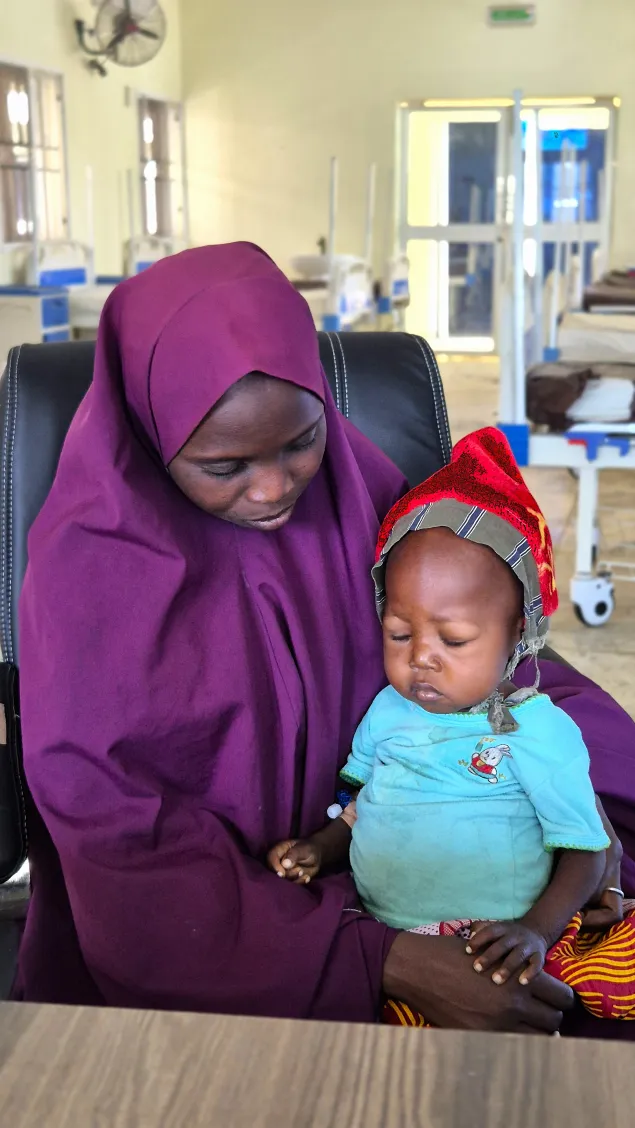
When Zainab arrived at the nutritional stabilization centre in Damaturu, in Yobe State, Nigeria, her 22-month-old son, Umar was barely conscious in her arms. His face and feet were so swollen that his skin seemed stretched to the limit. “I thought I was going to lose him,” she recalled.
Zainab may not have known the medical name for what was happening to her son, but she knew he had not grown normally. Since birth, Umar had struggled, eating poorly, failing to gain weight, and growing weaker every day.
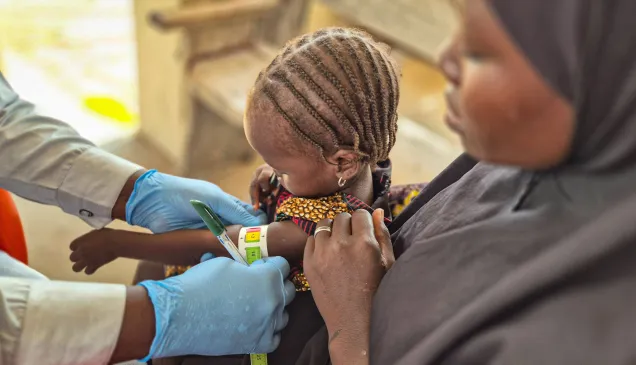
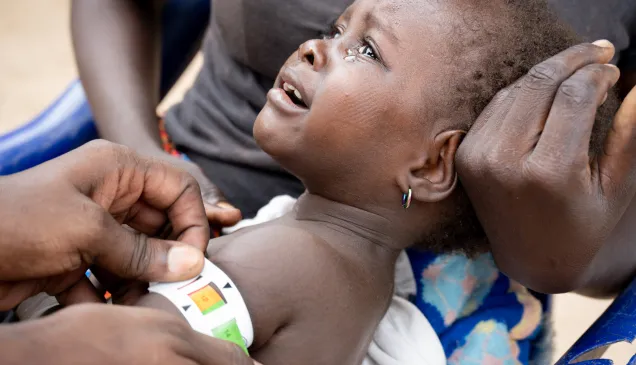
“The swelling was a sign of nutritional edema, a severe form of acute malnutrition usually caused by a prolonged lack of essential nutrients in the body,” explained Samira Hassan, a nurse at the Damaturu nutritional stabilization centre. Without urgent treatment, children with this condition rarely survive.
Children, as well as pregnant and lactating women, are most at risk. In hard-to-reach areas, especially in Borno and parts of Yobe, rates of severe acute malnutrition remain persistently high.
At the stabilization centre Umar received therapeutic feeding, medical care, and close monitoring. Within a week, the swelling began to subside and he gradually regained his appetite. He is now slowly recovering.