Tackling stigma, the silent aftermath faced by survivors of sexual violence in conflict-affected communities
Red Cross workers from Nigeria, Ethiopia and South Sudan share their experience during the learning event "Safer communities: from stigma to support" co-organized by the ICRC and the Norwegian Red Cross Society, late November in Addis Ababa.
They illustrate our Movement’s efforts to help victims/survivors and affected communities to battle against sexual violence and stigma, a deep-rooted problem in many of Africa’s conflicts.

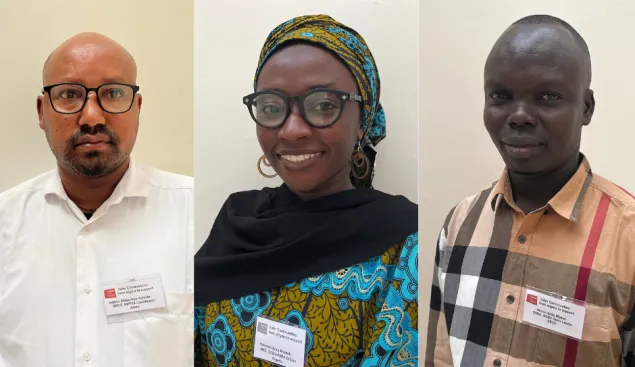
From left to right: Addisu Alebachew from Ethiopian Red Cross Society, Halimah Oyiza Momoh from Nigerian Red Cross Society, and Arike Moses from South Sudan Red Cross Society.
Halimah Oyiza Momoh, Nigerian Red Cross Society, on the consequences of sexual violence
Sexual violence is any act of a sexual nature committed against the person by force, threat of force or coercion. It has a lot of varying impacts or consequences on both the victim/survivor, the family and society at large. These consequences can be physical, psychological, economic, social, and there’s also an added level of impact on people. And that's stigma.
Stigma is even more devastating than all these other consequences. It's more long-lasting. It affects not just the individual but also the family and the society. Victims/survivors are usually scared to open about it. Their families don’t facilitate access to services for them. It's associated with shame and judgment from their immediate family, from the community, and sometimes even from themselves.
A survivor I interviewed had been in captivity for about five years, being exposed to sexual slavery and some other types of horrifying incidences. It was very difficult for her to reintegrate into the society because even her family had issues with accepting her back and supporting her. There had been no communication with her parents. Some people assumed her dead. And then she came back. She returned with a child she got out of what had happened to her, which made matters worse. She said she had to live with this shame ‘for the rest of her life’.
This is a young girl who came forward to talk and try to access services. But what about others who don’t even know that services exist?
Stigma leads to further consequences like depression, anxiety, insomnia… sometimes even suicide. So, by addressing stigma, we hope to reduce the silence that surrounds sexual and gender-based violence, and help communities create safer and more informed environments.
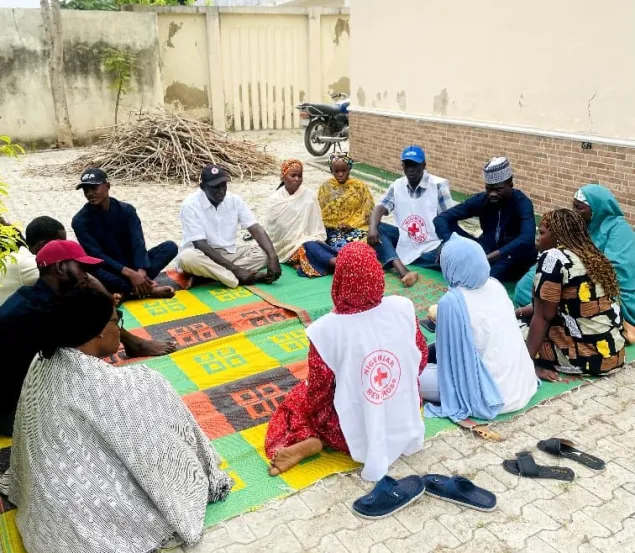
Nigerian Red Cross SGBV Focal Points share insights from their frontline efforts to reduce stigma related to sexual violence in communities.
Arike Moses, South Sudan Red Cross Society, on the impact of addressing stigma with communities
Before, when a woman was raped, she just kept silent. Sometimes, she was forced to marry the perpetrator, she was called with different kinds of names… But we intervene as volunteers and through the support from the ICRC, we go to the communities, raise their awareness, and there are some changes. Now you find victims/survivors going on their own to access mental health and psychosocial support, and to get medication in the time that is appropriate for them, which is 72 hours.
Secondly, when we intervene there is generally a reduction of sexual violence. Then thirdly, there is acceptance: Once they are aware of the problem, community leaders and members realize that it is not the victims/survivors' fault, and that they need to be protected.
Addisu Alebachew, Ethiopian Red Cross Society, on the challenges in carrying out awareness-raising about stigma
Stigma related to sexual violence is often deeply embedded in cultural norms and social attitudes.
As a mental health and psychosocial support specialist, I see several challenges, despite the awareness-raising and stigma reduction efforts. Especially cultural and social barriers. Overcoming entrenched beliefs and traditional structures that normalize silence or victim-blaming requires sustained engagement. We must also be culturally sensitive.
The second challenge is security and access in crisis contexts. Access to vulnerable people or remote settlements can be challenging, hindering the reach of the stigma awareness campaign. Especially in Tigray, Amhara and some parts of Oromia, it is very challenging to carry out these awareness-raising efforts due to security problems.
Another issue is limited resources for scale-up and duration. There are high needs of capacity building and of accessibility during emergency times, which require adequate resources to develop and disseminate context-specific training materials, and to ensure coaching, mentoring and supervision of staff and volunteers. We also need to increase the number of volunteers in some of the rural areas which are affected.
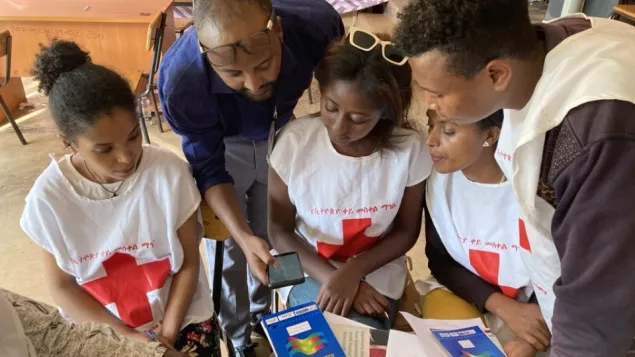
Ethiopian Red Cross Society volunteers study how to run a focus group discussion with communities, aimed at understanding and reducing stigma against survivors of sexual violence, last year in Dembi Dollo, Oromia region.
Specific takeaways from the Red Cross workers on addressing stigma in the affected communities
All groups should be involved in the prevention of the stigma against survivors of sexual violence: religious leaders, community leaders, teachers, police, family members.
A specific approach is the use of cross-sectoral integration. This means, addressing sexual violence in an integrated way with other humanitarian response sectors such as water, shelter, nutrition, health, and food security. By training staff from these sectors about protection, gender, mental health and psycho-social support, stigma reduction messages can be delivered through multiple channels and by different humanitarian teams. This helps victims/survivors feel less isolated.
To be more impactful, the stigma reduction message must be owned and disseminated by the community itself. This is why the Red Cross empowers community volunteers to work with local authorities, leaders and NGOs. The battle against stigma associated with sexual violence can only be won by tackling the problem at its core.