News release

South Sudan: Civilians pay a high price, as conflict intensifies

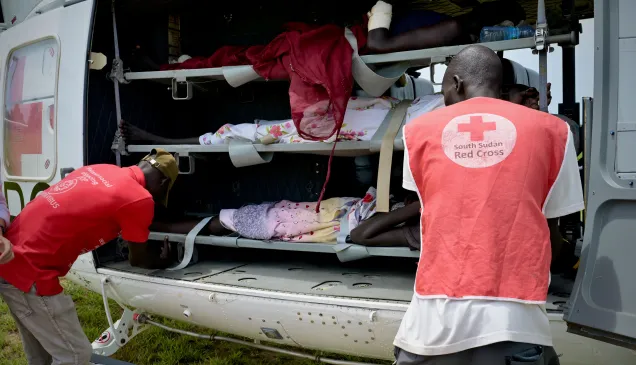
A group of South Sudan Red Cross volunteers, accompanied by an ICRC health personnel, carrying a weapon-wounded patient on a stretcher towards an evacuation aircraft to be airlifted for further treatment. Photo Credit Greta Mancassola/ICRC.

JUBA (ICRC) - Civilians are increasingly bearing the brunt of the renewed fighting across South Sudan since late 2025, marking the most intense escalation in nearly a year, particularly in Jonglei, Eastern and Central Equatoria States. 

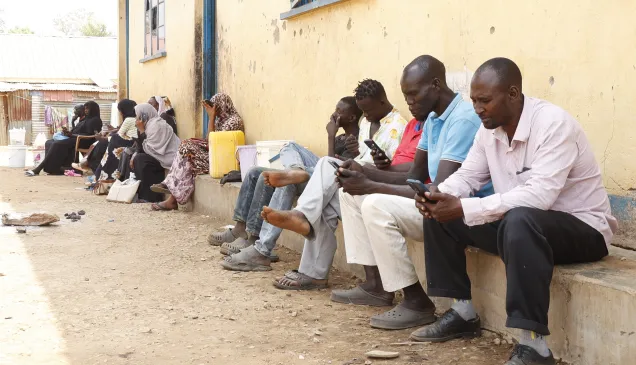
Tens of thousands of people have been forced to flee their homes amid intense hostilities through flooded wetlands, leaving them uncertain where their next meal will come from and exposing them to disease. Their main concerns now are finding a safe place to shelter, accessing food, and obtaining basic medical care. Meanwhile, dozens of patients wounded in the fighting are at risk due to the lack of reliable access to emergency, life-saving medical care.

Gatkuoth Ruach, who fled his home Jonglei State in January 2026 and found refuge together with his six children in Panyikang county, Upper Nile State, recounted: “When the fighting erupted, we ran far from the battlefield, crossing streams and swamps until we reached a small area of dry land. We survived on water lilies and wild fruits. The journey was extremely difficult and exhausting, moving through floodwaters, enduring mosquito bites, and suffering from a lack of food, among many other hardships. Many people developed severe sores on their feet and sustained injuries from sharp grass.” 

To respond to the spiralling humanitarian needs, the International Committee of the Red Cross (ICRC), among other life-saving activities, urgently deployed a temporary surgical team to Panyijar County, Unity State, to deliver emergency surgical care to critically-wounded patients who would otherwise have no access to such treatment. 
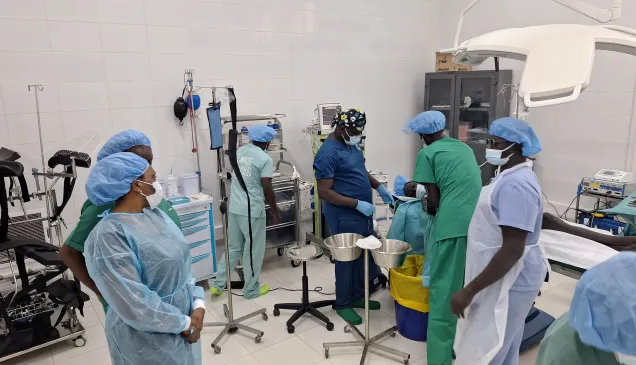
Panyijar is a remote area with extremely limited resources and facing multiple challenges such as lack of electricity and water supply to the hospital. However, we adapted to the resources available, prioritizing measures to save people's lives and limbs. We worked closely with the local health staff of Panyijar County Hospital, combining their local knowledge with our technical support to ensure effective and sustainable care.

Dr. Aktham Elfarnawany ICRC Anaesthetist

Since the intensification of the conflict in December 2025, the ICRC has conducted more than 600 surgeries on patients with weapon wounds arriving in Juba Military Hospital and Panyijar County Hospital, while facilitating the transfer of some 110 wounded patients from remote locations. While access continues being constrained in certain areas of South Sudan, the ICRC continues to remotely support Akobo County hospital in its provision of life-saving surgical care to the wounded. In this regard, we recently sent critical medicine and medical supplies to this hospital, where wounded have arrived in large numbers in recent weeks.

The ICRC reminds all parties to the conflict of their obligations under international humanitarian law (IHL) particularly those concerning the protection of medical mission and humanitarian access. Hospitals, health care centres, medical personnel including rescue workers, ambulances must not be the object of attacks or other interferences. Rapid and unimpeded passage of humanitarian relief should be allowed for civilians in need, and access to life-saving care for the wounded and sick should be granted and facilitated without any adverse distinction. 

In 2025, the ICRC, working closely with the South Sudan Red Cross (SSRC), has:

  • Carried out more than 4,500 surgical operations on weapon-wounded patients at the ICRC-supported hospitals in Juba, Akobo, Renk, and Malakal.
  • Treated 971 wounded patients at the ICRC-supported hospitals and facilitated the transfer of 585 patients in order to facilitate access to life-saving medical care.
  • Provided over 4,400 people with physical rehabilitation services helping them to regain mobility and independence, in partnership with the Ministry of Gender, Child and Social Welfare.
  • Visited almost 5,600 detainees across 15 places of detention, contributing to improved treatment and living conditions in line with international standards.
  • Facilitated nearly 38,000 successful phone calls, enabling families separated by conflict, violence and detention to restore and maintain contacts.
  • Conducted awareness-raising sessions on sexual violence for more than 28,400 community members to protect, prevent, and respond to incidents of sexual violence.
  • Distributed food assistance to nearly 50,000 internally displaced people fleeing armed conflict.

For more information, please contact:

Germain Mwehu, ICRC Juba, tel: +211 912 360 023, gemwehu@icrc.org

Eleonore Asomani, ICRC Nairobi, tel : +221 78 186 46 87, easomani@icrc.org


Did you know:

Hospitals are protected under international humanitarian law

Hospitals, ambulances and medical staff must never be attacked or obstructed during conflict. International humanitarian law protects those who care for the wounded and sick, and the red cross, red crescent and red crystal emblems signal that protection. When health care is disrupted, entire communities suffer. The ICRC reminds all parties to conflict that even in war, medical care must be respected and protected.