Rebuilding livelihoods for conflict-affected families in northeast Nigeria

Hauwa Kachallah, a mother of six from Bama, Borno State, vividly remembers the day her life changed forever. Her husband was killed during an attack on their town, and the conflict robbed her family of their livestock—their primary source of income. With no other choice, Hauwa and her children fled to Maiduguri, the capital of Borno State, traveling on foot for three days to reach safety.
“Life in the displacement camp was extremely difficult, with little access to food or assistance,” she recalled.
When it was finally safe to return home, Hauwa found her house in ruins and her livelihood completely destroyed. She had no idea how to start over.
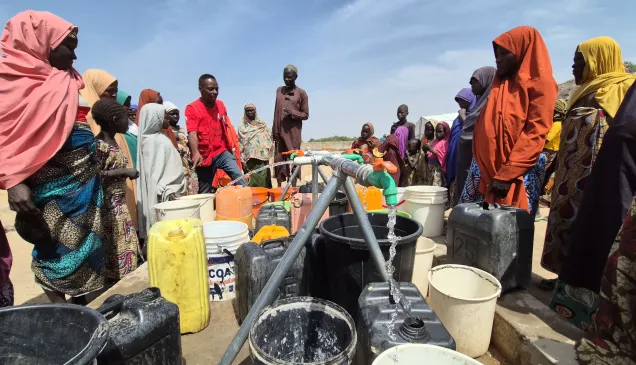
For more than 15 years, conflict in northeast Nigeria has uprooted millions, weakened agricultural and pastoral systems, and forced families into difficult coping mechanisms that jeopardized their health and safety.
In response, the International Committee of the Red Cross (ICRC) launched a cash-based livestock restocking program in Borno State in 2022, later expanding it to Adamawa and Yobe states. The initiative aims to help vulnerable households rebuild their livelihoods with dignity and regain a sense of stability.
The programme supports families by replacing lost animals, offering training in animal care, and prioritizing assistance to women, widows, and other vulnerable groups. In several communities across Borno, families who once returned home to nothing are now reporting growing herds, more regular incomes, and improved nutrition—clear signs of resilience and gradual recovery.
For Hauwa, this journey of resilience began with a small grant and a few sheep.
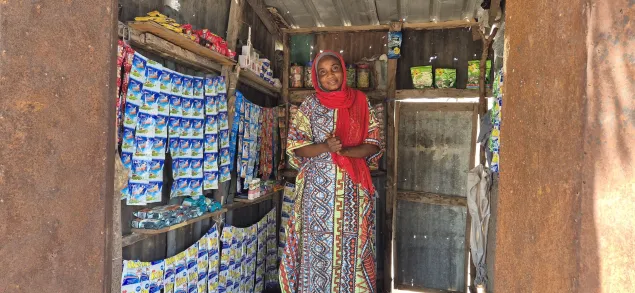
With the money she made from livestock, Hauwa Kachallah opened a small shop so that her children could go back to school.
Her earnings allowed her to open a small shop, which further supports her family. Her children are back in school, and she can now meet their daily needs— steps she once feared she would never take again.
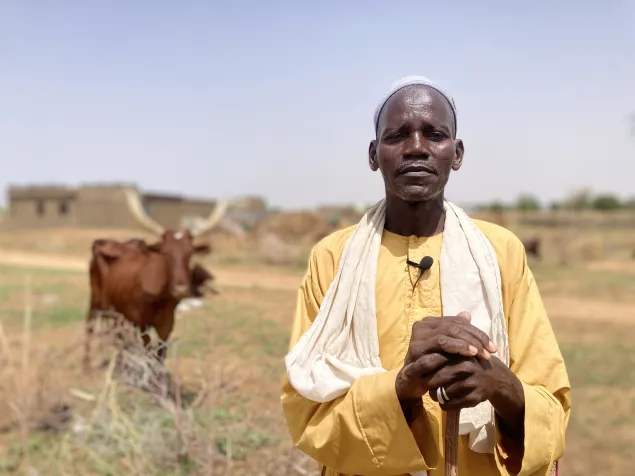
Abubakar Hussaini, returning to cattle rearing is like returning to my life's work.
Abubakar Hussaini who was displaced from Konduga to Maiduguri described the support as a return to identity. Eight years ago, the conflict forced him and his family to flee their village, leaving everything behind, including over 500 heads of cattle. To survive, he worked on local farms to feed his family.
With the livestock support he received from ICRC, Abubakar was able to return to cattle rearing. "Now, I own several heads of cattle, and it feels like I'm returning to my life's work," he shared with a sense of pride. Challenges remain - limited grazing land and restricted access to the bush, but he remains optimistic for the future.
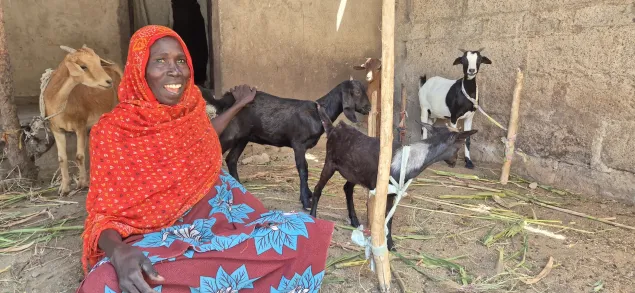
Zara Modu, a widow and mother-of-nine revived her pottery trade with money from rearing livestock.
For Zara Modu, a widow and mother of nine, the programme marked the turning point she had prayed for. With the grant from the ICRC, she bought goats. “From that moment, things started to get better,” she said, recalling the hardships of displacement and the relief that came with a renewed source of income. With the income from the livestock, Zara also revived her pottery trade, earning her additional income.
To date, more than 3,300 families have benefited from this initiative, leading to more livestock, better access to food, improved nutrition, and a renewed sense of dignity. “It has also helped families become more financially stable, and manage their livestock sustainably as a community,” John added.