Bosnia and Herzegovina: Mine risk education reduces risks and saves lives – but the danger is far from over

Thirty years after the armed conflict, landmines and explosive remnants of war still represent a life threating hazard in Bosnia and Herzegovina. For younger generations with no memory of the conflict, the threat is real, but invisible. Mine risk education may be their only warning.
No child should fear the land they walk on
In August 2025, a 19-year-old was killed in Doboj after entering a marked minefield. He was born after the conflict ended. He had no personal memory of why those mines were placed there, or how they remain. His death illustrates the central challenge facing mine safety efforts in Bosnia and Herzegovina today: the people most at risk are increasingly those who know the least about the danger.
Thirty years on from the conflict, around 2% of the country’s land remains contaminated, while 774 square kilometers remain suspected to contain mines, much of it forested, difficult to access, and slow to clear. In the post-conflict period, 1,862 mine incidents were recorded, leaving 625 people killed, others injured.
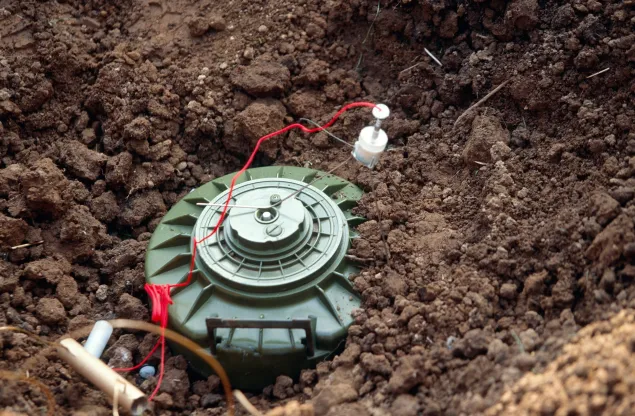
Sarajevo. Implosion device set to destroy mines.
Reaching those who don’t remember
The Red Cross Society of Bosnia and Herzegovina (RCSBiH) has run a mine risk education program for 30 years reaching more than 40 mine-affected communities including 600,000 schoolchildren with mine risk awareness programs, supported by the ICRC. Throughout these three decades of collaboration, the ICRC has recognized RCSBiH’s extensive reach and its significant achievements on such an important topic.
Through school visits, camps, and door-to-door outreach in rural areas, the programme brings lifesaving information to those most likely to encounter unexploded ordnance: children, farmers, hunters, fishers, returnees, hikers, and forestry workers.
The Bosnia and Herzegovina Mine Action Centre (BHMAC) which partners with RCSBiH on awareness efforts, is equally focused on educating younger audiences.
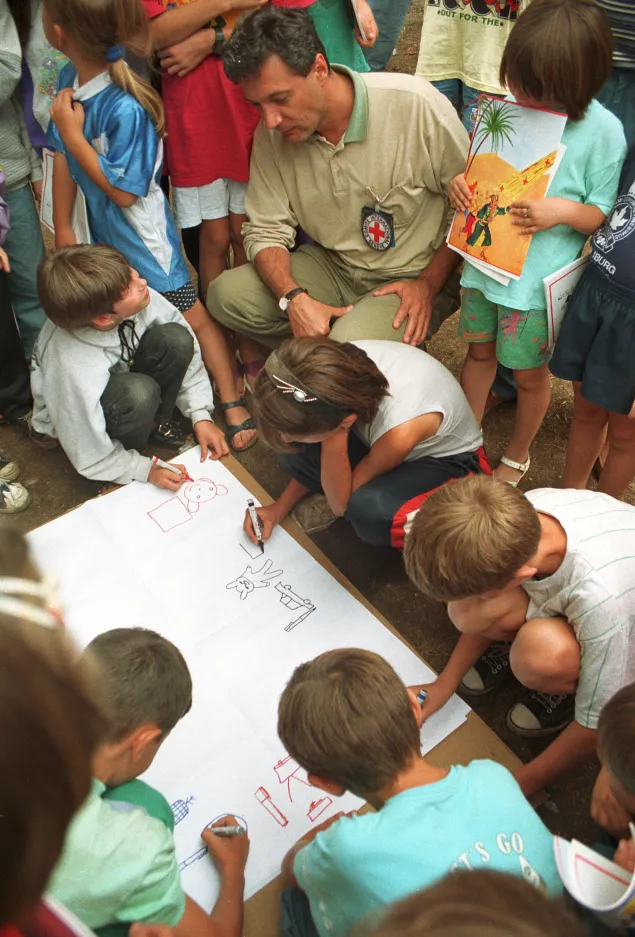
Landmine awareness campaign.
Progress, but not resolution
More than 80 per cent of once contaminated areas have been cleared, and mine causality numbers have fallen significantly due to sustained education and demining efforts. But the work is getting harder. Terrain along the former conflict lines has changed over decades, making clearance slower and more technically demanding.
For 30 years, the ICRC has supported the mine risk action program run by the Red Cross Society of Bosnia and Herzegovina (RCSBiH), recognizing its extensive reach and significant achievements in addressing this critical issue. However, the complexity of the challenge remains significant. In 2026, Bosnia and Herzegovina requested from the States Parties to the Anti-Personnel Mine Convention a further extension of its demining deadline, currently set for March 2027.
In Doboj, the loss of a young life in 2025 served as a stark reminder of these dangers. The Red Cross in Tuzla Canton launched an initiative to build a house for the boy’s mother, receiving support from citizens, artists, and businesspeople, which allowed construction to begin soon afterward. This act of compassion highlights the resilience and unity of communities in Bosnia and Herzegovina, even as they continue to face the lingering dangers of landmines.
On 4 April 2026, the International Day for Mine Awareness, the RCSBiH held a series of activities in Mostar, attended by the Head of ICRC Delegation in Bosnia and Herzegovina, Jamila Milovic Halilovic, representatives of BHMAC the EU force in Bosnia and Herzegovina (EUFOR), and numerous state officials, marking the dangers of landmines and unexploded ordnance and the continued importance of mine action. The joint Statement from the RCSBiH event, echoes the fact that although the war ended thirty years ago, its consequences have not. It also carries a message of hope:
“There is no secure and lasting peace when mines still pose a threat. Therefore, our message is clear: the safety of people must be a priority. Mine action saves lives and enables the recovery of communities.