Colombia: Conduct of hostilities and use of explosive hazards

Across various parts of the country, armed clashes intensified and, in many cases, took place in populated areas or near homes and other civilian property, exposing communities to greater risks.
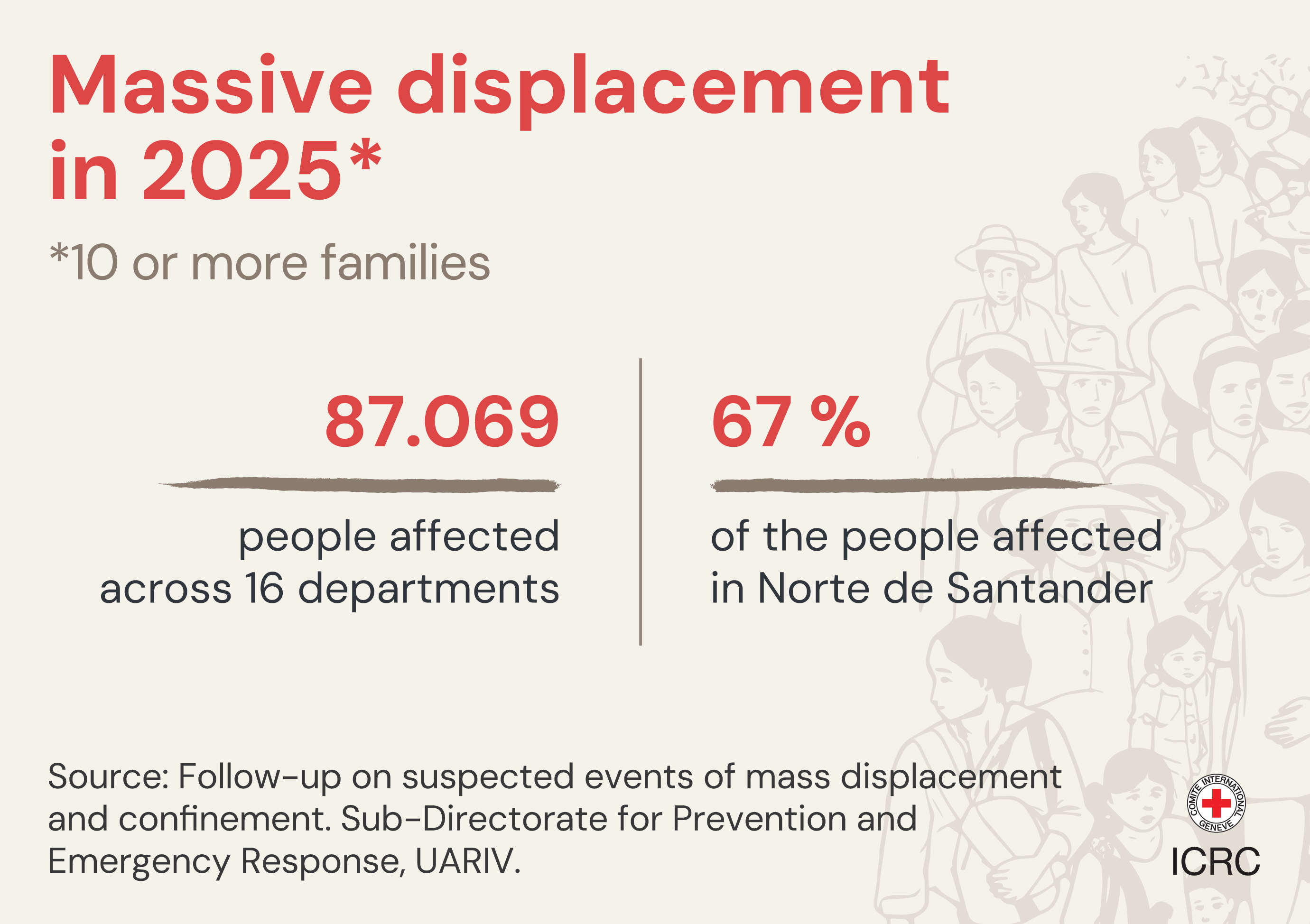
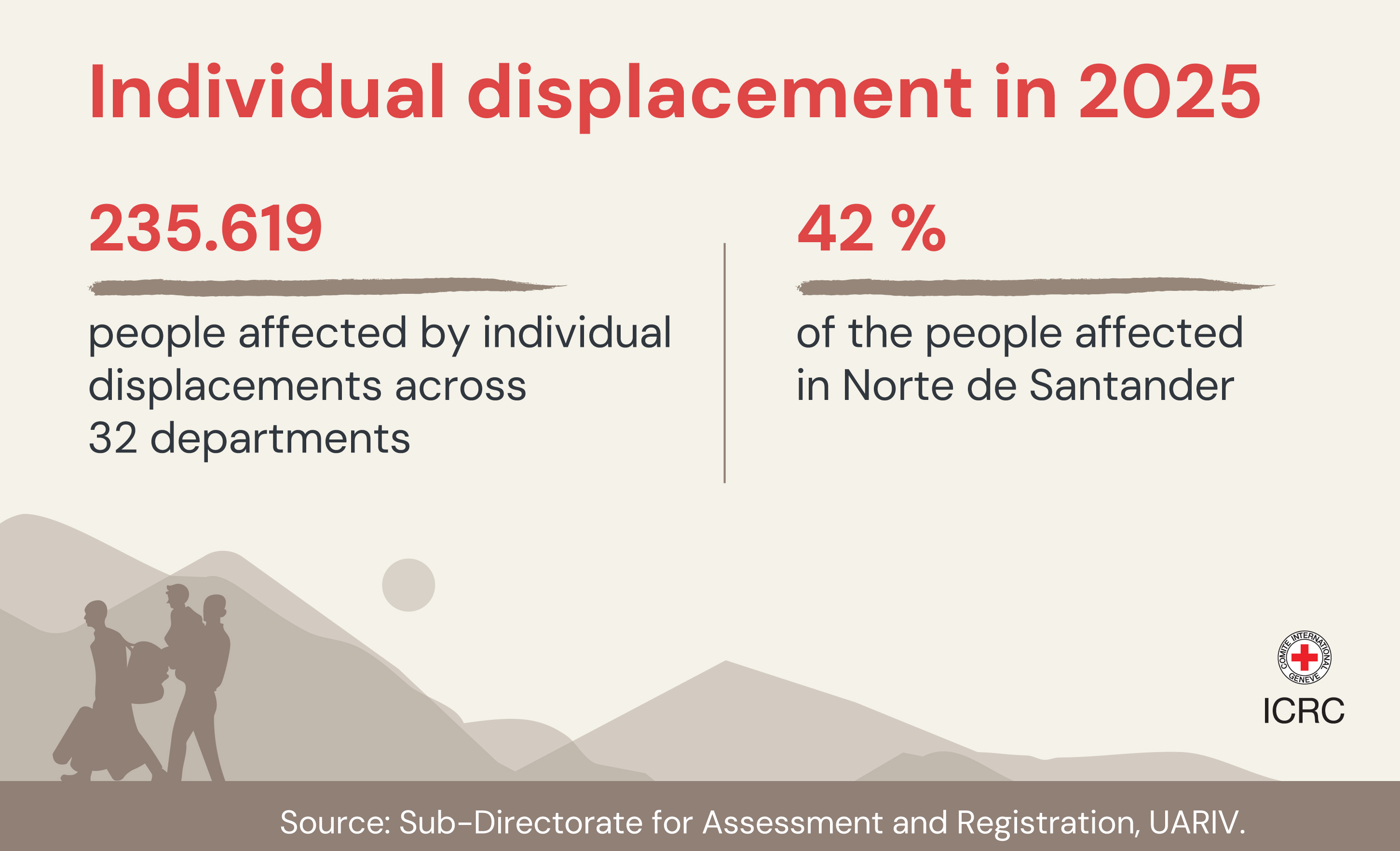
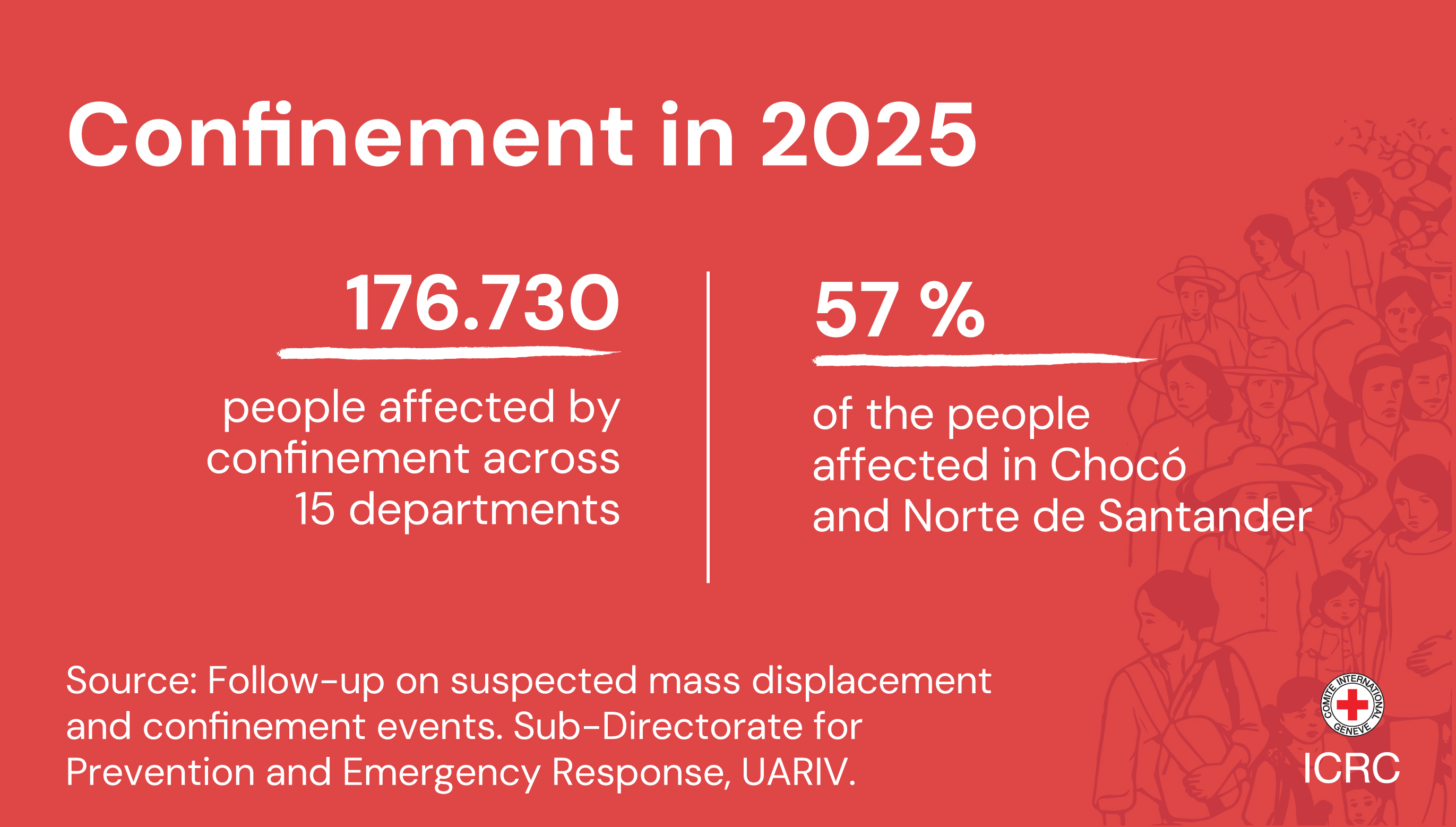
In this context, many families stayed inside their homes for hours and even days to take shelter. Civilians were injured, killed, and entire communities were confined or forced to be displaced. Access to water, food, health care services, education and other essential services for daily life was limited or disrupted, and health personnel, who have special protection under IHL, faced situations of violence that hindered their work.
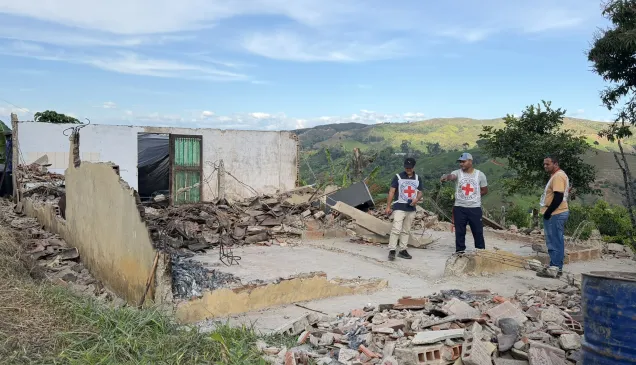
These dynamics also resulted in damage to housing, community spaces and health care infrastructure, deteriorating the communitiesʼ living conditions. This was compounded by the presence of explosive remnants of war on roads, transit areas and around homes, crops and community infrastructure, which continued to pose a threat even after hostilities had ceased.
In some cases, armed actors occupied or used civilian property, which made the situation worse for the population.
Several homes became uninhabitable, and those who continued to live there faced accusations or stigma.
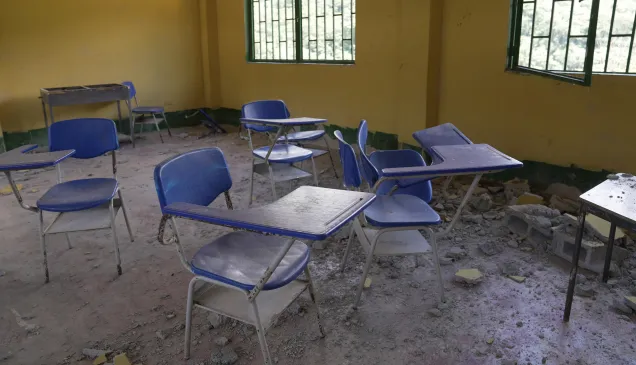
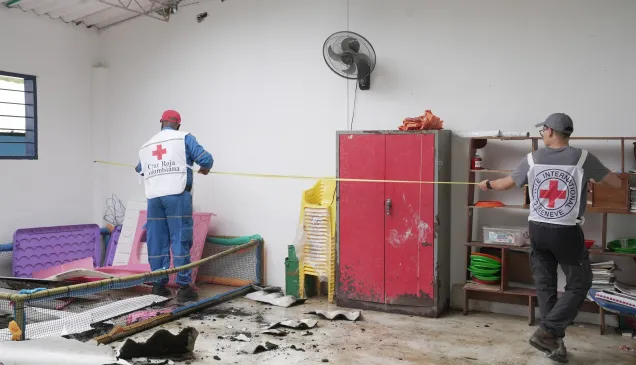
Schools were among the most affected civilian properties. Some schools were damaged during clashes and others were temporarily used by armed actors. Explosive hazards were also found on access roads leading to schools. Such situations affected the role of schools as protective spaces, and, in many cases, teachers had to leave the schools to protect their lives.
All of the above made it difficult or impossible for children and adolescents to access education, thereby increasing their exposure to various risks, including involvement in armed conflicts.
The use of certain weapons continued to have particularly serious consequences for civilians. Of the 965 people injured or killed by explosive hazards recorded by the ICRC in 2025, 198 were affected by anti-personnel landmines, of whom 75 were civilians. Despite a decrease compared to 2024 in cases related to anti-personnel landmines, the use of such explosive hazards continues to raise concerns owing to their humanitarian consequences.
Anti-personnel landmines can injure, maim or kill without distinguishing between parties to the conflict and civilians. Those who survive often face permanent disabilities and long-term psychological effects. In addition, the presence of such explosive hazards restricts mobility, limits access to crops, water sources and basic services, and keeps entire communities exposed to danger for extended periods of time. Given their nature and effects, the use of anti-personnel landmines is hardly compatible with the rules of IHL governing the means and methods of warfare, as established in the Convention on Certain Conventional Weapons, and is prohibited by the Ottawa Convention.
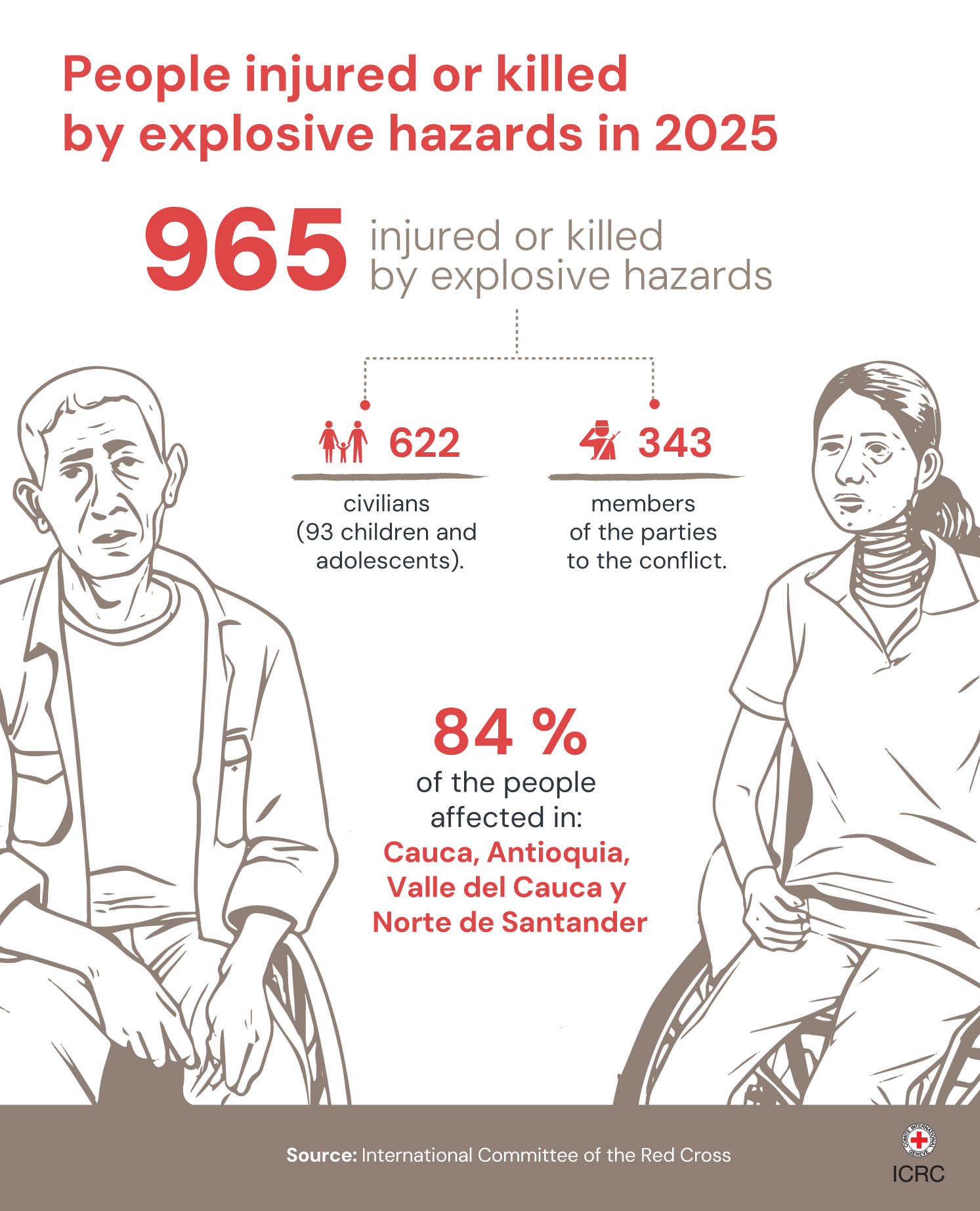
Other types of explosive hazards also had serious effects on civilians. 765 people, 71 per cent of whom were civilians, were injured or killed by controlled detonation devices and launched explosive devices. The impact of such explosive hazards depends to a large extent on how and where they are used, as well as on the precautions taken to limit their effects on civilians and civilian property.
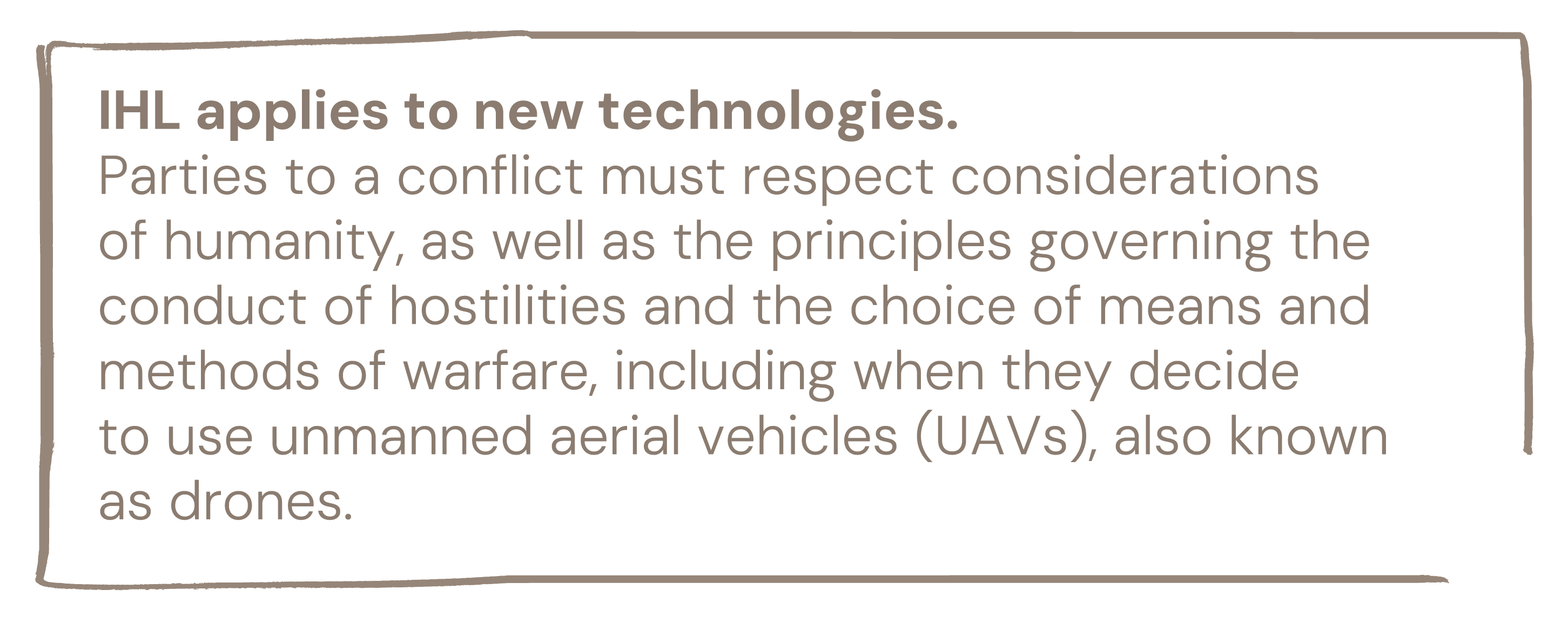
The increase in the use of launched explosive devices dropped in both rural and urban areas included the use of improvised launch devices and unmanned aerial vehicles, commonly known as drones.
The use of commercial drones modified to launch explosive hazards has intensified in the context of armed conflicts in Colombia and has generated fear, uncertainty and serious harm among affected communities.
The way in which hostilities are conducted and weapons are used has direct implications for civilians and civilian property. When the principles of distinction, proportionality and precaution are not respected, there is an increased likelihood that the effects of hostilities will extend beyond military objectives and affect communities, thereby amplifying both the scope and severity of the humanitarian consequences.