Libya in 2025: Standing alongside communities affected by conflict and violence
In 2025, the humanitarian consequences of armed conflict continued to affect communities across Libya. Families remained separated, people searched for answers about missing loved ones, essential services faced increasing pressure, and many communities continued to live with the long-term consequences of conflict.

Throughout the year, the International Committee of the Red Cross (ICRC) in Libya worked alongside the Libyan Red Crescent Society (LRCs), authorities, and local partners to respond to humanitarian needs and strengthen essential services across the country.
Whatever the context - whether widely reported or largely forgotten - the ICRC’s approach has remained the same: to stay close to affected communities, alleviate suffering, and uphold the Fundamental Principles of neutrality, impartiality and independence that enable humanitarian action in post-war situations.
Helping families reconnect and supporting families of the missing
Helping families stay connected and find answers when loved ones are missing has remained at the heart of the ICRC’s humanitarian mission in 2025.
In 2025, the ICRC continued its efforts to restore and maintain family links between separated family members, including detainees, unaccompanied minors, and vulnerable adults. Working closely with the LRCs, the ICRC facilitated phone calls, Red Cross Messages (RCMs) to help families reconnect.
The ICRC also continued to act as a neutral intermediary, engaging with representatives from the east and west of Libya to clarify the fate of people missing in relation to the conflict and to support families searching for answers.
Alongside these efforts, the ICRC maintained confidential dialogue with authorities on humanitarian concerns affecting detainees, internally displaced people, and families of missing persons.
Strengthening forensic capacities and supporting the dignified management of the dead
Proper management of the dead and support for families searching for answers remain essential humanitarian priorities.
In 2025, the ICRC continued strengthening Libya’s medico-legal and forensic capacities through training, technical support, and donations of specialized materials.
Training sessions on the management of the dead were conducted in Tripoli and Sabha for personnel from the Criminal Investigation Department (CID), while Human Remain Recovery Team trainings were organized for the Ministry of Interior and CID Benghazi branch.
The ICRC also supported awareness sessions for LRCS volunteers and continued engagement with relevant authorities, including the General Authority for Research and Identification of Missing Persons (GASIMP).
Material donations were provided to several institutions and facilities, including morgues, hospitals, emergency response centers, and forensic departments to strengthen the recovery and management of human remains.
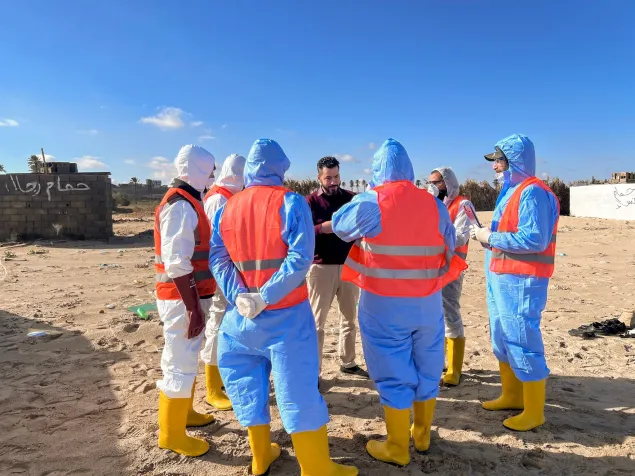
During the training on the management of human remains in emergencies.
Delivering health care where it is needed most
In 2025, ensuring access to health care has remained a central pillar of the ICRC’s work for people affected by armed conflict, particularly where health systems have been overwhelmed or deprived of essential resources.
The ICRC supported health facilities across Libya through the provision of medicines, consumables, and medical materials. In addition, primary health care centers received regular support, while additional facilities and hospitals benefited from ad-hoc assistance.
In cooperation with the LRCS, the ICRC also supported medical convoys in Kufra and Ubari, providing hundreds of consultations for women, children, and vulnerable communities living in remote areas.
The ICRC further invested in strengthening emergency response capacities through first aid trainings for weapon bearers and LRCS volunteers across Libya.
Efforts also continued to support the digitization of health services through the implementation of ALMANACH, an innovative digital clinical decision-support system currently operating in several health facilities in Tripoli, Benghazi, Al Khoms, and Sirte.
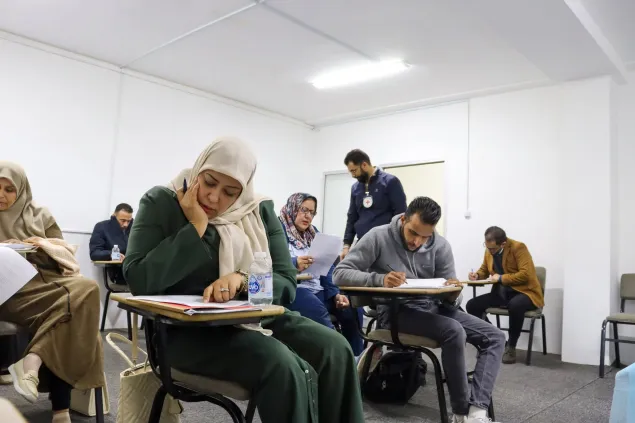
During the first aid training organized with the Ministry of Defense and the Military Medical Services Department in Tripoli.
Physical rehabilitation: Regaining independence, improving quality of life
In 2025, the ICRC continued supporting physical rehabilitation centers in Janzour, Misrata, Benghazi, and Abu Salim Hospital in Tripoli. A total of 795 persons with disabilities benefited from services including prosthetics, orthotics, physiotherapy, and walking aids.
The support included technical mentoring, on-the-job training, equipment donations, and prosthetic and orthotic materials, including high-quality imported components.
The ICRC also supported the Libyan Paralympic Committee through training initiatives aimed at improving inclusion and employment opportunities for persons with disabilities.
Despite the closure of the program, its impact remains significant.
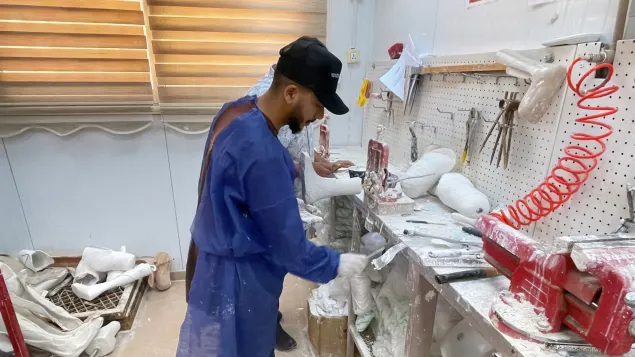
During a two-week technical training for the Physical Rehabilitation Centre at the University of Misrata.
Restoring access to water and sanitation services
In many conflict-affected settings, damage to water systems, housing and basic infrastructure has left people without safe living conditions. In 2025, the ICRC has continued to support access to water, sanitation, shelter and essential services in areas where conflict has disrupted daily life.
In close coordination with Libyan authorities and the LRCS, the ICRC supported projects aimed at restoring and improving critical infrastructure across the country.
Projects included the rehabilitation of wastewater pumping stations in Tarhouna and Sirte, improvements to water systems in Benghazi, support to laboratories and maintenance facilities, and strengthening emergency preparedness capacities of local water authorities.
The ICRC also organized specialized trainings for engineers and public employees in crisis management, emergency response, hydraulics, and water system diagnostics to strengthen national expertise and preparedness.
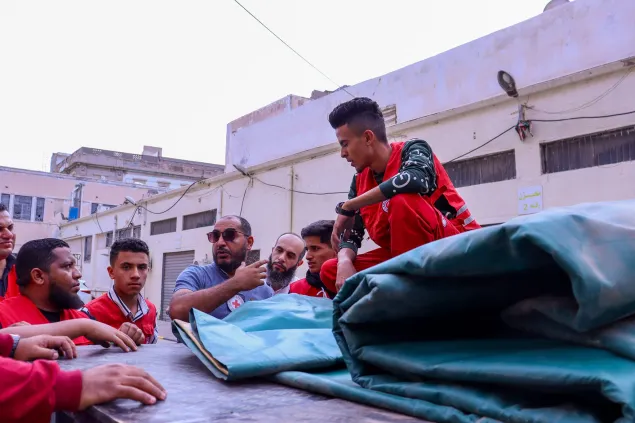
During an emergency water, sanitation and hygiene (WASH) training.
Supporting livelihoods and economic security
Beyond immediate relief, the ICRC Libya has continued in 2025 to support people’s ability to meet their basic needs and sustain themselves amid conflict.
In 2025, vocational trainings supported 573 individuals in developing income-generating skills such as sewing and electrical maintenance, while the Microeconomic Initiatives (MEI) program provided 834 vulnerable individuals with productive grants to help them start or strengthen small businesses and improve their financial autonomy.
Many beneficiaries were conflict-affected households, internally displaced people, or families of missing persons and persons with disabilities. These activities were implemented in close cooperation with local communities, municipalities, and the Libyan Red Crescent Society.
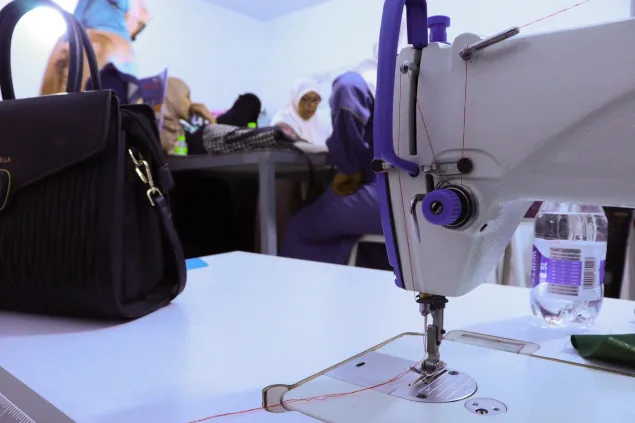
During the visits to the vocational training centers in Tripoli.
Promoting the respect for international humanitarian law
Promoting understanding and respect for international humanitarian law remains central to the ICRC’s humanitarian mission.
Throughout 2025, the ICRC organized workshops, trainings, and awareness sessions for military officers, government officials, parliamentarians, LRCS volunteers, and media professionals.
Activities focused on the protection of civilians, detainees, journalists, humanitarian reporting, and challenges related to contemporary armed conflicts, while the Libya joined the Global Initiative to Galvanize Political Commitment to International Humanitarian Law in 2025. The International Committee of the Red Cross also continued engaging with authorities and institutions across the country to strengthen awareness and implementation of IHL.
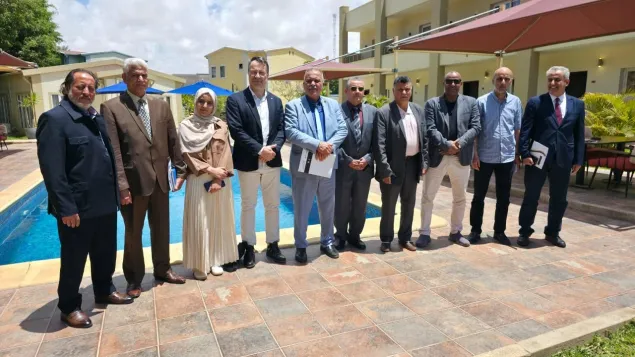
A training on international humanitarian law for officers and staff of the Ministry of Defense.
Reducing risks from weapon contamination
Long after fighting subsides, explosive remnants of war continue to threaten civilians. In 2025, weapon contamination has remained a major concern.
The ICRC has supported risk-awareness activities, engaged directly with communities on safe behaviour and worked with authorities and partners to reduce the dangers posed by unexploded ordnance and other explosive hazards. These efforts have helped prevent injuries and deaths and enabled safer access to homes, fields and essential services.
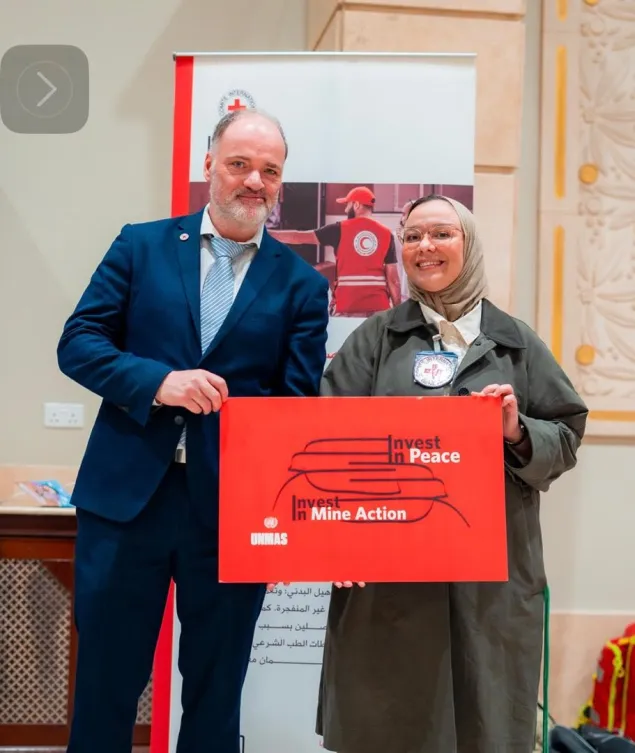
During the commemoration of the International Day for Mine Awareness and Assistance in Mine Action.