Management of the Dead in Emergencies: Training of Trainer Course Held in Luzhou, Sichuan

On December 9, a training on the "Management of the Dead in Emergencies" commenced at the Red Cross Society of China (Sichuan) Emergency Rescue Training Base in Luzhou, Sichuan. The train-the-trainer course was jointly organized by the Red Cross Society of China (RCSC) and the International Committee of the Red Cross (ICRC). Thirty-five key members of the Red Cross rescue teams from 22 provinces (autonomous regions, and municipalities) across the country gathered in Luzhou for a five-day systematic training.
As a neutral intermediary always working on the frontlines, the ICRC firmly acknowledges that proper management of the deceased in emergencies is a critical humanitarian issue. In collaboration with other organizations, it has developed practical guidelines while also delivering training and support to first responders—those who are often the initial point of contact for the deceased following natural disasters and catastrophic accidents.
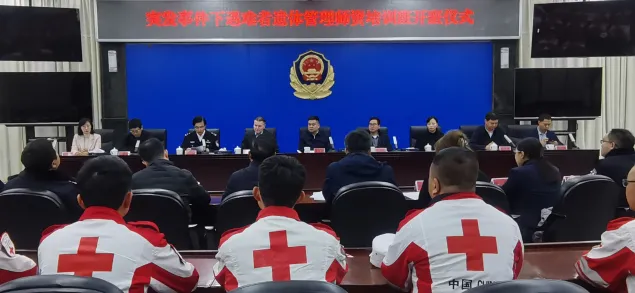
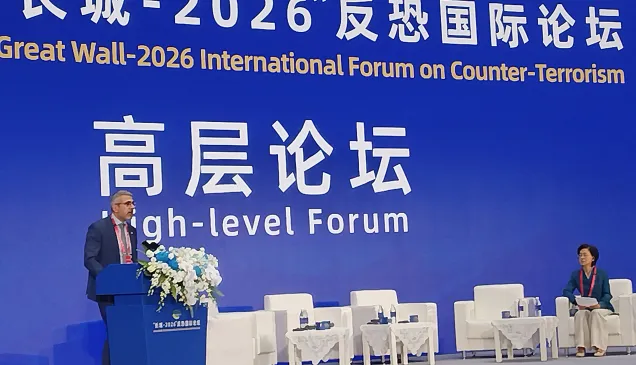
"Management of the dead is not only the proper and safe recovery of the body, but it also includes examination, identification and repatriation of the dead. This needs technical resources as well as a well-developed system of coordination among actors and systems, " Boris Kelecevic, Deputy Head of the ICRC’s Regional Delegation for East Asia addressed the opening ceremony.
He reflected on the increasingly prominent leadership demonstrated by the RCSC in the humanitarian field over the past decade, particularly acknowledging its swift response and professional performance in international operations, such as the 2025 Myanmar earthquake.
Boris stressed that this course aims to assist the RCSC in establishing a sustainable training system suited to China's national condition and cultural context. It will empower trainers and benefit more frontline rescuers.
Li Lidong, Vice President and Secretary General of the RCSC noted in his opening address that the RCSC has long been dedicated to building an emergency response system, which now comprises over 1,000 professional rescue teams across eight categories. These teams have played a significant role in responding to emergencies both domestically and internationally. The jointly developed "Localized Chinese Course on Management of the Dead" with the ICRC represents an important achievement in humanitarian cooperation between the two organizations and significantly enhances the RCSC’s emergency rescue capacity.
Since 2019, the RCSC and the ICRC have collaborated to develop the localized Chinese version of the "Training on Management of the Dead in Emergencies." Drawing on China's humanitarian realities and the ICRC's mature experience in this field, the two sides spent five years completing the curriculum design, translating teaching materials, developing educational tools, and selecting trainers.
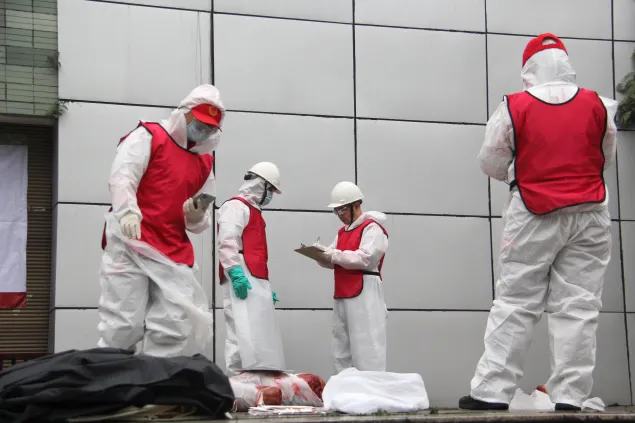
The course covers multiple disciplines, including forensic science, psychology, law, public health, disaster management, weapons contamination, CBRN (chemical, biological, radiological, and nuclear) hazards, and media communication.
During the five-day training, sixteen experts and scholars from various institutions, including the ICRC, RCSC Headquarters, the Chinese Center for Disease Control and Prevention, and Sichuan Police College, delivered lectures.
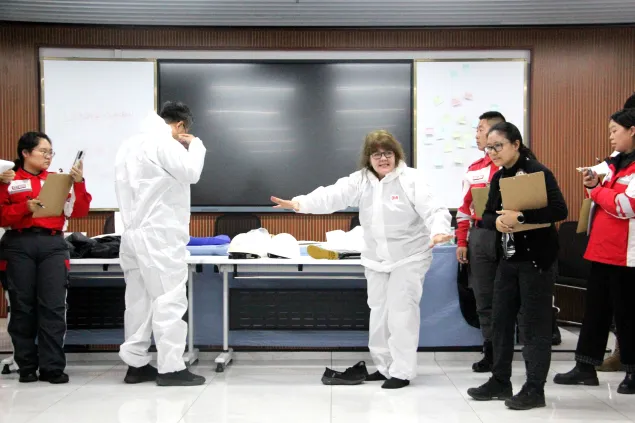
The curriculum covered activities such as on-site management, field preparation and exercises for single-body recovery, management of the deceased and weapons contamination, restoring family links in emergencies, and field exercises for emergency response in mass casualty incidents.