From New York to Beijing: Calls to galvanize political commitment to international humanitarian law

Today the world faces a crucial moment – a time when our shared humanity is both tested and needed. There are currently 130 ongoing armed conflicts around the world. Hospitals are being destroyed, innocent lives are being lost and families divided. Respect for international humanitarian law (IHL) is in crisis, and our very humanity is at risk.
In this context, on 27 September 2024, Brazil, China, France, Jordan, Kazakhstan, and South Africa, together with the ICRC, jointly launched the ‘Global Initiative to Galvanize Political Commitment to International Humanitarian Law’ in New York (hereinafter referred to as the Global Initiative). The Global Initiative seeks to mobilize state leaders globally, elevate IHL as a political priority, and identify concrete, actionable recommendations across seven thematic workstreams to strengthen respect for IHL. It aims to restore the protective power of IHL by bringing political will and leadership back to the heart of compliance. So far, 98 States have officially joined the initiative.
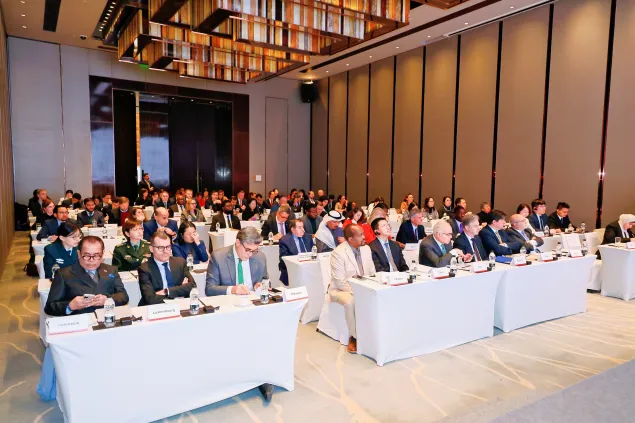
Participants at the event.
On December 11, 2025, the International Committee of the Red Cross (ICRC) hosted a high-level diplomatic event in Beijing on the Global Initiative. Nearly one hundred representatives from the Chinese government, foreign diplomatic missions in China, as well as the Red Cross Society of China – Secretariat of the National IHL Committee, gathered to engage in in-depth discussions on the significance of the Global Initiative and the key elements highlighted in the progress report of the first year since the launch of the Global Initiative. As one of the founding States of the Global Initiative, China has been proactively raising its voice to promote respect and compliance of IHL in contemporary armed conflicts.
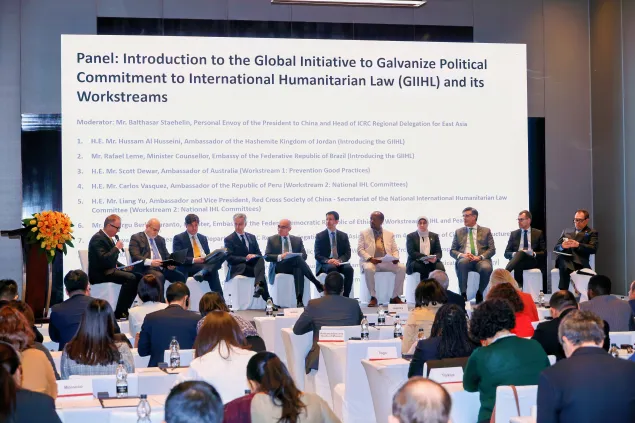
Panel of speakers.
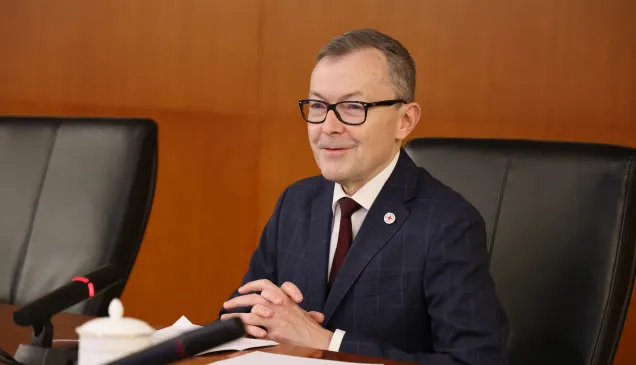
In his opening remarks, Balthasar Staehelin, Personal Envoy of the President and Head of the ICRC Regional Delegation for East Asia, emphasized that in an era where humanitarian norms face increasingly complex and evolving challenges, this Global Initiative aims to reaffirm unwavering commitment to international humanitarian law and promote concrete actions to uphold humanity in war. He recalled ICRC President’s Spoljaric‘s words: ‘The Global IHL Initiative is an exceptional measure because the current situation demands it. It is not merely a response to the crises we are all witnessing, but an effort to secure our future.’
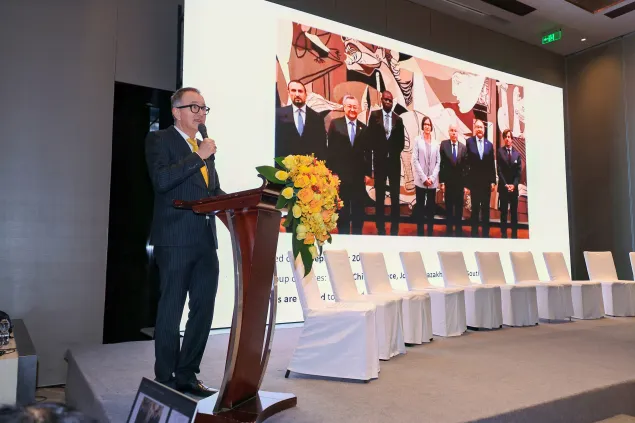
Balthasar Staehelin, Personal Envoy of the President and Head of the ICRC Regional Delegation for East Asia delivered the opening remarks.
On the occasion, Jordan and Brazil were represented by Ambassador Hussam Al Husseini and Minister Counsellor Rafael Leme respectively, who shared their countries’ experience on the importance of the initiative and their decision to support the initiative as a founding State. Ambassador Liang Yu, vice president of the Red Cross Society of China - Secretariat of the National IHL Committee, underlined in his address the importance of IHL in China and the role of NIHLC in championing respect for IHL.
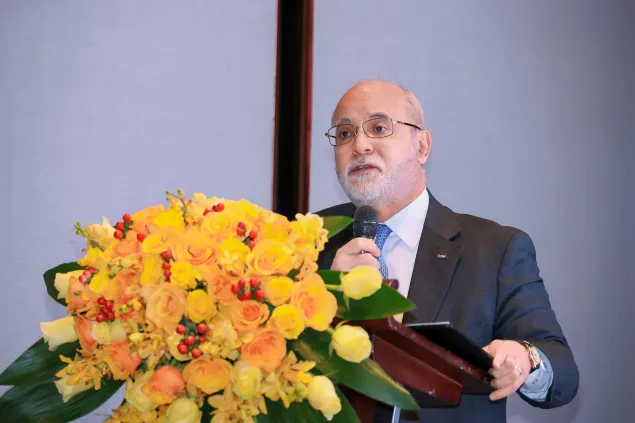
H.E. Mr. Hussam Al Husseini, Ambassador of the Hashemite Kingdom of Jordan.
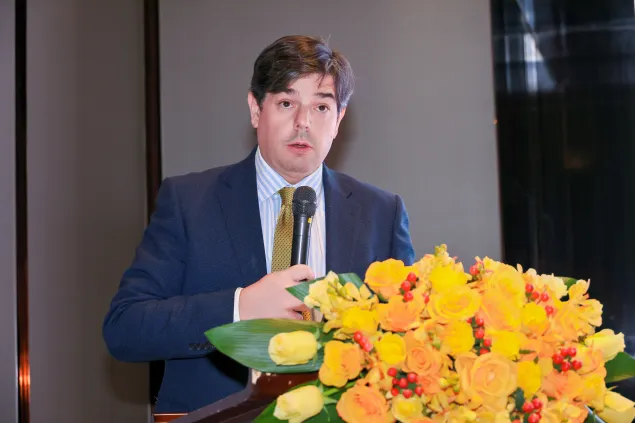
Mr. Rafael Leme, Minister Counsellor, Embassy of the Federative Republic of Brazil.
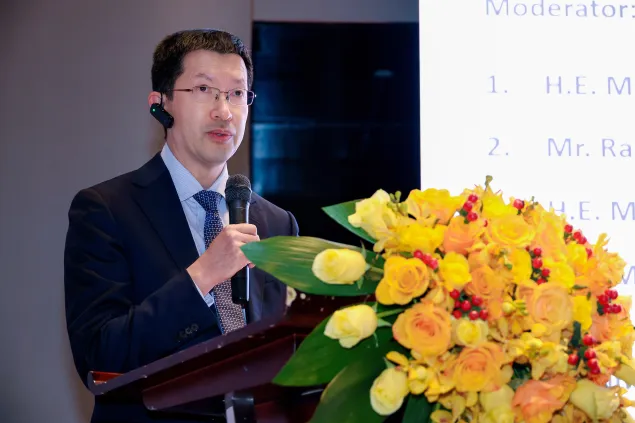
H.E. Mr. Liang Yu, Ambassador and Vice President, Red Cross Society of China - Secretariat of the National International Humanitarian Law Committee.
Since the Global Initiative was launched over a year ago, approximately 130 countries have participated in the first round of consultations across the initiative's seven workstreams, bringing to light a wealth of good practices and concrete proposals to ensure better protection for all persons affected by wars.
At the event, following representatives from selected co-chair countries and the ICRC delivered remarks on the Global Initiative’s importance as well as the workstreams. Speakers also shared updates on future priorities and called on all States to continue the dialogue and participate in future events.
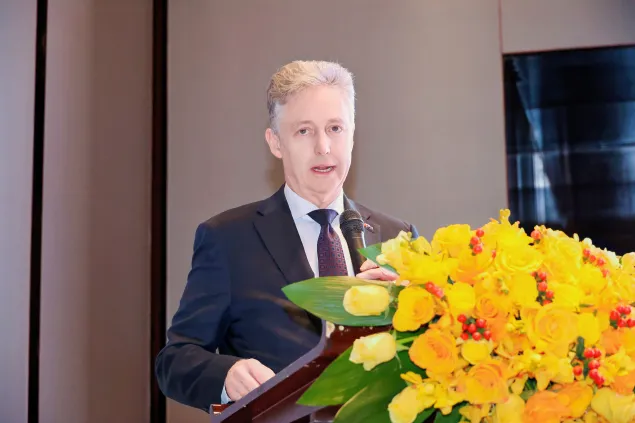
H.E. Mr. Scott Dewar, Ambassador of Australia.
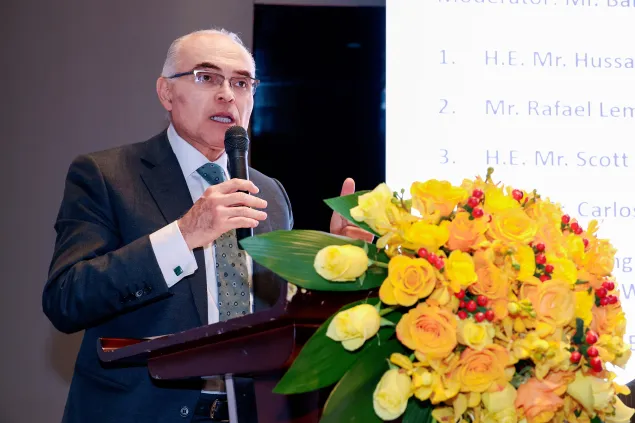
H.E. Mr. Carlos Vasquez, Ambassador of the Republic of Peru.
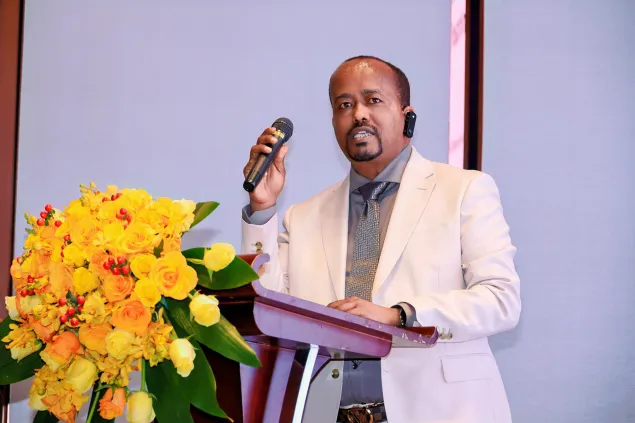
Mr. Andargu Berhe Baranto, Minister Counsellor, Embassy of the Federal Democratic Republic of Ethiopia.
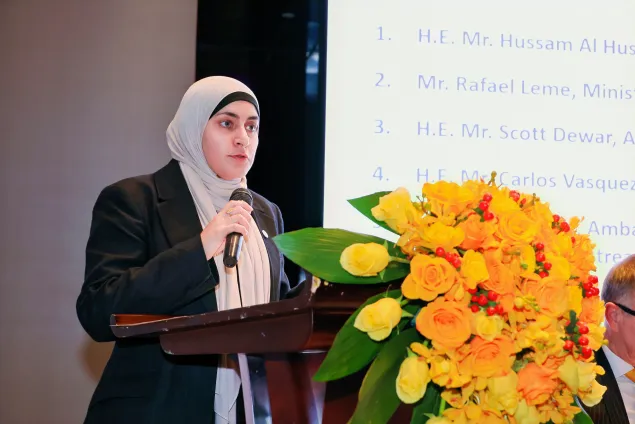
Ms. Marwa Shabbar, Head of Legal Department of the ICRC Regional Delegation for East Asia.
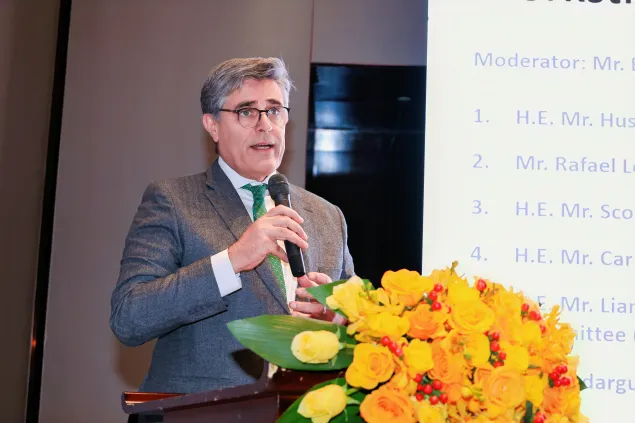
H.E. Mr. Khalil ur Rahman Hashmi, Ambassador of the Islamic Republic of Pakistan.
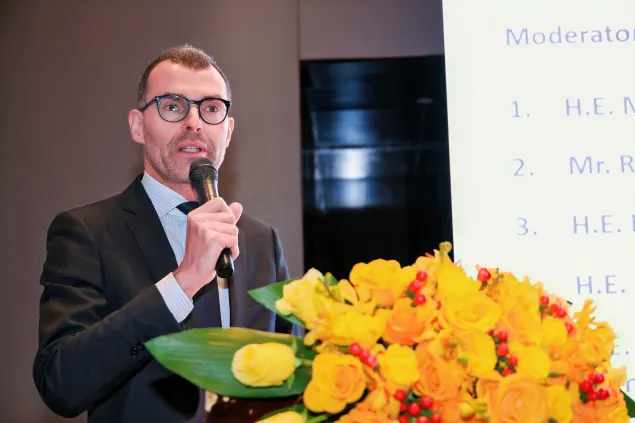
H.E. Mr. Roland Reiland, Ambassador of the Grand Duchy of Luxembourg.
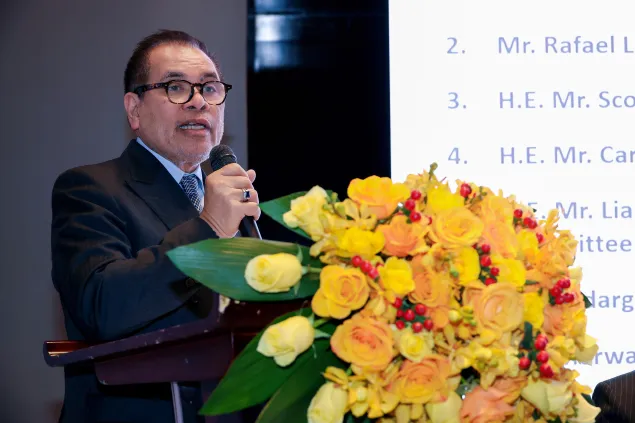
H.E. Mr. Djauhari Oratmangun, Ambassador of the Republic of Indonesia.
The first progress report of the Global Initiative documents the achievements since the launch of this collective process one year ago. All the speakers who took the floor expressed deep concern over ongoing violations and emphasized that upholding IHL is essential to reduce human suffering.
The initiative will produce concrete and practical recommendations to meet the challenges facing IHL.
The world is witnessing an erosion of respect for IHL, the last thread that ensures some degree of humanity in war. If the world loses this thread, we risk losing our humanity. If the principles of IHL collapse, humanity risks a world where suffering knows no bounds, with all prospects of peace becoming more elusive. Therefore, the increasing number of States joining the Global Initiative and renewing their political commitment to IHL is a beacon of hope.